
Original briefings. Zero spin.
Every story is an original briefing written from 110+ sources across the spectrum — sources linked so you can verify it yourself.
 energy
Major Story (7/10)
September 1, 2026 at 12:55 PM
energy
Major Story (7/10)
September 1, 2026 at 12:55 PM
China's Solar Capacity Overtakes Coal, But Coal Still Generates Far More Electricity
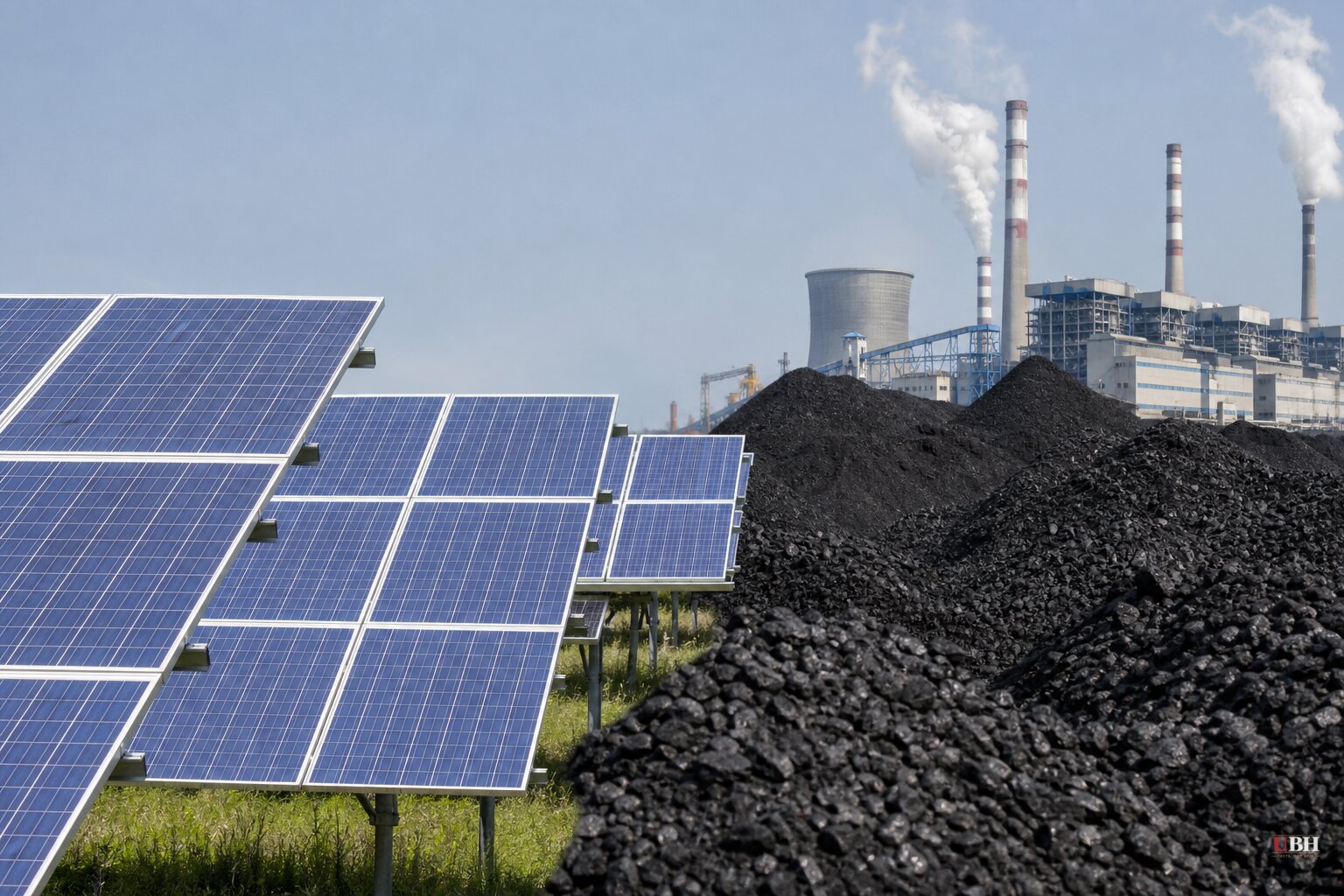
China's National Energy Administration (NEA) announced that as of the end of July, the country's installed solar power capacity reached 1.286 billion kilowatts, or 1,286 gigawatts, edging past coal-fired power's 1,285 gigawatts. State broadcaster China Central Television reported the figures, and Bloomberg, Reuters-adjacent outlets, and Xinhua all carried the same NEA data. The China Electricity Council had already flagged in June that solar was within 1 gigawatt of coal, so the crossover wasn't a surprise to anyone tracking the numbers.
Solar now makes up 31.5% of China's total installed power generation capacity, according to the NEA. That's a real milestone on paper for a country that built its industrial rise on coal.
The Number That Matters More: Actual Generation
Capacity is not output. Solar panels only produce electricity when the sun is up, running at a capacity factor typically in the 15-25% range. Coal plants run around the clock, often above 50%.
The NEA's own data shows the gap. Solar generation rose 15.5% year-over-year to 802.4 billion kilowatt-hours in the first seven months of 2026, according to the NEA, cited by Euronews and The Straits Times. That's roughly one-eighth of China's total electricity generation. Solar has nearly caught coal in nameplate capacity. It is nowhere close to catching coal in actual power delivered to the grid.
Notably, Euronews reported that the NEA statements did not detail total coal-fired generation for the same seven-month period, so a direct generation comparison isn't available from the agency's own release.
Coal Isn't Vanishing, It's Just Growing Slower
China's coal-fired power generation fell by nearly 2% in 2025, according to data reviewed by AFP in February. That marked the first annual decline in six years, and some analysts told AFP it may be the first time on record that coal generation dropped while overall power demand rose. That's a genuine data point worth taking seriously if you're skeptical of Beijing's numbers on principle: it's independently reviewed, not just a government press release.
But a nearly 2% dip in one year doesn't mean coal is being phased out. China still has roughly the same installed coal capacity as solar, and coal remains the workhorse that keeps the lights on when the sun sets, according to the same NEA data.
The Subsidy Story Nobody's Headline Mentions
China installed a record 315 gigawatts of solar and 119 gigawatts of wind in 2025, according to the China Electricity Council, over 80% of all new power capacity that year. In May 2025 alone, China added 93 gigawatts of solar, according to Bloomberg's reporting carried by Energy Connects and The Business Times.
Then Beijing ended guaranteed revenue for wind and solar projects through a policy overhaul that took effect in June 2025. Since then, installation has slowed sharply: China added just 86 gigawatts of solar over the entire first seven months of 2026, less than what it installed in that single month of May 2025, according to Bloomberg's figures.
This shows that China's renewable boom was substantially subsidy-driven. When Beijing pulled the guaranteed-price floor, the pace of new installations dropped fast. Investment in the sector is still expected to top 2 trillion yuan ($298 billion, according to Bloomberg's conversion) over the next five years, so the buildout continues, just not at the breakneck rate subsidies produced.
The Global Context
BloombergNEF's energy transition outlook, cited by Warp News, projects solar will overtake coal as the world's single largest source of electricity generation globally within six years. BloombergNEF's Jenny Chase says solar is now the cheapest source of new electricity generation in many countries, roughly half the cost of new coal plants, based on the firm's levelized cost of electricity benchmarks.
China remains far ahead of everyone else. IndexBox reported that China installed 180 to 230 gigawatts of solar in 2023 alone, compared to 58 gigawatts across all of Europe combined that same year, citing China's earlier start, cheaper labor, ownership of solar manufacturing patents, and a power grid IndexBox describes as better equipped to integrate variable renewable sources than Europe's aging infrastructure.
What's unresolved: neither the NEA nor Bloomberg's reporting says whether China is still approving new coal plant construction even as solar capacity overtakes it on paper. China has continued permitting coal plants in recent years as backup capacity for grid stability, a detail none of these reports directly addresses for 2026. Whether that continues, and whether coal generation keeps declining as the subsidy-free solar buildout slows, will show up in the NEA's next capacity reports.
Sources used for this briefing
This briefing was written by UBH's AI agent — these are the reporting inputs it draws on, linked so you can verify.


