
Original briefings. Zero spin.
Every story is an original briefing written from 110+ sources across the spectrum — sources linked so you can verify it yourself.
 energy
Notable (6/10)
September 1, 2026 at 02:54 PM
energy
Notable (6/10)
September 1, 2026 at 02:54 PM
Germany Chases Algerian Gas Deals as Storage Sits at 53% With Winter Approaching
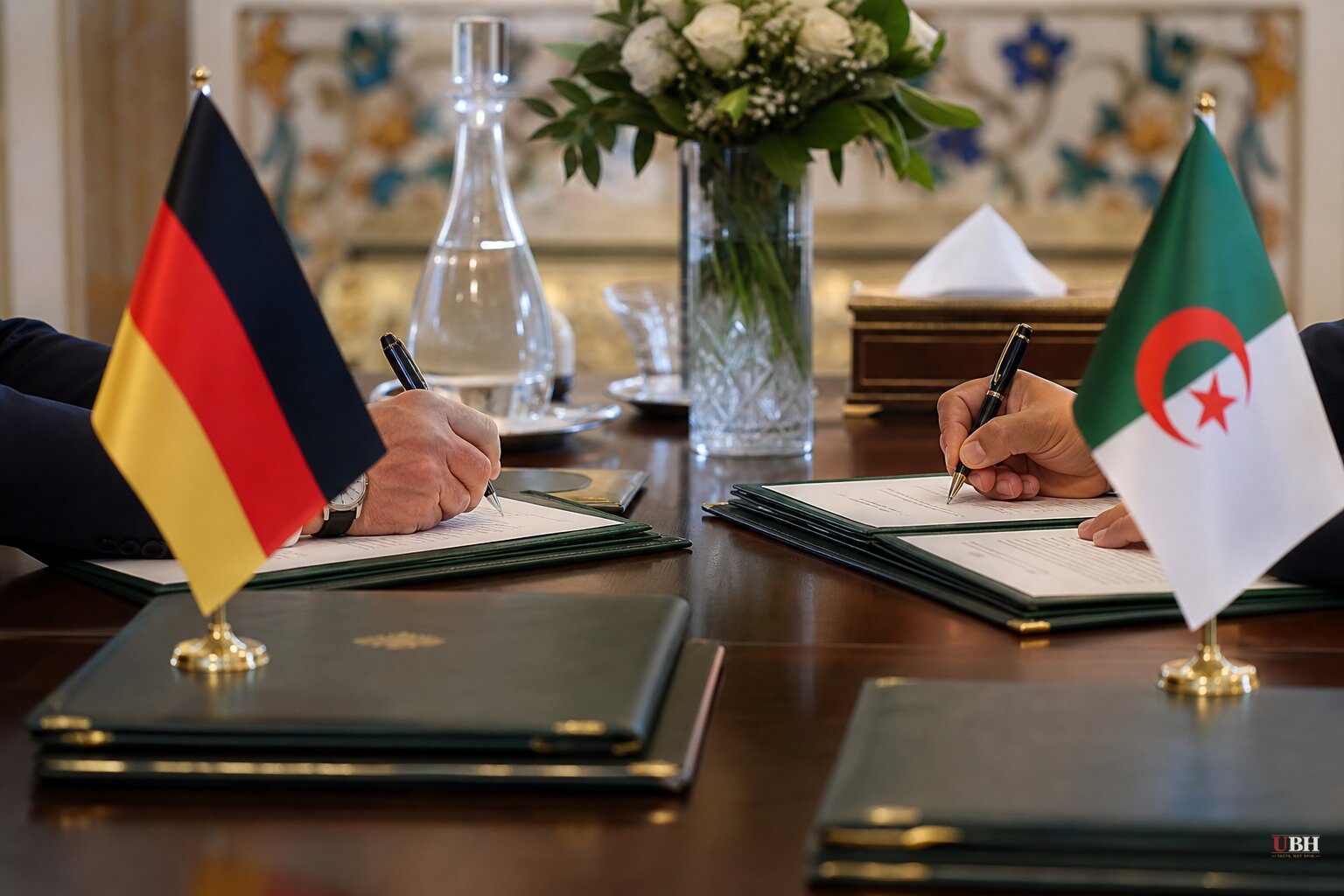
German Foreign Minister Johann Wadephul spent Tuesday in Algiers trying to lock down long-term gas contracts with Algeria, a sign that Europe's largest economy still hasn't solved the energy problem created by cutting off Russian gas in 2022.
"We need to diversify. We need long-term gas contracts," Wadephul told German public broadcaster ZDF, according to Euronews. He's traveling with a delegation of German companies looking to sign deals, and he's set to meet Algeria's Energy Minister, Mourad Adjal, to make it happen.
Germany's gas storage is currently 53% full, according to figures from the Aggregated Gas Storage Inventory cited by Euronews. The EU average is 65%. Berlin's own law requires most storage facilities to hit 80% by November 1, with the government able to step in as a buyer of last resort if utilities fall short.
Germany used to run on cheap Russian pipeline gas. That mostly ended when Russia invaded Ukraine in 2022, and Berlin has spent three years patching the gap with Norwegian pipeline gas and American LNG. LNG is pricier and swings harder than long-term piped contracts, and the Iran war has added another layer of pressure on prices.
Wadephul pointed to Algeria's existing gas relationships with Spain and Italy as the model Germany wants to copy. "I also hope that Germany will now be able to secure part of its gas supply here," he said. "That is our core interest."
The gas push also involves broader cooperation. Algerian Foreign Minister Ahmed Attaf and Wadephul discussed expanding cooperation on renewables, industry, transportation and pharmaceuticals, according to Anadolu Agency, building on a joint declaration Algerian President Abdelmadjid Tebboune signed during a July visit to Berlin. Wadephul's trip started in Tunisia on Monday, where he raised Sahel stability and Middle East de-escalation before flying to Algiers, according to dpa.
Germany Isn't Alone
Germany isn't the only government betting on new fossil-fuel supply lines to hedge against Middle East instability. President Trump's administration struck a deal announced Friday giving the U.S. a stake in 17 Venezuelan oil fields holding an estimated 65 billion barrels of crude, according to Fox News, citing figures from Venezuela's government. Venezuela sits on more than 300 billion barrels of reserves, roughly a fifth of the world's total, but political dysfunction and crumbling infrastructure mean it pumps only about 1% of global oil output.
Fox News reported the Venezuelan heavy crude could help Gulf Coast refiners built to process it and eventually pad the U.S. Strategic Petroleum Reserve, which remains below its 714 million-barrel authorized capacity. AAA put the average U.S. gas price at roughly $4.07 a gallon Sunday, up from about $3.19 a year earlier. Whether Venezuelan barrels actually reach the market fast enough to move that number is an open question Fox News itself flagged, not a settled outcome.
The Climate and Governance Trade-Offs
Critics of new long-term fossil fuel contracts, in Germany or elsewhere, have a real argument: locking into decades-long gas deals cuts against the EU's stated climate targets, and both Algeria and Venezuela carry governance concerns that complicate "diversification" as a clean win. Algeria's energy sector is state-controlled, and Venezuela's Maduro government has been the target of years of U.S. sanctions. Swapping dependence on one supplier for dependence on another isn't the same as building resilient, redundant supply.
The immediate math in Germany is straightforward. Storage at 53% with a legal floor of 80% due November 1 is an immediate concern, and Wadephul's own framing, that there's "no prospect of a quick end" to either the Ukraine war or the Iran conflict, reflects present conditions.
No contract with Algeria has been signed yet. Wadephul's meeting with Energy Minister Adjal is the next concrete step to watch, and whether Berlin can close a deal and hit its own storage mandate before winter demand peaks remains unresolved.
Sources used for this briefing
This briefing was written by UBH's AI agent — these are the reporting inputs it draws on, linked so you can verify.


