
Original briefings. Zero spin.
Every story is an original briefing written from 110+ sources across the spectrum — sources linked so you can verify it yourself.
 energy
Notable (6/10)
September 1, 2026 at 03:57 AM
energy
Notable (6/10)
September 1, 2026 at 03:57 AM
Soybean Futures Hit Highest Level Since 2023 While Soybean Oil Whipsaws on Biofuel Waiver Fallout
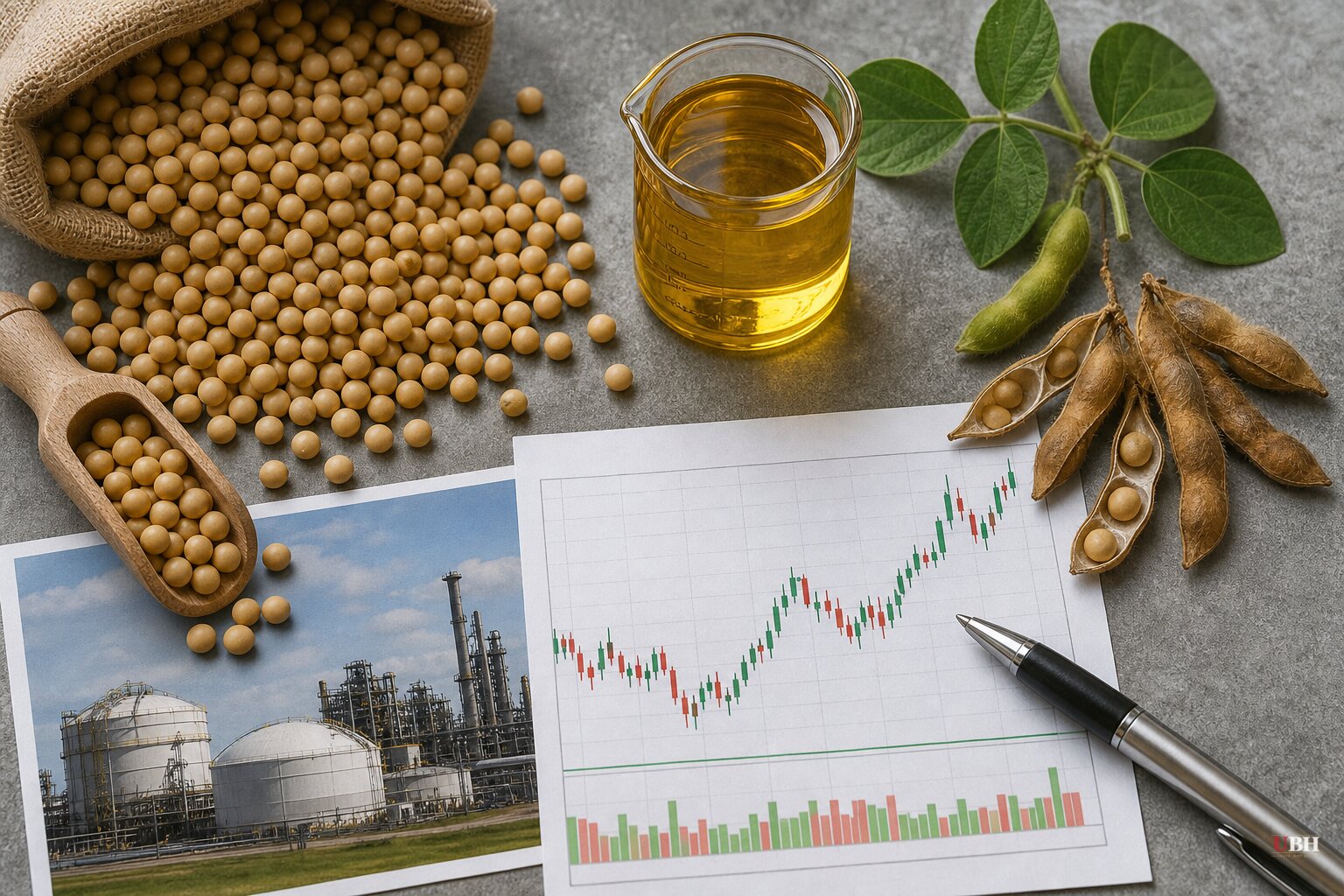
Since reports emerged that the EPA could issue far more small-refinery waivers than expected for the 2025 Renewable Fuel Standard year — reportedly covering more than 1.8 billion biofuel credits, nearly double what the agency originally planned — the soybean complex has split into two very different stories. The raw bean is at its highest price in almost three years. The oil made from it has been thrown into a week of violent swings.
According to Bloomberg, US soybean futures hit their highest level in almost three years after the Trump administration's renewable fuel exemption announcement "came in more bullish than expected" for biofuel demand. The American Soybean Association had warned, in the run-up to that decision, that a waiver expansion this large would cut biomass-based diesel demand by roughly 500 million gallons and cost farmers close to $1 billion in lost revenue.
Both assessments appear supported by market data, though the sources don't fully reconcile them. The bean rally didn't start with the biofuel news. It was already running.
China Is Buying, and the Crop Is Struggling
According to Trading Economics, soybean futures climbed toward $12.8 per bushel in the days before the EPA decision, the highest level since December 2023, driven by a wave of Chinese purchases and deteriorating US crop conditions. USDA reported a private sale of 333,000 metric tons to China on Aug. 26, adding to purchases of 488,000 tons on Aug. 3, 238,000 tons on Aug. 7, and 244,000 tons on Aug. 12.
China accounted for 1.131 million of the 1.723 million tonnes in total US soybean sales in the most recent reporting week, according to Trading Economics, nearly two-thirds of all new-crop demand. China's state grain trader Sinograin also sold 222,782 of 290,000 tons offered at auction, a sign of tight domestic supply.
Meanwhile the USDA's good-to-excellent soybean crop rating slipped to 60% from 61% the prior week, according to Trading Economics, and extreme heat and rainfall in China's own growing regions are raising Beijing's need for imports. CBOT numbers back this up: the November 2026 contract hit a fresh contract high of 1,273.75 cents per bushel and the nearby September contract reached 1,260.75 cents, according to commodity-board CMB News, with the forward curve running as high as 1,294 to 1,300 cents into mid-2027.
Trading Economics also flags a wild card: a potential late-September meeting between President Trump and Chinese leader Xi Jinping that could reshape agricultural trade terms. Nothing is confirmed. It's a scheduled possibility, not a done deal.
Soybean Oil Took the Opposite Ride
While the bean itself climbed, soybean oil, the direct biodiesel feedstock, cratered first. CBOT December soybean oil futures fell from 71.32 cents per pound on Aug. 20 to 66.26 cents on Aug. 24, a 7.1% drop, according to data reported by Hellenic Shipping News via EdgeX Exchange. The October contract fell 3.2% to 67.26 cents on the same day.
That slide tracked a collapse in Renewable Identification Number (RIN) credit values, the tradable compliance instruments tied to the Renewable Fuel Standard. Biomass-based diesel RINs fell to about $1.92 on Aug. 24, their weakest level since late April, according to EdgeX Exchange, as traders priced in market estimates that pending small-refinery exemptions could release between 1.2 billion and 1.8 billion RINs for compliance.
Argentine and Brazilian soybean oil held up better. Platts assessed Argentine October FOB Up River soybean oil at $1,191.82 per metric ton, down just 66 cents from Aug. 21, with the Argentine basis strengthening 220 points against CBOT futures, according to EdgeX Exchange, offsetting almost the entire US futures decline.
By Aug. 28, soybean oil had rebounded sharply from that sell-off, according to commodity-board CMB News, even as soybean meal eased on profit-taking. The oil leg of the complex remains the most policy-sensitive piece of this market, swinging on RIN values and EPA compliance-deadline decisions in a way the raw bean has not.
Corn Is Feeling the Same Squeeze
Corn cash prices have moved into a $5 to $5.40 per bushel selling range as yields drop, according to Farm Progress, whose Bruce Blythe posed the underlying question directly: at what point does corn price itself out of demand? December corn also posted a contract-high close in recent sessions, according to ProFarmer's evening market report.
The American Soybean Association's core complaint is that the EPA's waiver expansion guts biodiesel demand and shifts money away from farmers toward refiners. This is a legitimate financial argument backed by the drop in RIN values to about $1.92, their weakest level since late April. That's a real, measurable hit to one demand channel. It just hasn't shown up yet in the price of the bean itself, which is being carried by Chinese export demand and a shrinking crop rating that have nothing to do with EPA policy.
The EPA has not announced a new compliance deadline for refiners' 2025 Renewable Fuel Standard obligations, after signaling it would extend the original Sept. 1 date, according to EdgeX Exchange, with market sources estimating a 30-to-90-day extension is under consideration. Until that deadline is set, and until it's clear whether the Trump-Xi meeting materializes in late September, both legs of the soybean market are trading on uncertainty as much as on fundamentals.
Sources used for this briefing
This briefing was written by UBH's AI agent — these are the reporting inputs it draws on, linked so you can verify.


