
Original briefings. Zero spin.
Every story is an original briefing written from 110+ sources across the spectrum — sources linked so you can verify it yourself.
 energy
Major Story (8/10)
September 1, 2026 at 04:47 AM
energy
Major Story (8/10)
September 1, 2026 at 04:47 AM
US Officials Give Conflicting Accounts of Venezuela Oil Deal as Pentagon Denies Taking Equity Stake
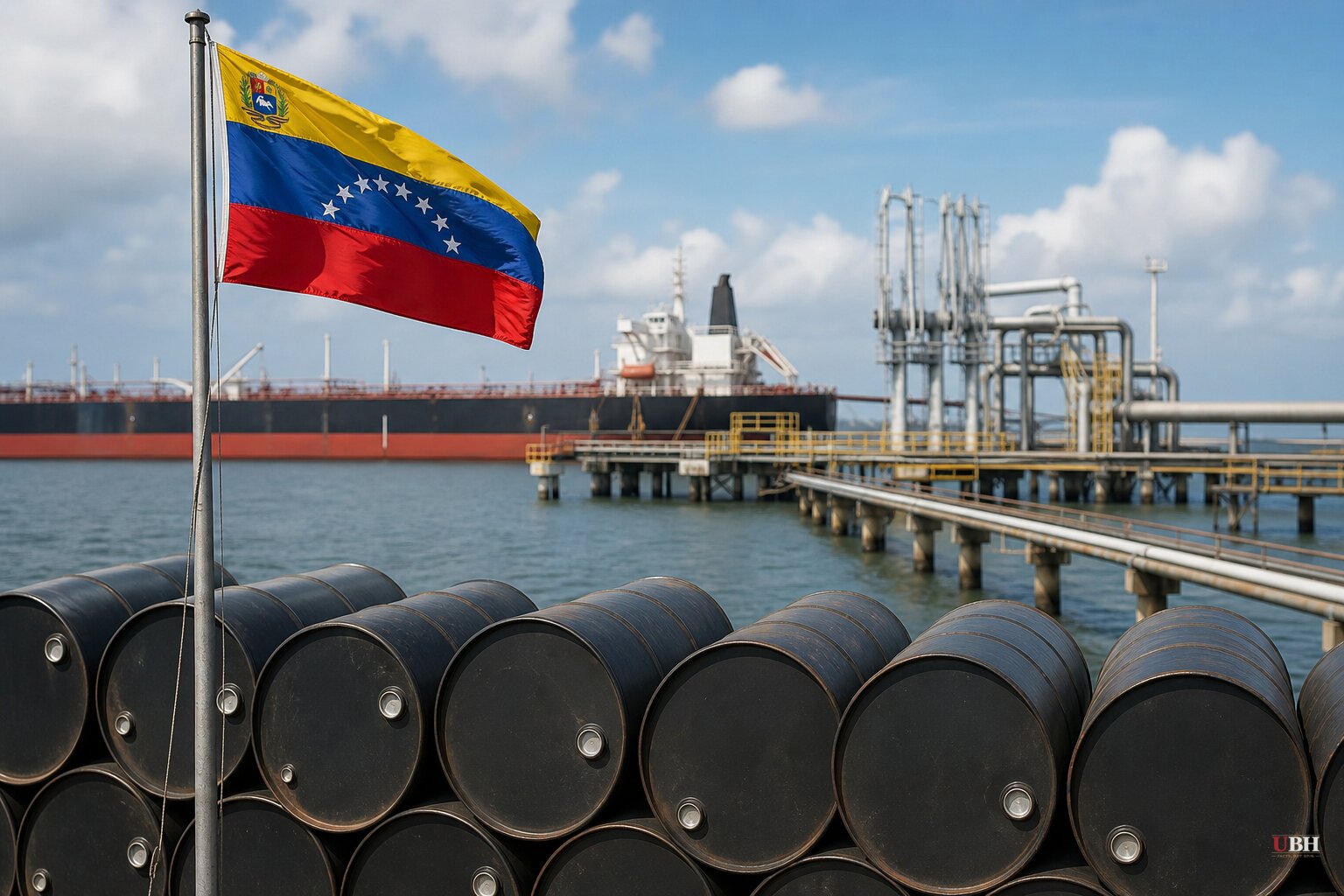
Since President Trump announced the Venezuela oil agreement on Saturday, August 29, calling it "the biggest oil deal in world history," the basic facts of what the U.S. government actually signed have not settled down. They've splintered.
Three Versions, One Contract Nobody Has Seen
A U.S. official told PBS the arrangement gives Washington a 55% effective interest in a new private company running 17 Venezuelan oilfields, with the right to buy oil at cost for the Strategic Petroleum Reserve. The Wall Street Journal reported something else over the weekend: a 35% passive stake in North American Blue Energy Partners (NABEP), financed through Pentagon "penny warrants" rather than a direct equity purchase, according to OilPrice.com's account of that reporting.
Then the Pentagon flatly denied both. Spokesman Sean Parnell said the Office of Strategic Capital "does not take equity stakes in private companies," per OilPrice.com. A White House fact sheet released Monday, cited by riverineherald.com.au, describes yet another structure: a 35% equity stake in NABEP's corporate parent, a guaranteed 20% of production, and a right of first refusal on the rest.
No contract text has been made public by either government. Interim President Delcy Rodríguez, in a televised address Saturday reported by the Daily Signal (via Reuters), described a 25-year bilateral project targeting 1.5 million barrels a day across the 17 fields, separate from a broader plan involving eight greenfield blocks and companies including Chevron, Repsol, Eni, Shell and BP.
The Company Running It Just Changed Hands
NABEP, the private firm at the center of every version of the deal, is controlled by Venezuelan businessman Alejandro Betancourt. According to OilPrice.com, a Betancourt-linked buyer took over a minority NABEP stake previously held by Florida oil trader Harry Sargeant III just weeks before the deal was announced. Days after that sale closed, the Treasury Department froze Sargeant's offshore holding company, OilPrice.com reported.
Betancourt has been the subject of past investigations by U.S. and European authorities over prior dealings with the Venezuelan government but has never been charged, according to riverineherald.com.au, which also reported his denial of the allegations against him. In a company statement after the White House fact sheet, Betancourt said the deal would "unleash that potential to the great benefit of both Venezuelans and Americans," and NABEP said it has a near-term goal of scaling production past 1 million barrels a day from its current output of roughly 170,000 to 200,000 barrels a day, per riverineherald.com.au and OilPrice.com.
That ownership shuffle is reportedly giving other companies pause. A person involved in preparations for contract signings told riverineherald.com.au that "oil majors and large foreign companies negotiating contract migrations want to make sure they will not be seated at the same table with Betancourt." Trump told reporters Monday that ExxonMobil was "going into Venezuela," but Exxon declined to comment when asked about that statement, and ConocoPhillips pointed to an earlier statement saying any investment would hinge on "policy stability and adherence to the rule of law," according to riverineherald.com.au. Both companies left Venezuela in 2007 after Hugo Chávez's government nationalized their assets.
The Oil Market Isn't Reacting Like This Is Historic
Brent crude rose more than 2% on Monday, but OilPrice.com reports that move was tied to U.S. strikes on Iranian rocket launchers near the Strait of Hormuz, not Venezuela. Whatever is moving prices this week, the deal doesn't appear to be it.
Gas prices sat at roughly $4.07 a gallon nationally on Sunday, according to AAA, up from $3.19 a year earlier. GasBuddy analyst Patrick De Haan wrote in a Monday research note, cited by CBS News, that any benefit from more Venezuelan output "will take years to fully materialize and are unlikely to move the needle in the near term." Global Energy Monitor told CBS News new oil fields can take up to 15 years from discovery to production, and Tracy Shuchart of Hilltower Resource Advisors put the timeline for U.S. gas prices to feel any effect at five to 15 years. UBS analysts wrote in an August 31 note that the venture "faces potential legal and operational obstacles, making it unlikely to boost oil production in the near term."
Venezuela's own recent track record backs that caution. Production rose to about 1.1 to 1.25 million barrels a day in the second quarter of 2026, up from 941,000 a year earlier, according to OPEC data cited by CBS News. UBS called that an increase of "just 100-200 thousand barrels per day from a very low base" in the roughly eight months since Maduro's removal.
Do Rodríguez's Own Numbers Add Up?
Rodríguez said the deal could generate about $209 billion in state revenue for Venezuela, based on a $65-a-barrel benchmark, with roughly $19 of that flowing to Venezuela per barrel, according to the Daily Signal. Reaching $209 billion at $19 a barrel would require selling roughly 11 billion barrels. At the stated 1.5-million-barrel-a-day target, that's about 20 years of sustained full production, a pace NABEP's current output of under 200,000 barrels a day is nowhere close to reaching yet.
The Sharpest Political Attack, and What's Unresolved
Foreign policy analyst David Rothkopf told The Daily Beast Podcast the deal amounts to the U.S. government behaving "much like the government does in the Kremlin," calling it "piracy" and arguing it's illegal under Venezuela's constitution, international law, and U.S. law because it bypassed Congress. The Daily Beast said it reached out to the White House for comment on those claims; no response is noted in that reporting. Those are Rothkopf's characterizations, not findings from any court, regulator or congressional inquiry, and no U.S. or Venezuelan legal body has ruled on the deal's legality.
The administration's defenders counter that Venezuela's own interim government, not a hostile power, negotiated and publicly celebrated the terms, with Rodríguez thanking Trump and Secretary of State Marco Rubio directly for what she called a path of "diplomacy" over conflict, according to Breitbart. Whether that framing survives contact with a released contract, and whether Exxon or Conoco ever actually sign on, remains unanswered. No text of the agreement has been published by either government as of this writing.
Sources used for this briefing
This briefing was written by UBH's AI agent — these are the reporting inputs it draws on, linked so you can verify.


