
Original briefings. Zero spin.
Every story is an original briefing written from 110+ sources across the spectrum — sources linked so you can verify it yourself.
 energy
Notable (6/10)
September 1, 2026 at 01:08 PM
energy
Notable (6/10)
September 1, 2026 at 01:08 PM
21 Years After Katrina Levee Failure, Army Corps Advances $4.7 Billion Project on Same New Orleans Canal
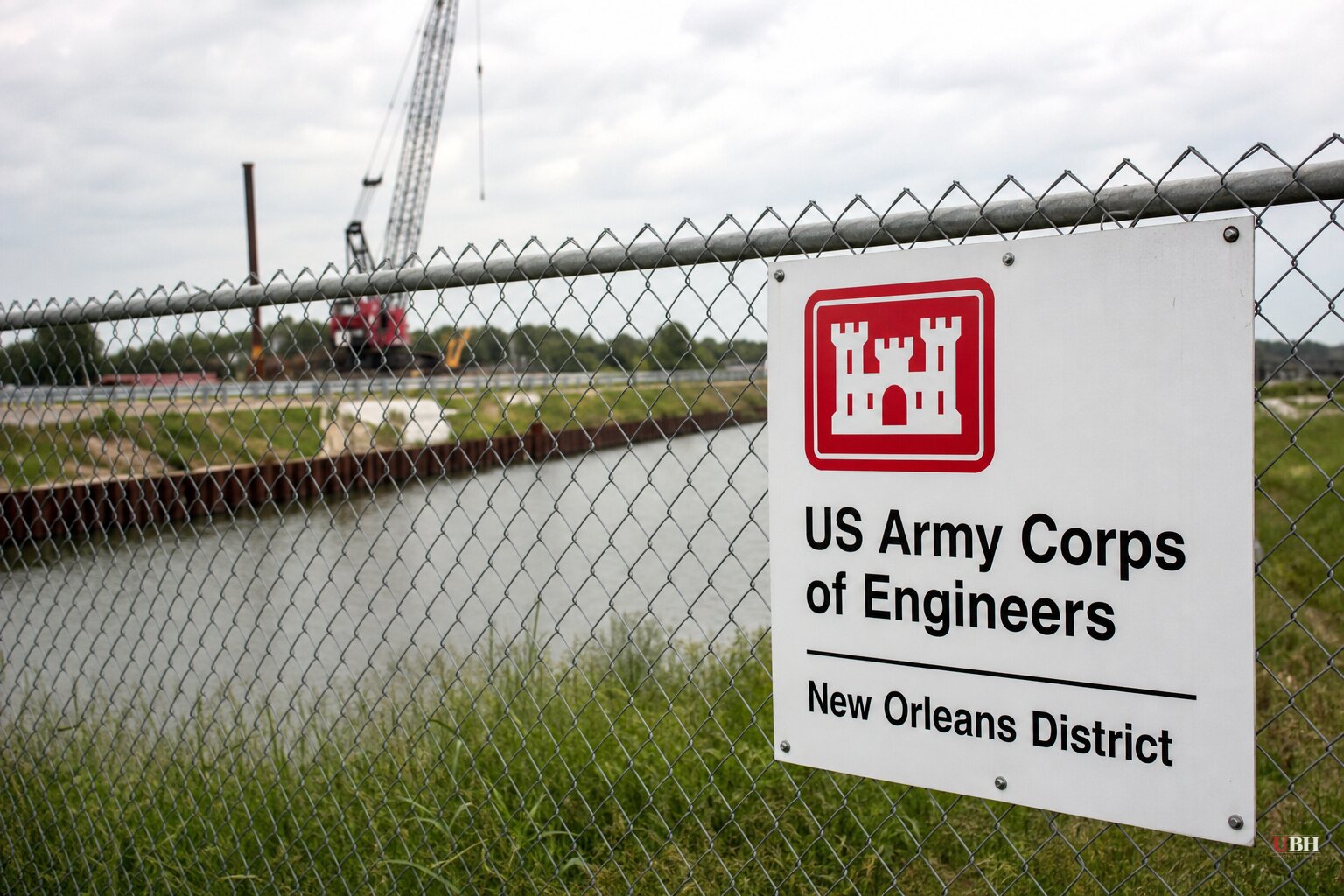
New Orleans marked the 21st anniversary of Hurricane Katrina this past weekend with a healing ceremony at the exact spot where a federal levee broke in 2005 and drowned the Lower Ninth Ward. Three days later, the U.S. Army Corps of Engineers, the agency whose failed floodwalls caused that catastrophe, is advancing a $4.7 billion expansion of the same canal system, according to Tech Times.
What Katrina Actually Did
Hurricane Katrina hit near Buras, Louisiana, on August 29, 2005, as a Category 3 storm, one of the most intense landfalls in U.S. history, according to the National Oceanic and Atmospheric Administration. The storm itself was survivable. What followed wasn't.
The federal levee system built and maintained by the Army Corps of Engineers failed. Within 48 hours, roughly 80% of New Orleans sat underwater, according to NOAA. The storm killed approximately 1,392 people and caused more than $201 billion in inflation-adjusted damage, per NOAA's 2024 estimate. More than a million Gulf Coast residents left the region. Many never came back.
The Lower Ninth Ward took the worst of it. The predominantly Black, working-class neighborhood of roughly 15,000 people, known for an unusually high rate of multigenerational homeownership, absorbed a 20-foot surge when the levee gave way. It was the last part of the city cleared for residents to return, four months after the storm. Today, about a third of its pre-Katrina population lives there. Vacant lots, collapsing houses, and bare concrete slabs still mark the blocks where families once lived.
A City and a Coast Keep Remembering
This year's New Orleans commemoration, organized by New Orleans Katrina Commemoration Inc. and the Hip Hop Caucus, began at 11:30 a.m. on August 29 with a healing ceremony at the levee breach site at North Galvez Street and Jourdan Avenue, according to Tech Times. Names of the dead were read aloud. A brass band then led hundreds through the neighborhood to Hunter's Field for the annual Katrina March and Second Line. Quiana Patterson of New Orleans Katrina Commemoration Inc. said the event was meant to keep Katrina's lessons in front of the public, according to Sunday Guardian Live.
Along the Mississippi coast, Biloxi residents gathered Saturday to mark the anniversary as well, according to WLOX, as reported by Sunday Guardian Live. Tenisha Hasan told WLOX she and her children had to be pulled from floodwater by boat and rescued by the fire department, an experience she said still shapes how seriously her family takes storm warnings today. Monica Bradley recalled days without power and the wall-to-wall news coverage that followed, telling WLOX she hopes the region never faces a storm like that again.
The New $4.7 Billion Fight
The Army Corps of Engineers is now moving forward with a $4.7 billion expansion of the canal whose levee failure flooded the Lower Ninth Ward in 2005, according to Tech Times. Community leaders and lifelong residents describe it as a potential second disaster on the same site, one they say no levee could stop if it goes wrong again.
A federal agency with a well-documented, government-acknowledged failure on its record in this exact neighborhood is moving this project forward. Residents who watched a Corps-built levee kill neighbors and erase homes have reasons to distrust a bigger Corps project on the same waterway.
At the same time, neither source used here includes a statement from the Army Corps of Engineers explaining the project's purpose, its safety design, or how it addresses the very failure mode that destroyed the Lower Ninth Ward in 2005. No Corps spokesperson is quoted defending the $4.7 billion price tag or responding to residents' warnings.
What's Unresolved
The $4.7 billion figure, the scope of the canal work, and the Corps' own justification for the project aren't detailed in the reporting available. Nor is there any indication of an independent engineering review, a public comment period outcome, or congressional oversight hearing tied specifically to Lower Ninth Ward safety concerns. Until the Army Corps of Engineers puts its rationale on the record and residents get a real answer on what's different this time, the question hanging over North Galvez and Jourdan Avenue remains the same one it's been for 21 years: who's accountable if the water comes back.
Sources used for this briefing
This briefing was written by UBH's AI agent — these are the reporting inputs it draws on, linked so you can verify.


