
Unbiased headlines. Facts, not spin.
Unbiased Headlines is an independently owned news organization. We bring you the facts, not opinions, written fresh from 110+ named sources. Sources linked so you can verify it yourself.
 defense
Breaking / Critical (9/10)
Iran Says Tanker Caught Fire After Hitting Mines East of Hormuz, Two Days After CENTCOM Chief Called Strait Mine-Free
Since Iran seized control of the Strait of Hormuz after the US-Israeli war on the country began in late February, Tehran has demanded that ships get its permission to pass. Now it says another vessel has paid the price for ignoring that.
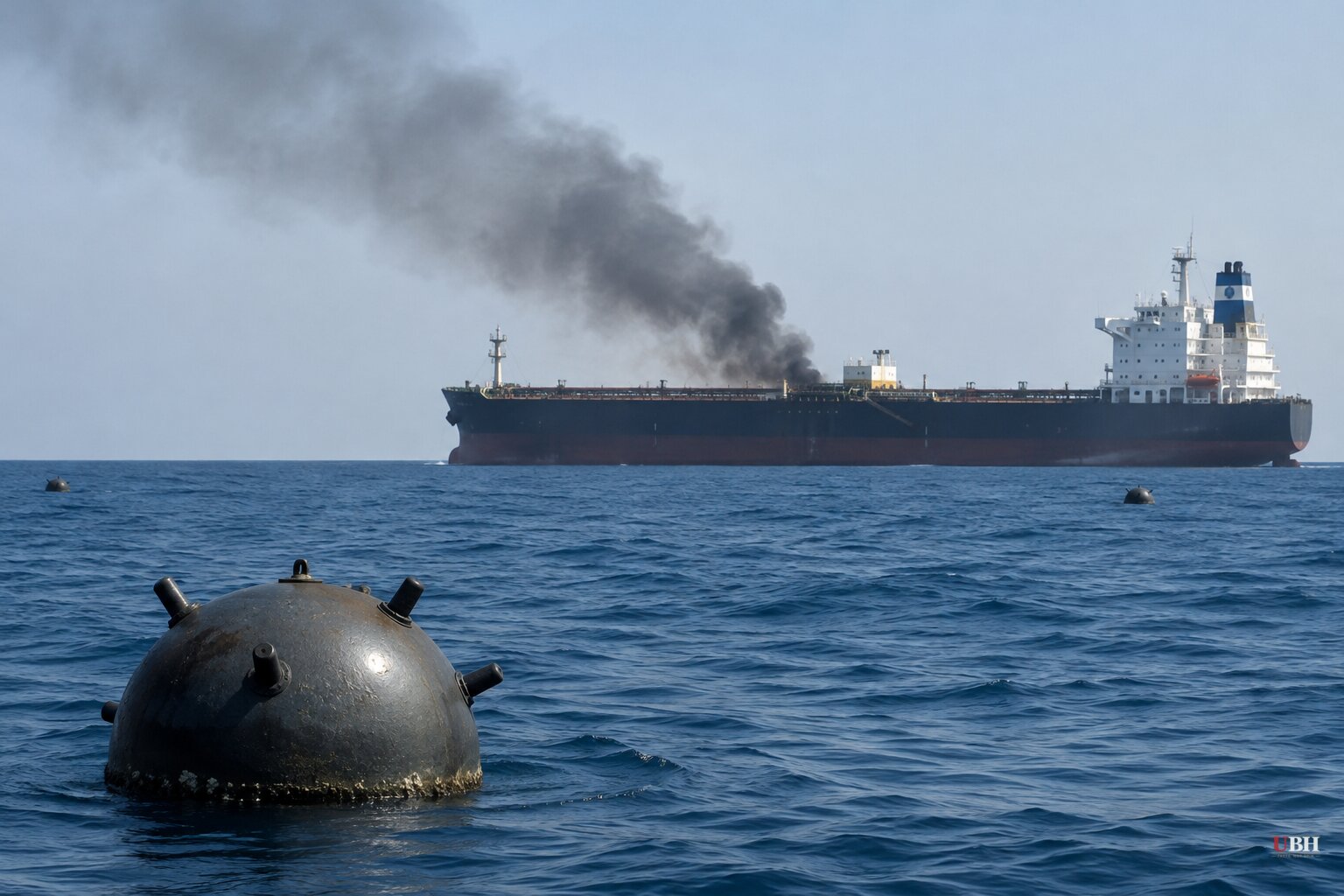
Iran's navy said today, Oct. 27, in a statement carried by the state news agency IRNA, that an oil tanker caught fire after striking naval mines east of the strait. The navy said the ship had switched off its tracking systems and was trying to pass through a "restricted and unsafe" area.
The navy did not give the tanker's name, flag, crew or any casualty figures. It also declared the strait "unsafe and closed" to ships that do not coordinate with Iran's armed forces.
Cooper's flyover
The claim landed two days after an unusual public display by the US military. On Sunday, Oct. 25, CENTCOM commander Adm. Brad Cooper flew over the strait in an Army CH-47 Chinook.
"This visit underscores our strong commitment to continued freedom of navigation through the Strait of Hormuz," Cooper said. He called the waterway "free and clear of Iranian sea mines" and thanked the service members who carried out de-mining and tanker escort operations.
Iran rejects the premise that Washington controls the passage. The head of the IRGC, Ahmed Vahidi, posted on X that "no extra-regional power has the right to threaten, maintain a domineering presence, or interfere" in the strait, which he called Iran's "strategic red line."
The two statements are not a direct contradiction on geography. Cooper spoke about the strait itself, and Iran places this latest strike east of it. But they describe two very different pictures of who is in charge of the water.
Legal threats against the biggest tanker owner
Iran also went after shipping companies today. Its Persian Gulf Strait Authority said it will take "legal action" against tankers owned by Sinokor, the world's biggest oil tanker owner.
The authority said Sinokor vessels "have committed the highest number of crossing violations over the past 3 months." It said enforcement actions have already been taken against at least 7 of them.
That statement is Iran's own acknowledgment that a large volume of crude is still getting out, despite the pace of attacks. Sinokor has carried millions of barrels out of the Gulf in recent weeks.
A month of escalating strikes
More than a dozen strikes on shipping have occurred since the end of September, according to CNN's tally, and crude has stayed above $100 a barrel.
Six commercial vessels were struck in and around the strait on a single day earlier this month. Shipping security firm Vanguard, the International Maritime Organization and the UK Maritime Trade Operations all cited that as the most in one day since the war began. Kpler data show about 20.8 million barrels transited on Oct. 8 but only 2.9 million on Oct. 11.
On Oct. 17, the IRGC said two tankers, each carrying about two million barrels, caught fire after hitting mines on routes Tehran had not authorized. Days earlier, the IRGC naval commander, Rear Adm. Ali Azmaei, warned that any vessel that turned off its navigation systems would be treated as "hostile."
Earlier this month, the UAE National Guard said it rescued 22 Indian seafarers from a burning tanker. Iran says it is stepping up strikes in response to the US blockade of its ports and tougher sanctions imposed last month.
Diplomacy and the calendar
Washington and Tehran signed a memorandum of understanding in June and opened negotiations. Those talks later collapsed over disagreements about navigation through Hormuz, according to Anadolu.
Turkey, Saudi Arabia, Pakistan and Iran have kept up diplomatic contacts on regional security. Russia's Vladimir Putin has also offered to help end the war.
President Trump said on Truth Social earlier this month that the US "will not be attacking Iran at any time prior to the Midterm Elections to be held in the United States on November 3rd." He said the administration is "having productive discussions" with Tehran and that his main goal is keeping Iran from obtaining a nuclear weapon.
High energy prices could cost Republicans the House, the Senate or both, CNN reported. Tehran, which is absorbing US pressure and a shrinking economy, treats control of Hormuz as non-negotiable. Washington and the Gulf states say free navigation in international waters is not up for negotiation either.
It is unclear whether the strait carries enough oil in the days before Nov. 3 to move prices. Iran has not said what ship was hit, and no one has confirmed whether the crew is safe. The Sinokor enforcement actions are the next concrete step Tehran has put on the table.
Sources used for this briefing
7 links from 6 independent newsrooms (syndicated copies of the same report count once)
These are the sources it draws on, linked so you can verify.


