
Unbiased headlines. Facts, not spin.
Unbiased Headlines is an independently owned news organization. We bring you the facts, not opinions, written fresh from 110+ named sources. Sources linked so you can verify it yourself.
 defense
Major Story (8/10)
US Names USS Colorado as First Submarine for AUKUS Rotational Force in Western Australia
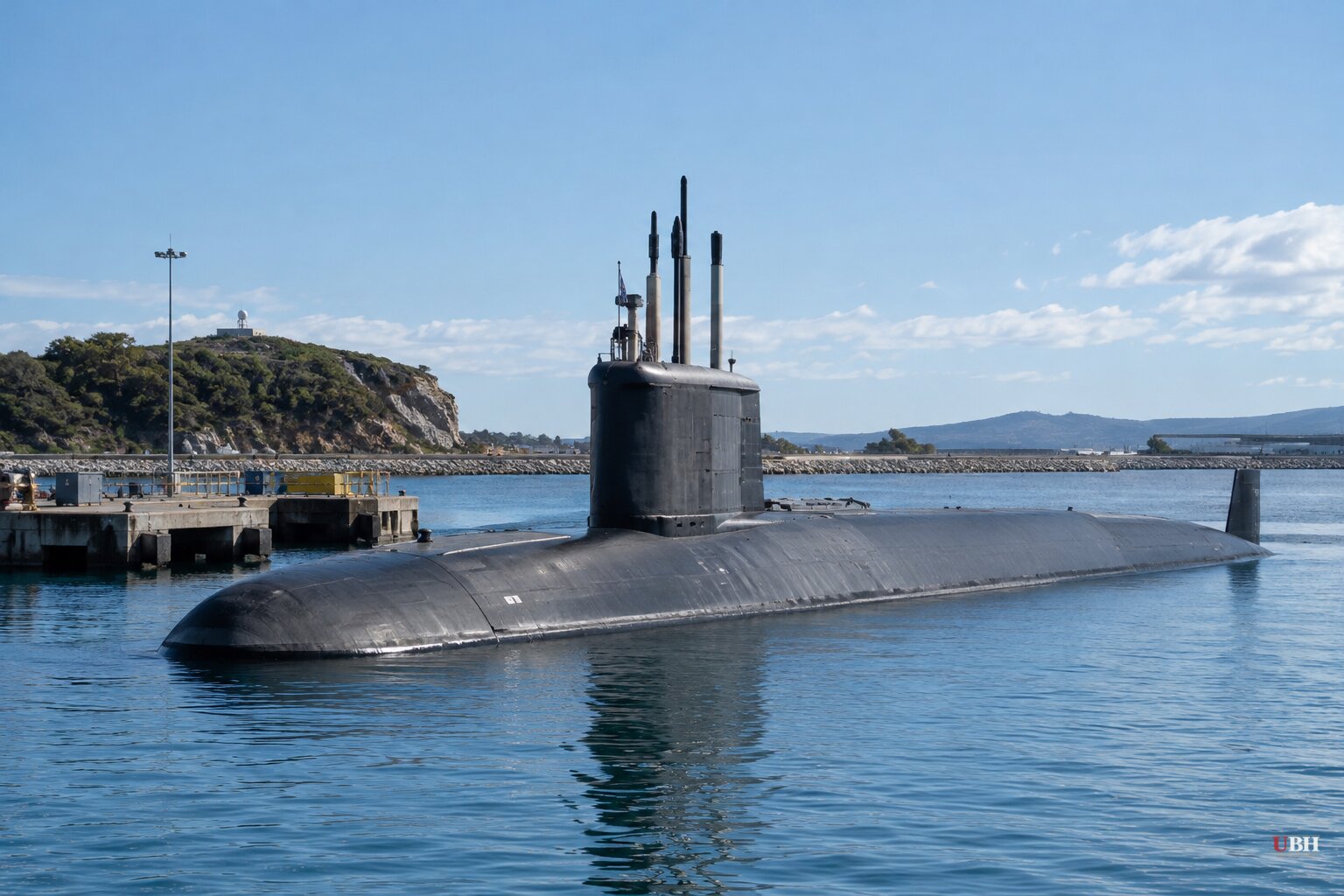
The Pentagon has picked its boat. The Virginia-class fast-attack submarine USS Colorado (SSN 788) will be the first U.S. Navy vessel assigned to Submarine Rotational Force-West (SRF-West) at HMAS Stirling in Western Australia, with the rotation set to begin in late 2027.
U.S. Secretary of War Pete Hegseth, Australian Deputy Prime Minister and Defence Minister Richard Marles and the UK defence secretary announced the designation together in a joint statement on Oct. 27. They called it "a significant milestone for AUKUS Pillar I and a decisive step in strengthening collective deterrence in the Pacific."
What is being deployed
The Colorado is a Block III Virginia-class boat, 377 feet long, commissioned in 2018. It carries two Virginia Payload Tubes that can launch up to 12 Tomahawk cruise missiles, plus four torpedo tubes for Mk 48 torpedoes.
SRF-West is planned to host up to five submarines on a rotating basis: four U.S. Virginia-class boats and one British Astute-class boat. The Colorado is the first to get a name and a start date.
Not a base, officials say
Australia does not permit foreign military bases on its soil. The three governments say SRF-West fits within that rule. According to the joint statement, the force will operate under existing arrangements, including the U.S.-Australia Force Posture Agreement, and will not constitute a permanent foreign base.
Australia already hosts U.S. Marines in Darwin for exercises six months of each year.
Marles told News24 that the rotational force is the first "really big milestone" under AUKUS. "It's on track," he said. "There are American personnel at HMAS Stirling right now readying the site for this."
Training Australians before Australia has its own boats
The purpose goes beyond signaling to Beijing. Vice Admiral Jonathan Mead, director-general of the Australian Submarine Agency, said the designation "signals the transition from planning to implementation." He said the Colorado's presence "will help accelerate the development of the skills, experience and knowledge transfer that are fundamental to delivering Australia's future conventionally armed, nuclear-powered submarine capability."
Chief of Navy Vice Admiral Matt Buckley said Australian sailors will work "alongside the world's most experienced nuclear-powered submarine operators." The statement says Australian sailors will gain at-sea time on American and British boats, while local maintenance personnel support the vessels ashore.
Under the acquisition pathway announced in 2023, SRF-West is a transitional step before Australia takes ownership of its first nuclear-powered submarines. Australia is learning to run a nuclear submarine enterprise before it owns a single boat.
Maintenance test comes first
The announcement precedes a U.S. Submarine Maintenance Period that, according to the allies, begins later this week. They say it will demonstrate Australia's growing ability to sustain U.S. and UK nuclear-powered fast-attack submarines. Mead called the designation "a clear demonstration of the trust and confidence the United States has in Australia's people, workforce and infrastructure."
The China factor and the price tag
AUKUS was established in September 2021 and is widely seen as a response to China's military buildup in the Indo-Pacific. A June 2026 report from the Australian Strategic Policy Institute, "Pressure Points Part 3," said Beijing is building a wider pattern of military access, security cooperation and regional influence across the Pacific.
The program also carries a heavy price tag. Australian government forecasts put the AUKUS submarine program at up to US$235 billion over 30 years. That is Australian taxpayer money, and the program sits at the center of the country's defence strategy.
A named submarine and a scheduled arrival date are concrete progress. They also leave the hardest part still ahead. Australia has no timeline in this announcement for operating a nuclear-powered boat of its own, and the bill runs for three decades.
The next checkpoints are specific. The maintenance period at Stirling starts later this week, and the Colorado is due to arrive in late 2027.
Sources used for this briefing
8 links from 8 independent newsrooms (syndicated copies of the same report count once)
These are the sources it draws on, linked so you can verify.


