
Unbiased headlines. Facts, not spin.
Unbiased Headlines is an independently owned news organization. We bring you the facts, not opinions, written fresh from 110+ named sources. Sources linked so you can verify it yourself.
 defense
Major Story (7/10)
Event date: October 26, 2026 ·
US Military Bars All BYD Vehicles From Kadena Air Base in Okinawa
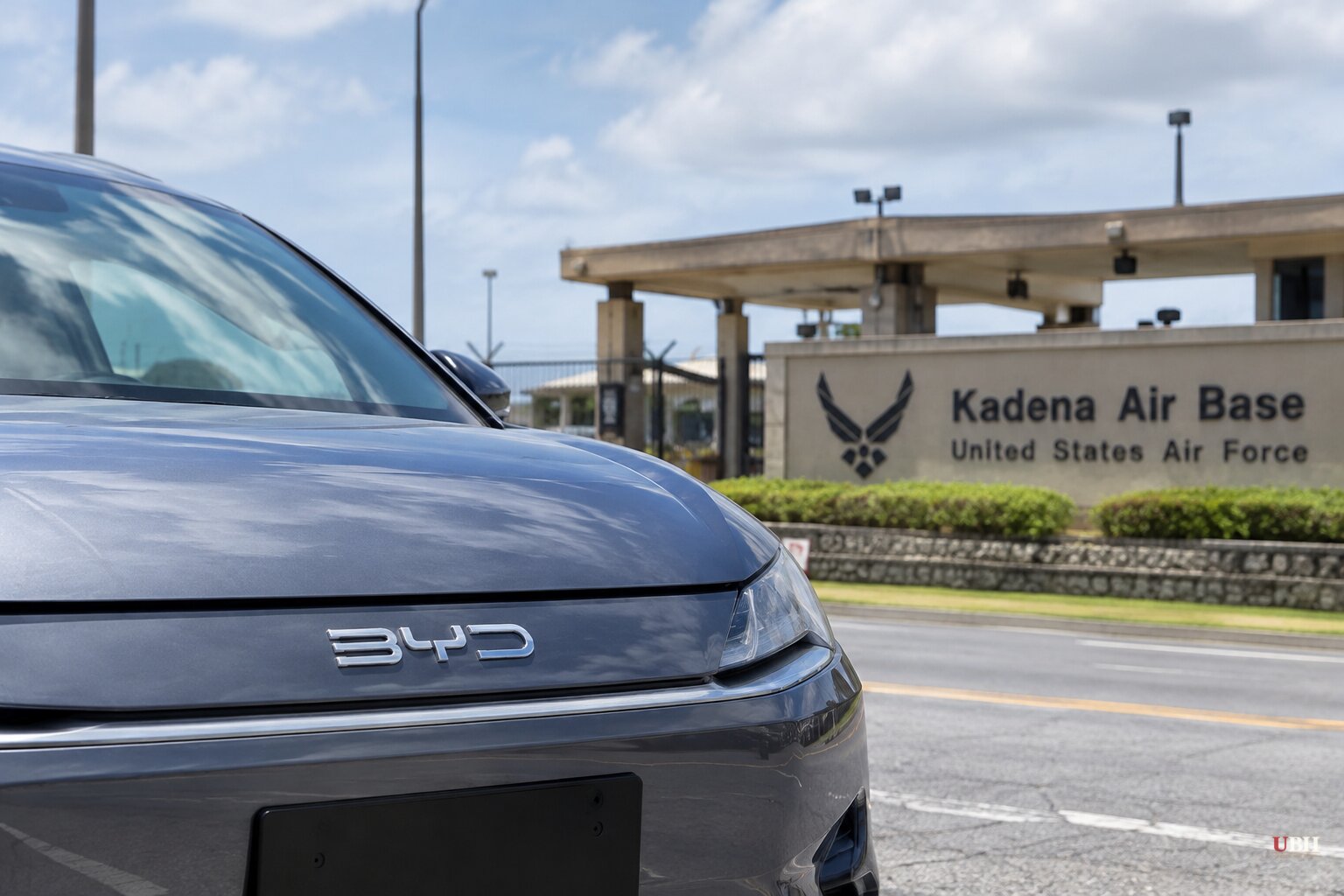
The U.S. military has stopped all BYD vehicles from entering Kadena Air Base on Okinawa. The ban took effect Monday, Oct. 26.
"These vehicles present an unacceptable and unmitigable risk to our personnel and our mission," said Lt. Col. Alli Stormer, a spokesperson for the Air Force's 18th Wing at Kadena.
The restriction is not limited to base residents. It covers privately owned cars, taxis, delivery vehicles and contractor vehicles. Gate security has been told to turn BYD vehicles away and send drivers back out.
What the military has and hasn't said
Stormer did not say what specific threat prompted the base commander's decision. U.S. Forces Japan offered a general rationale instead. "Installation commanders are responsible for protecting their people, facilities, and assigned missions and may implement lawful, risk-informed security measures necessary to mitigate credible threats," spokesperson Col. John Severns said.
The military has not publicly disclosed evidence that a BYD vehicle has transmitted information from the base. The concern, as reported, is the hardware: cameras, sensors, GPS and wireless connectivity built into modern cars. Any of those could capture images or location data around an air base.
The Japan Times reported that U.S. Forces Japan did not explain what prompted the move. BYD had not publicly responded to the ban when the first reports appeared.
Why Kadena
Kadena is the largest U.S. Air Force installation in East Asia. It hosts fighters and aircraft for aerial refueling, surveillance and reconnaissance. It would be at the center of any crisis involving China, Russia or North Korea.
The base also houses the Typhon mid-range missile system, which is believed capable of firing Tomahawk cruise missiles up to 1,600 kilometers. That puts parts of China within range. Typhon was deployed to Japan for joint exercises earlier this year and is being stored at Kadena. The Japan Times reported that the "temporary" storage drew outrage in Beijing.
Bloomberg has reported that Kadena hosts about 20,000 Americans and holds roughly $836 million in munitions.
The Pentagon's BYD history
In June, the Pentagon added BYD to a list of 188 Chinese companies it believes have ties to China's military. Nio, Alibaba and Baidu are on the same list. The designation bars direct procurement and contracting with those firms.
BYD rejected the designation at the time. The company said it would explore administrative and legal options to protect its interests.
That is BYD's stated position: it disputes that it supports the Chinese military. The Pentagon's position is that it believes it does. The Kadena ban is a separate, base-level step that rests on the vehicles' onboard technology.
There is precedent for this kind of restriction. The Defense Department banned the sale and use of Huawei and ZTE smartphones at military bases worldwide in 2018. Last year, Washington also banned the sale of some Chinese vehicles and related hardware and software deemed a national security risk.
China has imposed similar restrictions. It barred Tesla vehicles from some government compounds in 2021 over camera concerns. It lifted that restriction in 2024 after Tesla won an endorsement from the country's top auto industry association.
The business context
BYD overtook Tesla as the world's biggest seller of battery-electric vehicles in 2025. It is pushing into Japan, the world's fourth-largest auto market. In July it launched its Racco electric minicar there, aiming at a segment long dominated by domestic brands.
Other governments are also tightening their messaging on connected cars. In late September, the Dutch government warned that vehicle technology, including GPS, microphones, cameras, entertainment systems and Bluetooth, could be used for spying by state actors.
A single-base ban has little direct effect on a company BYD's size. Whether it spreads is the open question.
What comes next
Yonhap News, the South Korean agency, reported that the restriction could eventually extend to other U.S. installations in Japan and South Korea. Those countries host about 50,000 and 39,000 American troops respectively. No such expansion has been announced, and the Japan Times noted it is unclear whether the BYD ban will reach other U.S. bases in Japan.
Three things are unresolved. The first is whether other base commanders follow Kadena's lead. The second is whether the Japanese government, which hosts the base and where BYD is trying to build a customer base, adopts any restriction of its own. The third is whether BYD responds publicly, or takes the legal route it said it would explore after the June designation.
Sources used for this briefing
7 links from 7 independent newsrooms (syndicated copies of the same report count once)
These are the sources it draws on, linked so you can verify.


