
Unbiased headlines. Facts, not spin.
Unbiased Headlines is an independently owned news organization. We bring you the facts, not opinions, written fresh from 110+ named sources. Sources linked so you can verify it yourself.
 defense
Major Story (7/10)
Oman's Foreign Minister Proposes Gulf-Iran-Iraq Non-Aggression Pact as Saudi, Turkish and Pakistani Officials Meet in Tehran
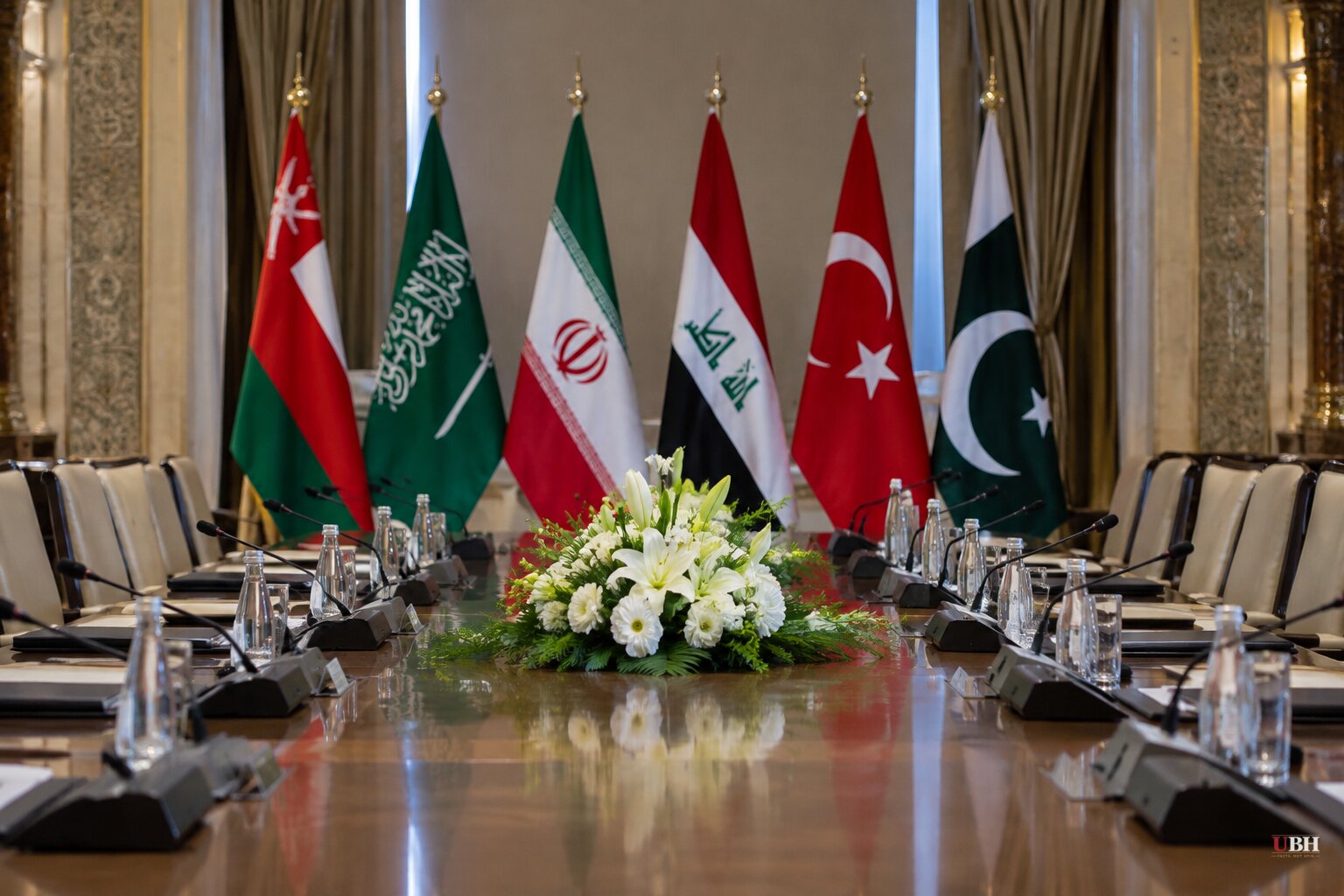
Since Saudi, Turkish and Pakistani delegations began shuttling toward Tehran to head off a return to open war, the diplomacy has moved from crisis management to a bigger question: who should guarantee security in the Gulf. On Monday, Oct. 26, Oman's foreign minister put an answer on the table.
Badr Albusaidi, speaking at Girton College, Cambridge, called for a non-aggression security pact covering all six Gulf states plus Iran and Iraq. Under his proposal, the United States would no longer be the primary provider of security in the region.
Oman breaks ranks
Albusaidi argued that for 50 years Iran "had been systematically excluded from playing any meaningful role in the security arrangements of the region." He said that had produced "profoundly negative consequences, not just for Iran, but for the region as a whole."
He also took aim at the idea that Iran and the Arab Gulf states are natural enemies, calling it "the entirely false perception that there is a fundamental regional antagonism between Iran and the Arab states of the Gulf." In his words, the most damaging outside imposition was "the requirement that Iran be excluded. Not just excluded. Worse. Positioned as the threat against which regional security had to be organised."
On the Strait of Hormuz, he said the issue has become "impossible to resolve because external powers continue to define the terms of engagement, while regional powers are unable to take collective responsibility."
He is the first Gulf leader to say this so explicitly. A security alliance between the mainly Sunni Gulf states and Iran has long been a goal of Tehran's. Albusaidi conceded the talks might be difficult and the idea could look counterintuitive.
Oman sits on the southern side of the strait, Iran on the northern. The two have a temporary agreement on how shipping traffic should be managed.
The facts on the ground
The proposal lands against a hard backdrop. Iran struck Saudi infrastructure weeks ago, and Iran-backed Houthis continue to fire missiles toward Riyadh. Those are the circumstances in which Saudi Defense Minister Khalid bin Salman was in Tehran on Monday.
He met Iran's top security officials and negotiators alongside Pakistani army chief Field Marshal Asim Munir and Ibrahim Kalin, head of Turkey's intelligence service. Their aim was to push for a deal between Tehran and Washington. Saudi Arabia said in a statement that the delegations hoped to find "ways to de-escalate tensions, enhance regional security and promote its stability."
Iran's Foreign Ministry said the agenda was not set. Spokesman Esmail Baghaei said the talks would "undoubtedly address the most pressing threats to regional security." Two regional officials, speaking anonymously, said the Yemen war and the Houthi strikes on Saudi Arabia were also on the table.
Iranian President Masoud Pezeshkian told the visitors that Iran supports any agreement that deepens regional cooperation, resolves differences and makes greater use of the shared resources of Islamic countries. Tehran said the meeting also explored future security arrangements in the region.
Qatari mediators traveled to Tehran on Sunday, coordinating with the United States, according to a regional official who spoke anonymously.
Washington's position and the clock
The diplomatic track has already failed once. Pakistan and Qatar helped broker a June agreement meant to have Iran fully reopen the Strait of Hormuz, end the US blockade of Iranian ports and open talks on a broader settlement covering Iran's nuclear program. It unraveled quickly as both sides resumed attacks.
Baghaei said over the weekend that Iran has not closed the window of diplomacy and that messages are being passed to the US through intermediaries. He accused Washington of persisting in unilateral demands and said Trump and other American officials repeatedly use the phrase "complete surrender," which he said no Iranian accepts.
Israel sees a different threat picture. Prime Minister Benjamin Netanyahu repeated a warning on Sunday that Iran or its proxies could attack before Israel's close election to disrupt the vote, citing intelligence. Israel votes Tuesday, Oct. 27. US midterms follow on Nov. 3.
Albusaidi's argument runs directly against the premise Washington and Jerusalem operate on: that Iran is a threat to be contained. Netanyahu's warning and the Houthi missile fire at Riyadh are the facts that premise rests on. The Omani view is that those same dynamics are products of an arrangement that excludes Tehran.
The US has not been part of any of Monday's talks, and Albusaidi's plan would write it out of the primary security role. Whether Riyadh, which just sent its defense minister to Tehran, or any other Gulf capital endorses the idea is the open question. The next test comes within days: Israel's vote Tuesday and the US midterms on Nov. 3.
Sources used for this briefing
3 links from 3 independent newsrooms (syndicated copies of the same report count once)
These are the sources it draws on, linked so you can verify.


