
Unbiased headlines. Facts, not spin.
Unbiased Headlines is an independently owned news organization. We bring you the facts, not opinions, written fresh from 110+ named sources. Sources linked so you can verify it yourself.
 defense
Major Story (8/10)
Mecca Pact Delegations Hold Tehran Talks on Iran-US Deal as Turkey Moves to Ratify the Treaty
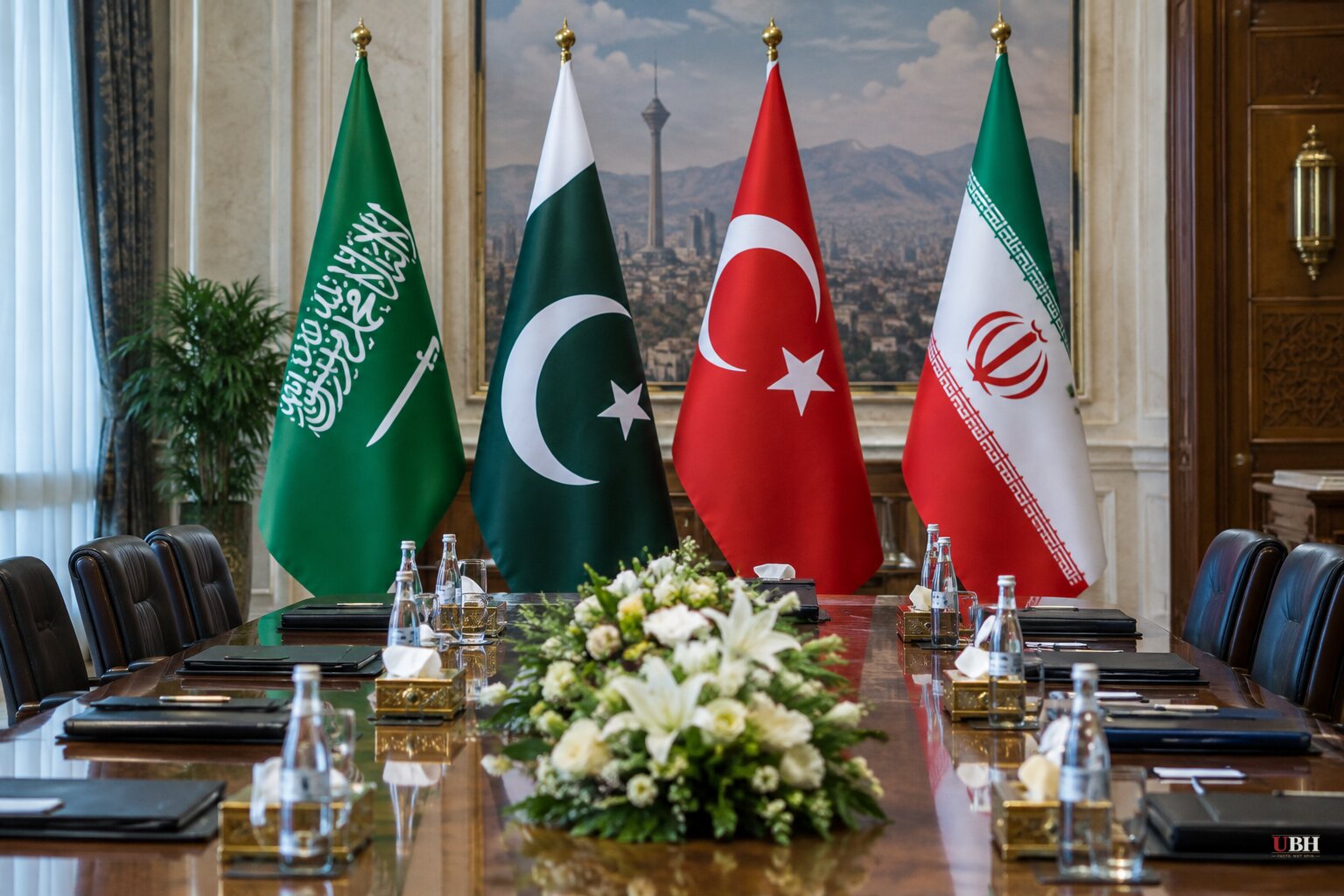
Since the Mecca Joint Defense Agreement was signed on Aug. 7, the three-nation pact has been a paper alliance. Today, Oct. 26, it is being used for diplomacy, as its delegations sit down with Iranian officials in Tehran.
The delegations are Saudi Defence Minister Prince Khalid bin Salman, Pakistani army chief Field Marshal Asim Munir and Turkish intelligence chief Ibrahim Kalin. CNN reports they are meeting Iran's national security chief Mohsen Rezaei and President Masoud Pezeshkian. Iran's deputy Supreme National Security Council secretary, Ali Baqeri-Kani, told state TV the consultations would be with the council.
No outcome has been announced.
Turkey starts the ratification clock
The treaty was formally submitted to Turkish lawmakers on Oct. 21, according to parliamentary records. Speaker Numan Kurtulmus said on Oct. 22 that a parliamentary committee will take it up first, then send it to the General Assembly for debate and a vote. If approved, it becomes law.
Turkey is the first of the three to publicly begin ratification. Pakistan has not sought parliamentary approval, and Saudi Arabia has not announced a separate process. Officials from both countries have already taken part in meetings under the pact.
The agreement commits the three states to closer military cooperation. It includes a collective defense clause: an armed attack on one member is treated as an attack on all. President Donald Trump has welcomed the pact as a step toward regional security.
What each side says the meeting is for
Saudi Foreign Ministry official Rayed Krimly said the visit is meant to support "de-escalation" and "dialogue and diplomatic solutions." He said channels need to open to "prevent the return of military escalation."
Iranian Foreign Ministry spokesman Esmail Baghaei said the talks could be a first step toward "regional security mechanisms." He listed Israel's "expansionist policies," the Palestinian territories, Lebanon and the repercussions of US and Israeli military action against Iran as agenda items. "Sustainable and reliable security in our region will only be possible by building trust and cooperation among the countries of the region," he said.
A senior Pakistani security official said the focus is a regional non-aggression network. The agenda also covers US-Iran talks, Houthi attacks on Saudi Arabia, the Strait of Hormuz and the US blockade of Iranian ports, the official said.
Former Iranian foreign minister Javad Zarif, a longtime advocate of a regional security alliance, wrote: "Regional security is not imported, it must be created by the people of this very region together."
Houthis and a possible Israel card
A separate senior security official in Islamabad told RFE/RL that one main aim is to convince Iran to use its influence over the Houthis to stop attacks on Saudi Arabia. The official said the alliance is prepared to raise closer Saudi-Israeli security cooperation as leverage.
"The key question is why Iran should comply? The answer is that Saudi Arabia may ask for support from Israel and that will potentially require them to join the Abraham Accords," the official said. The same official said Iran may rein in the Houthis but is unlikely to soften its stance on negotiating with the United States.
The Guardian reports that some in Iran feared the Mecca pact was built to challenge Tehran. The signatories have insisted it is purely a mutual defense arrangement. Officials were also understood to be discussing Iran's possible inclusion in a wider security pact involving Islamic countries.
The clock behind the talks
Hamidreza Azizi, senior Iran analyst at the International Crisis Group, said the "immediate priority seems to be finding a way to prevent the resumption of war between Iran and the United States." He described the meeting as a continuation of diplomacy already under way, and said regional states are increasingly worried time is running out.
Trump said Friday the US may carry out another military operation against Iran. Iranian security officials told Reuters that Tehran has drawn up detailed plans to attack Gulf undersea cables if the US and Israel strike again.
A June interim agreement produced by Pakistani and Qatari mediation did not hold, and fighting between Iran and the US resumed. Qatari mediators were in Tehran on Sunday, an official told Reuters.
CNN, citing two US officials and an Israeli security source, reports that Prime Minister Benjamin Netanyahu is pushing for a joint US-Israel strike on Iran. The Israeli source said Trump has asked that any action wait until the US is ready, and earlier told Netanyahu to hold off until after the Nov. 3 midterms. Netanyahu's office dismissed the report as "fake news."
Munir was in Tehran last week, where he reportedly delivered a "last warning" to the Iranian government, according to Islamabad-based analyst Azaz Syed.
Two markers are now on the calendar. The Turkish parliamentary committee has yet to take up the treaty, and no date has been announced for a General Assembly vote. The US midterms fall on Nov. 3, the date several sources tie to the timing of any renewed strike decision.
Sources used for this briefing
7 links from 7 independent newsrooms (syndicated copies of the same report count once)
These are the sources it draws on, linked so you can verify.


