
Unbiased headlines. Facts, not spin.
Unbiased Headlines is an independently owned news organization. We bring you the facts, not opinions, written fresh from 110+ named sources. Sources linked so you can verify it yourself.
 defense
Major Story (8/10)
Lebanese security sources say Iran sent Hezbollah tens of millions to rearm, as Tehran hosts Saudi, Turkish and Pakistani envoys
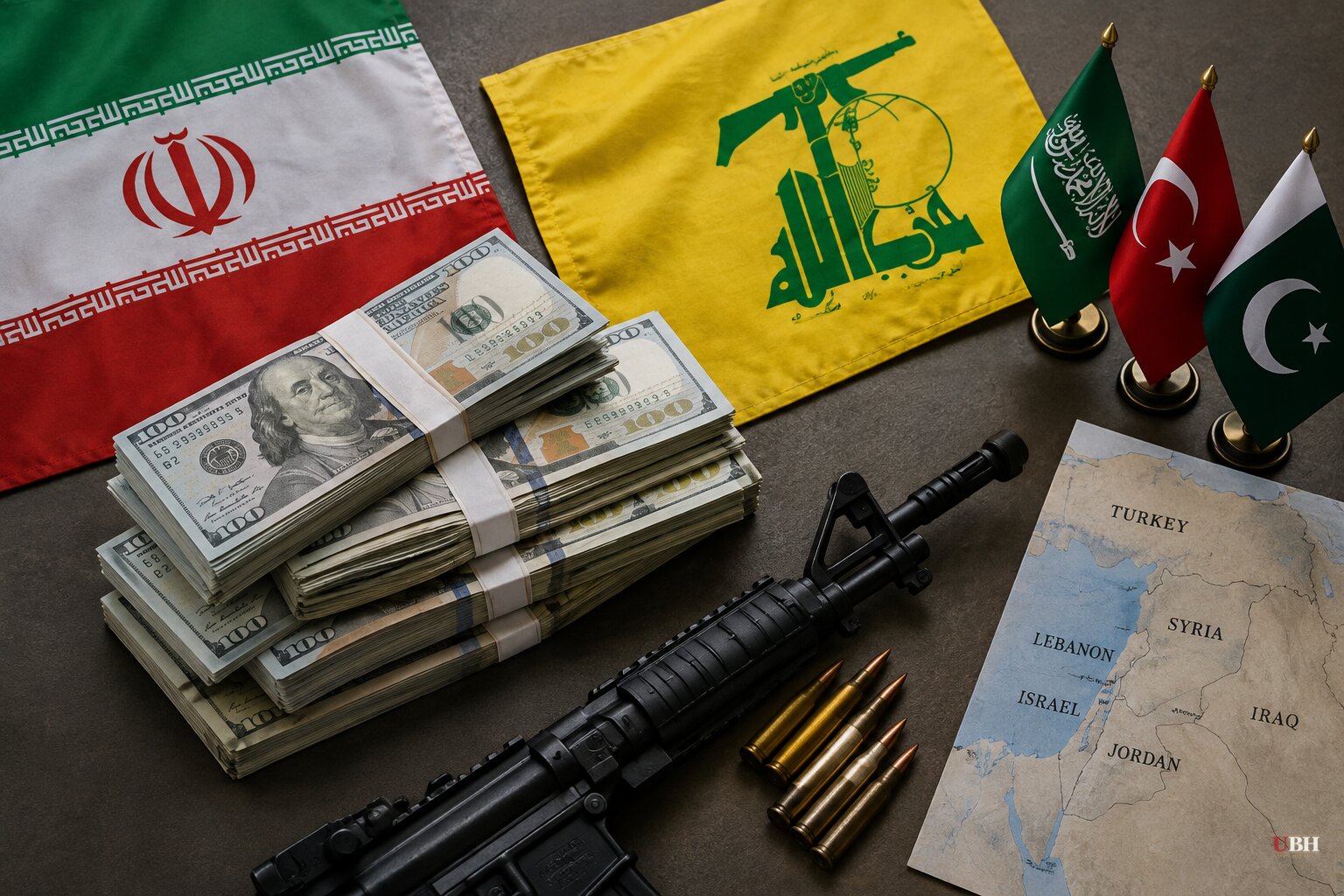
Hezbollah has spent the past three months preparing for a possible resumption of fighting with Israel, funded in part by fresh cash from Iran, according to Lebanese security sources cited in a Reuters report published today, Oct. 26.
Two Lebanese security sources told Reuters the group has used the lull in hostilities since June to rearm. The focus is on buying explosives and producing drones that can be flown into Israeli positions.
One of those sources and another source close to Hezbollah said Iran provided tens of millions of dollars for military capabilities. That comes on top of about $200 million Tehran sent to help displaced families in Shiite areas, which Reuters reported earlier this month.
A rebuilding force, not a ready one
Hezbollah has taken heavy damage. Thousands of its fighters and many of its leaders have been killed in two wars with Israel since 2024, and much of its arsenal was destroyed. Israeli forces now occupy villages in southern Lebanon, and political pressure for its disarmament has grown in Beirut.
The sources said the group has not yet fully rebuilt its stockpiles or fighting force. One of them and three other security officials said Hezbollah is also restoring command-and-control structures that broke down in key battles.
Hezbollah's media office rejected the idea that its command systems had failed. It said Israel's occupation of Lebanese land makes resistance a legitimate right. Israel's military declined to comment. Iran's mission to the U.N. in Geneva did not immediately respond to Reuters.
A State Department spokesman said Washington will keep squeezing Hezbollah's finances through sanctions and other measures. A Treasury spokesperson said Iran is running out of money and ways to move it.
The Wall Street Journal separately reported that Lebanese authorities recently stopped a truck carrying more than 1,000 pounds of C-4 and TNT from the Bekaa Valley toward the Beirut area, and detained two people. According to the Journal, Hezbollah confirmed the cargo was its own and has asked Lebanese security authorities to hand it back. A State Department official told Reuters that Secretary of State Marco Rubio urged Lebanese President Joseph Aoun not to return it.
Hezbollah's war started March 2
Hezbollah opened fire in support of Iran on March 2, after the U.S.-Israeli attack on Iran in February. The Israeli offensive that followed killed more than 4,000 people and displaced about a quarter of Lebanon's population.
Fighting largely subsided over the summer under an interim Iran-U.S. deal that included a Lebanon ceasefire. Washington then mediated Lebanon-Israel talks. The U.S.-Iran deal has since collapsed, but full-scale war has not returned to Lebanon, though Israel keeps up deadly strikes in the south.
Tehran talks with the Mecca Pact states
The rearmament report landed the same day Iranian President Masoud Pezeshkian met in Tehran with Saudi Defense Minister Prince Khalid bin Salman, Pakistani Field Marshal Asim Munir and Turkish intelligence chief Ibrahim Kalin. Saudi Arabia, Turkey and Pakistan signed the Mecca Defense Pact in August.
Pezeshkian urged "regional unity and cohesion" and called on Islamic countries to "stand together and adopt a coordinated position." Iranian state television said the participants agreed to continue talks on cooperation, including regional peace and security.
It was the first high-level contact between Iran and the three countries since the war spread to Saudi Arabia and Yemen. Yemen's Houthis have been hitting Saudi Arabia nearly daily, killing more than 20 people and disrupting flights and oil exports. Egypt has approved military support for Riyadh. The Saudi-led coalition said it destroyed two ballistic missile launchers in northwestern Yemen.
Saudi security analyst Hesham Alghannam wrote on X that the meeting "may be the last chance before escalation spirals out of control."
Dueling claims over where the war stands
The rhetoric from Washington and Tehran points the other way. Speaking at a midterm rally in Montana, President Donald Trump said Iran has no navy or air force, its army is "decimated" and its leaders are "gone." He added: "I should have probably left the leaders because I don't know who we're negotiating with."
Iranian Army spokesperson Mohammad Akraminia answered that Iran's air defenses "far surpass pre-war and wartime levels." He said that if the U.S. leaves the region, "the Strait of Hormuz will reopen," and "if it doesn't leave, we'll expel it."
Revolutionary Guards spokesperson Hossein Mohebbi has said Iran has "new targets that have not yet been attacked" and that the Guards have prepared for "long-term war." Iranian officials have floated cutting undersea internet cables, striking AI data centers and hitting regional oil and gas facilities if fighting resumes.
Nearly nine months in, both sides claim victory and the conflict is a stalemate. The costs are mounting abroad. Spanish Prime Minister Pedro Sánchez said after a European Council summit in Brussels that the war has cost Europeans more than 100 billion euros, about $112 billion. He said those who opposed it "were right when we said NO to war." Spain approved more than 12 billion euros in relief measures.
In Tehran, residents told CNN they are stocking water and charging power banks, waiting for bombing to restart.
What to watch
Two questions are open. The first is whether Aoun's government returns the seized explosives to Hezbollah despite Rubio's request. The second is whether the Tehran talks with Riyadh, Ankara and Islamabad produce anything that slows the slide toward a renewed U.S.-Iran war. The participants have agreed only to keep talking.
Sources used for this briefing
6 links from 6 independent newsrooms (syndicated copies of the same report count once)
These are the sources it draws on, linked so you can verify.


