
Unbiased headlines. Facts, not spin.
Unbiased Headlines is an independently owned news organization. We bring you the facts, not opinions, written fresh from 110+ named sources. Sources linked so you can verify it yourself.
 defense
Major Story (7/10)
Event date: October 19, 2026 ·
Ukraine Hits Ryazan Refinery After Zelenskyy Declares Energy Truce Over, Citing Lost U.S. Intelligence
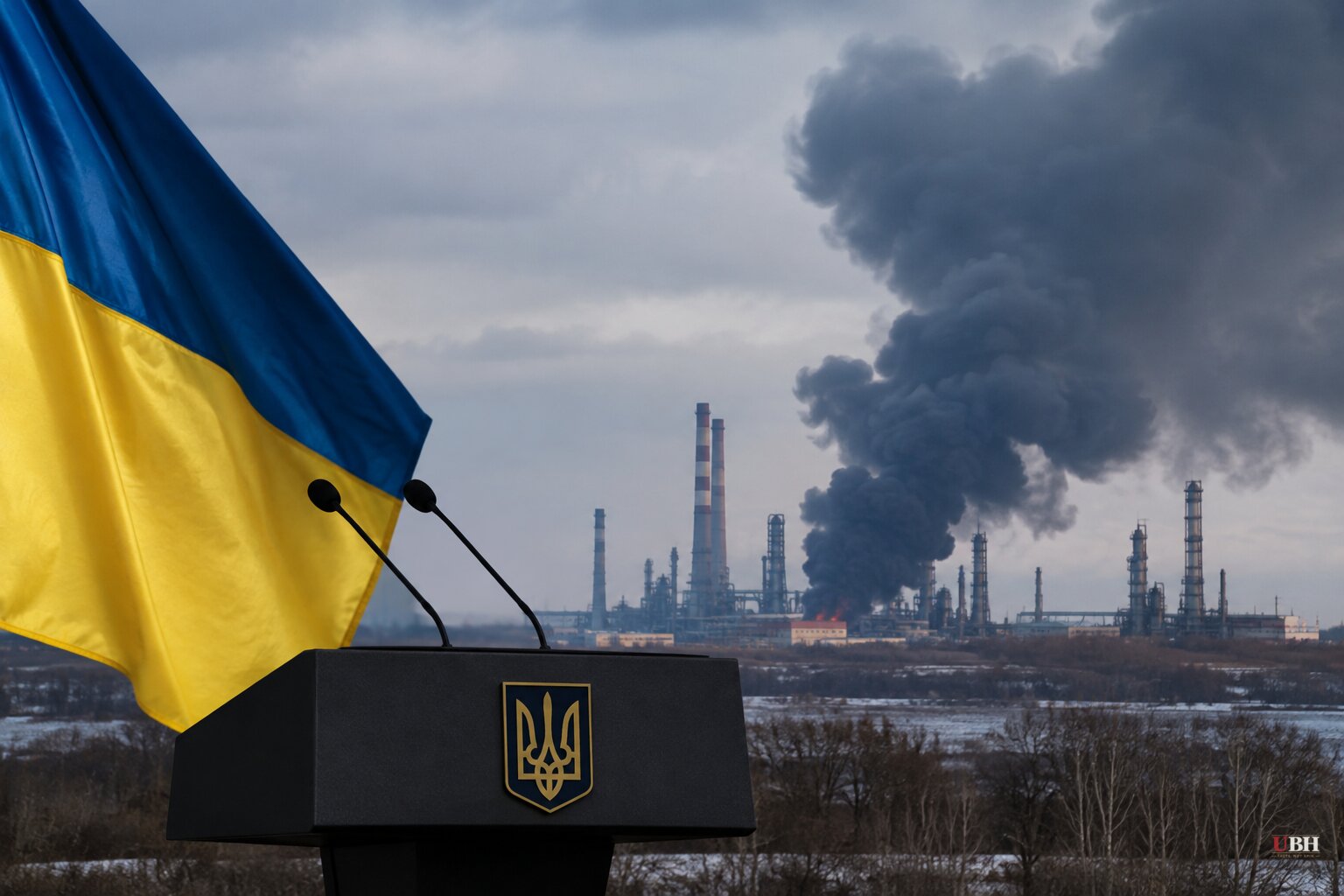
Since Trump demanded on Sunday, Oct. 18 that Russia and Ukraine stop attacking each other's energy infrastructure, the truce has lasted about four days. Ukrainian drones hit a refinery in Russia's Ryazan region early last Thursday, hours after President Volodymyr Zelenskyy said the arrangement Moscow spurned was finished.
The strike started a fire at the plant, about 300 kilometers (180 miles) southeast of Moscow, according to Russia's Defense Ministry and Ryazan Gov. Pavel Malkov. A senior Ukrainian official, speaking anonymously, confirmed Ukraine carried out the attack.
Zelenskyy: 'We're done'
In an interview with the Financial Times, Zelenskyy said Ukrainian attacks on Russian oil refineries would resume. "We're done," he was quoted as saying.
He also told Piers Morgan on the British journalist's YouTube show that he felt betrayed by Trump. Asked directly, he answered: "Really, yes, between us." He added that "our country has to survive, and we count on our real partners."
Zelenskyy listed three grievances. Russia kept bombing Ukrainian energy sites despite Trump's demand. Ukraine says it was denied the usual Western intelligence on Russian ballistic missile launches. And limits were placed on its use of Starlink terminals, which he called vital for both defense and attack operations.
He also slammed the diesel import deal Trump struck with Vladimir Putin, arguing it lets Russia press on with an invasion now more than 4½ years old. U.S. efforts under Trump to end the war have made no progress.
Moscow's version
The Kremlin disputes Kyiv's account of the truce. Spokesman Dmitry Peskov said Ukraine never stopped hitting refineries, which have hurt Russia. Ukraine's government maintains it was heeding the ceasefire.
Foreign Minister Sergey Lavrov called Ukraine's strikes on oil facilities a "direct and crude challenge to President Trump."
Neither side's claim about who broke the pause first has been independently confirmed.
What Russia hit in the meantime
Ukraine's grid took heavy damage in the days around the truce announcement. The Ukrainian Ministry of Energy said more than one million consumers lost power at one point on Oct. 17.
On the night of Oct. 18 to 19, Russia launched Iskander-M or S-400 ballistic missiles, Iskander-K cruise missiles and 269 drones, according to the Ukrainian Air Force. Air defenses downed 247 targets, four cruise missiles and 243 drones. Not every ballistic missile was stopped.
Ukrainian authorities said more than ten energy facilities were damaged and about 550,000 households lost power. Zelenskyy later put the number of affected substations and other critical facilities at 28.
The attacks continued. Early Tuesday, Oct. 20, drones hit the same critical energy site in the Lviv region twice, regional governor Maksym Kozytsky said. In neighboring Khmelnytsky region, a church's facade, windows and bell tower were damaged and an enterprise was struck, according to military administration chief Serhii Tiurin. A Monday-evening strike on the city of Khmelnytsky killed two women.
Kyiv Post has put the human cost of the intelligence gap at at least six dead and 21 injured from Russian ballistic missiles in the first week, a count it says is incomplete.
The interceptor problem
Ballistic missiles are the hardest threat to stop. Patriot systems remain Ukraine's main defense, and the stockpile is thin. The Washington Post reported on Oct. 15 that Ukraine had only a few Patriot missiles left after earlier Russian barrages. The exact inventory is not public.
The warning data is central to that gap. A few hits on the right substations can do more damage than hundreds of intercepted drones.
NATO's eastern flank sees the same drones
The same cheap-drone problem is showing up inside the alliance. Romanian F-16s recently shot down a pair of jet-powered drones over the Black Sea with Sidewinder missiles, Newsweek reported. Romania has logged 35 unauthorized drone entries in 2026, against nine in all of 2025 and seven in 2024.
Lt. Gen. Guillaume Thomas, deputy commander of NATO Allied Air Command, told Newsweek the alliance will use fighter jets and missiles when civilians or infrastructure are at risk. Arun Dawson of King's College London's Freeman Air and Space Institute said each interception also burns flying hours, maintenance capacity and aircrew readiness.
What comes next
The Ryazan strike is the first confirmed Ukrainian refinery hit since Zelenskyy's announcement. Trump has demanded that both sides stand down, and his diesel deal with Putin remains in place. Ukraine is heading into peak winter demand with a damaged grid and a short supply of interceptors. Whether Washington restores ballistic-launch warnings and Starlink access is the open question.
Sources used for this briefing
6 links from 5 independent newsrooms (syndicated copies of the same report count once)
These are the sources it draws on, linked so you can verify.


