
Unbiased headlines. Facts, not spin.
Unbiased Headlines is an independently owned news organization. We bring you the facts, not opinions, written fresh from 110+ named sources. Sources linked so you can verify it yourself.
 defense
Major Story (8/10)
Event date: October 23, 2026 ·
Ten European Countries Are Working With France on Nuclear Deterrence, WSJ Reports, as RAF Jets Join French Drill
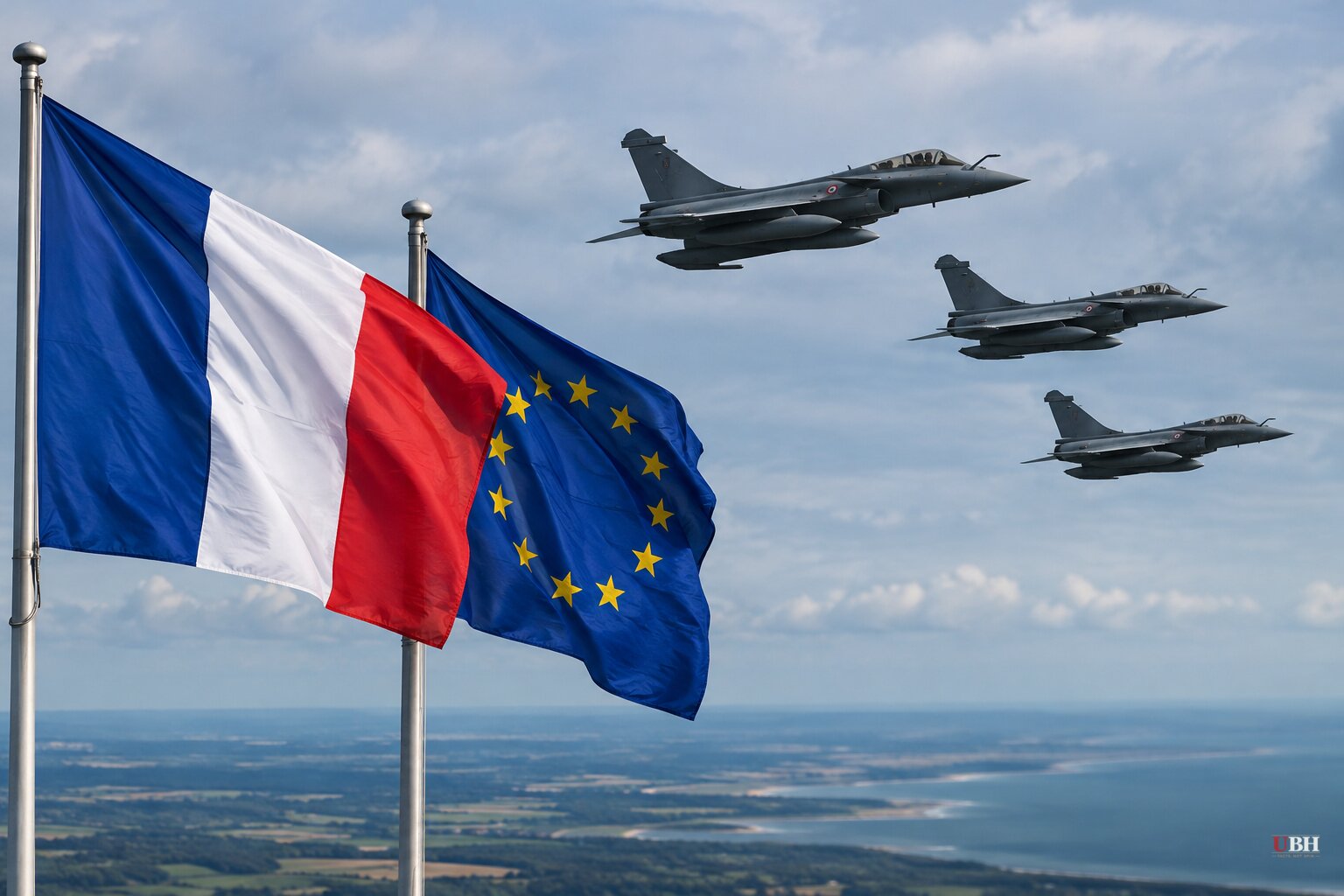
Since French President Emmanuel Macron announced the "forward deterrence" initiative in March, 10 European countries have begun working with Paris on a plan to extend France's nuclear deterrent across the continent, the Wall Street Journal reported today, Oct. 26.
The UK, Germany, Poland, the Netherlands, Belgium, Finland, Norway, Sweden and Denmark are among the participants, with varying levels of involvement, according to the WSJ.
What the plan involves
The plan covers new infrastructure, communications links, early-warning systems and intelligence sharing with allies. It also includes deployments of nuclear-capable French Rafale fighter jets across Europe.
France has not convened the partners in one room. Senior defense officials told the WSJ that Paris has held separate talks with each country, so the partners keep checking with one another to compare what the French told them.
Macron also announced in March that France would resume making nuclear devices for the first time in decades. He said the size of the French stockpile would become confidential.
Despite the foreign involvement, the nuclear force remains entirely under French control, the WSJ reported. Estimates put France at roughly 290 warheads and Britain at about 225.
The drill over the Mediterranean
The plan has a visible military side. On Oct. 20 and 21, the French Armed Forces Ministry said, Royal Air Force Eurofighter Typhoons escorted French Rafales on a simulated nuclear-strike mission over the Mediterranean. The exercise was code-named Rummy.
It was the first time British aircraft took part in a French airborne nuclear drill. No nuclear weapons were involved, the ministry said. The aircraft took off from Saint-Dizier air base in northeastern France, and A330 MRTT tankers supported the mission.
French Armed Forces Minister Catherine Vautrin said: "Having independent nuclear forces doesn't exclude coordination."
Gen. Fabien Mandon, the French chief of staff, said the crews showed a "very high level of interoperability and a capability to coordinate."
Etienne Marcuz, a senior analyst at the Fondation pour la Recherche Stratégique, called it "a revolution for the Strategic Air Forces, which have always operated in complete autonomy since their creation in the 1960s."
British Defence Secretary Wes Streeting called it "a landmark step in UK-France defence co-operation."
The UK has submarine-launched missiles but no airborne nuclear component. France has both.
The 2025 agreement behind it
The drill follows the Northwood Declaration, signed by Prime Minister Keir Starmer and Macron in July 2025. In it, the two countries said there was no extreme threat to Europe that would not prompt a response by both nations.
Neither country has announced plans to merge its nuclear forces. Decisions on use stay with each national authority.
In early October, France also carried out the first test launch of its M51.3 submarine-launched ballistic missile off Brittany. The missile carried no nuclear warhead. The launch certified the submarine Le Vigilant to deploy the weapon after a major overhaul.
Doubts about Washington
The WSJ tied the project to doubts in Europe about whether the U.S. would risk nuclear war to defend a European ally. It said those doubts have grown as President Donald Trump strikes energy deals with Russian President Vladimir Putin and presses Ukraine.
Trump and Putin spoke by phone on Oct. 9, and the call produced a deal for the U.S. to buy Russian diesel fuel and help sell it on global markets, the WSJ reported, citing a former Russian intelligence officer briefed on the call.
Trump has said he would do "anything he can" to end the war, and has also said it is "time for somebody else to negotiate on behalf of Ukraine." Ukrainian President Volodymyr Zelensky said Sunday that Ukraine, the U.S. and Russia are expected to hold trilateral talks in November. Kremlin spokesman Dmitry Peskov said Friday that officials were preparing for a meeting in the United Arab Emirates.
A French adviser to Macron, identified as Chatel, made the case for the French approach at the Warsaw Security Conference: "There is one difference between France and the US. We share the same geography, we are part and parcel of the same continent."
One government minister from another European country told the WSJ: "The French will let us participate in their nuclear deterrence as much as the Americans."
What partners say it is, and is not
Not everyone describes it as a replacement for the American umbrella. Norwegian Foreign Minister Espen Barth Eide said the plan is not meant to "replace anything. It supplements the nuclear guarantees that were already there" from the U.S.
Finnish President Alexander Stubb was specific about limits. "We don't have any plans to put nuclear weapons on Finnish soil in peacetime," he said. "But we do have plans for creating a strategic dilemma for Russia."
Stubb said Finland wanted information and involvement. "We don't know where this is going to end," he said. "It's probably a 10- to 15-year process."
The next concrete dates are on the diplomatic calendar. The U.S.-Russia-Ukraine talks are expected in the UAE in November. No date has been announced for a joint meeting of the countries working with France on the deterrence plan.
Sources used for this briefing
6 links from 6 independent newsrooms (syndicated copies of the same report count once)
These are the sources it draws on, linked so you can verify.


