
Unbiased headlines. Facts, not spin.
Unbiased Headlines is an independently owned news organization. We bring you the facts, not opinions, written fresh from 110+ named sources. Sources linked so you can verify it yourself.
 defense
Major Story (7/10)
Event date: October 21, 2026 ·
Zelensky Says U.S. Missile Warnings and Starshield Speeds Are Restored; Rubio Denies Any Cutoff
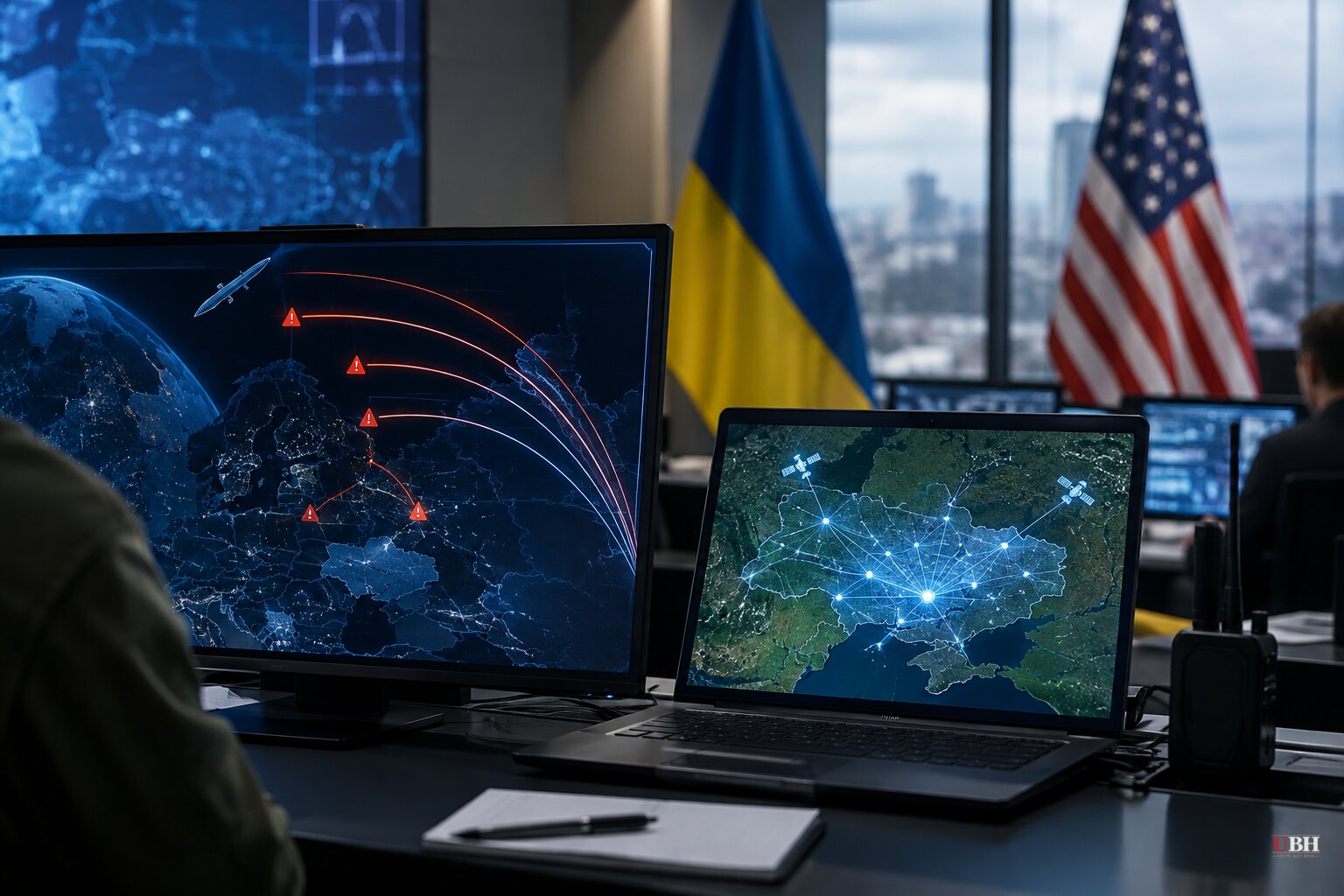
Ukrainian President Volodymyr Zelensky says the United States is once again giving Kyiv early warning of incoming Russian ballistic missiles. The U.S. says it never stopped.
The two accounts have not been reconciled.
The warning gap
Zelensky said on Oct. 20, on a visit to Norway, that the alerts were working again. "We are thankful that early warning is now working," he said. Ballistic missiles leave defenders far less time to react than drones or cruise missiles, so the alerts decide whether sirens sound and interceptors launch in time.
For at least a week beforehand, Zelensky said, Ukraine had not received warnings about ballistic missiles aimed at the capital. In an overnight attack from Oct. 18 to Oct. 19, he said, the country got advance notice only for the second of two ballistic waves. That barrage killed at least four people and injured about 55, and hit energy and civilian infrastructure nationwide.
On Oct. 20, Russia struck again, killing at least nine people, officials said.
Zelensky told the Financial Times earlier this month that Ukrainian military officials were told by their U.S. counterparts: "if you will not stop [the energy strikes], we will block intelligence." That is Zelensky's account of what U.S. military contacts said. No U.S. official has confirmed it.
Rubio's denial
Rubio, traveling in India, rejected the claim flatly. "I saw somebody associated with the Ukrainian government say that people in Ukraine are dying because the U.S. is denying them information," he told reporters in Mumbai on Oct. 20. "That's outrageous. That's just simply not true."
He said the U.S. had not changed how it treats Ukraine and was "providing the same warnings to them now that we always have." Slower internet speeds, he said, could be a technical matter, and "we're looking at it." Rubio did acknowledge mutual frustration over intelligence sharing and weapons supplies.
Zelensky described a call with Rubio as "constructive," covering Starlink, ballistic missile interceptors and intelligence. The two planned to talk again within days.
Starshield throttled, then restored
Ukrainian forces reported that Starshield-enabled drones stopped functioning at speeds between 130 and 161 kilometers per hour, affecting intermediate-range drones, jet-powered drone interceptors and frontline logistics. Starshield is the SpaceX satellite service Ukraine's military relies on.
In a later interview with Ukrainian channel TSN, Zelensky said the service had run normally since the early hours of Oct. 24. He tied both the restored warnings and the full-speed internet to his meeting with Witkoff in Oslo. Rubio's position remains that no directive was issued to withhold anything, so the cause of the disruption is unexplained.
Trump's pressure and the energy fight
The disputes sit inside a sour relationship. Trump told reporters at the White House that "we want Zelenskyy to make a deal," adding that the U.S. has "given a lot to Ukraine" and gotten "absolutely nothing back." He has said it is time for "somebody else to negotiate on behalf of Ukraine," and that he would meet Vladimir Putin and Xi Jinping, not Zelensky, to work out an end to the war.
Zelensky rejected that. "There can be nothing about Ukraine with Ukraine," he said.
Earlier this month Trump announced a deal for Russian diesel and a U.S.-declared "energy ceasefire" that neither Moscow nor Kyiv had publicly confirmed. The diesel announcement drew bipartisan criticism and anger among European allies. Zelensky said he halted attacks on Russian oil infrastructure for three days, then said Ukraine would resume because Russian attacks on Ukrainian energy sites continued. "We're done," he told the FT. Trump has pressed Kyiv to stop hitting Russian refineries while he works to bring down energy costs ahead of the midterm elections.
Russian Foreign Minister Sergey Lavrov said Moscow is willing to listen to new U.S. proposals but expects no "miracle," and has said there will be no ceasefire to "bring him back to his senses and pump him full of weapons."
What the talks produced
Zelensky met Witkoff, Norwegian Prime Minister Jonas Gahr Støre and Finnish President Alexander Stubb in Oslo on Oct. 20. Jared Kushner joined by video. Stubb said "genuine progress" was made but that patience was needed.
Witkoff then met Putin outside St. Petersburg on Oct. 21. Putin agreed "in principle" to resume trilateral negotiations with the U.S. and Ukraine after Nov. 10, according to Putin's foreign affairs adviser Yuri Ushakov, as reported by The Associated Press.
Zelensky told Fox & Friends that he is open to freezing current front lines. "Right now, we have to freeze," he said, calling it the minimum needed from Russia before Ukraine seeks security guarantees from the U.S. and Europe.
He has also drawn limits. Technical talks among Ukrainian, Russian and U.S. teams in November, he said, will not cover the size of Ukraine's armed forces or impose neutrality. "The issue of territories is a red line that can be discussed exclusively at the level of leaders," he said. Russia occupies nearly 20 percent of Ukrainian territory.
Kremlin spokesman Dmitry Peskov said on Oct. 23 that a three-way meeting is planned for November in the United Arab Emirates. Zelensky has said that meeting would follow the technical talks, with an energy ceasefire, Black Sea grain shipments and prisoner exchanges on the agenda.
It is unclear whether the warnings and satellite speeds stay on. Washington says nothing was ever switched off, and Kyiv says it was. The November talks are the next test.
Sources used for this briefing
6 links from 6 independent newsrooms (syndicated copies of the same report count once)
These are the sources it draws on, linked so you can verify.


