
Unbiased headlines. Facts, not spin.
Unbiased Headlines is an independently owned news organization. We bring you the facts, not opinions, written fresh from 110+ named sources. Sources linked so you can verify it yourself.
 defense
Major Story (7/10)
Event date: October 19, 2026 ·
CENTCOM Puts Iran War Cost at $47 Billion, Up More Than $3 Billion Since September
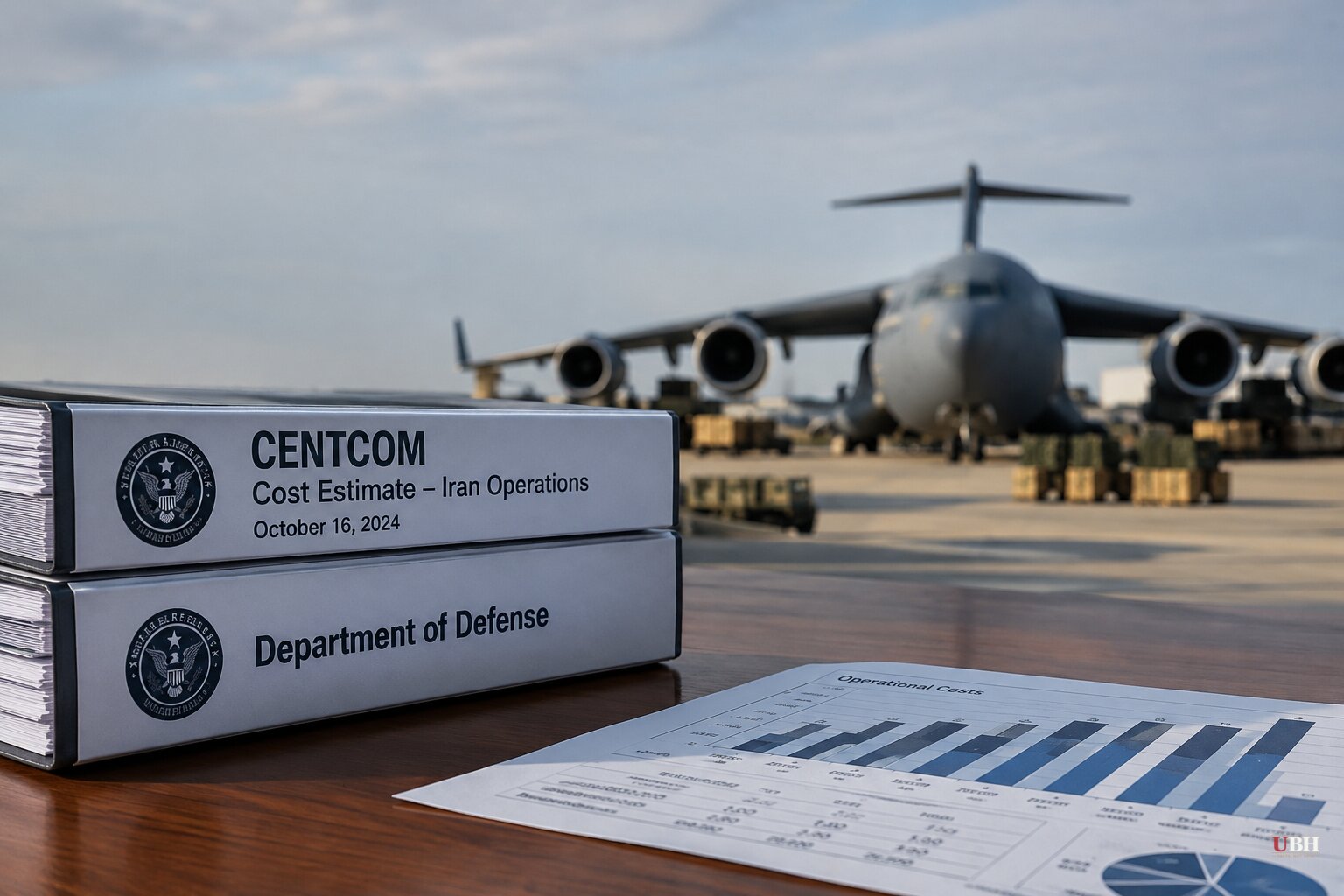
Since the war with Iran began in late February, the Pentagon's own price tag has kept climbing. The latest figure is $47 billion, according to a U.S. Central Command estimate dated Oct. 16 and shared with Congress. The Hill obtained it Tuesday, Oct. 27.
That is more than $3 billion above the roughly $43.6 billion the Pentagon cited in early September.
Where the $47 billion goes
Munition replacement is the biggest item at $29 billion. Nearly $12 billion is obligated for the incremental costs of military operations. Another $6.1 billion covers replacing lost equipment.
Air Force support for deployed personnel, airlift, bases, communications and transportation in theater is listed at $7.6 billion.
The estimate leaves out the cost of repairing damaged U.S. military bases in the Middle East. The real total is higher than the number on the page.
The cost to households
The Pentagon's bill is only part of it. Mark Zandi, chief economist at Moody's Analytics, estimates the war has cost U.S. consumers about $265 billion since late February. He puts that at roughly $2,000 in higher costs for the average American household.
Zandi says energy accounts for about $1,100 of it, and that tally is rising by roughly $50 a week at current prices.
AAA puts the national average for gasoline at $4.34 a gallon, up from $2.98 before the conflict. Tuesday was the 165th day this year at or above $4, the most in any calendar year since AAA began tracking in 2000. The prior record was 158 days in 2022.
Diesel remains near all-time highs. Wage growth slowed in September to a five-year low, and real wages have fallen almost every month since the war began.
Oil is still elevated. On Monday, Oct. 26, Brent crude settled at $109.55 a barrel, down 31 cents. West Texas Intermediate settled at $103.66, up $2.25 and its highest close since Sept. 15, according to Reuters.
The White House response
The White House disputes Zandi's credibility. A spokesperson told CNN: "Mark Zandi is a Democrat donor who is frequently wrong – including predicting multiple recessions that never happened." The spokesperson did not offer a competing cost figure in the response quoted.
Trump has argued in the past that higher gas and diesel prices are a small price to pay for keeping Iran from getting a nuclear weapon. At a rally in Corpus Christi, Texas, on Tuesday, he said the U.S. is "making an absolute fortune because of the situation" in the Middle East and predicted the war would "end very soon." He did not offer figures to support the first claim.
The Pentagon's own number does not show a profit. It shows $47 billion in costs, and that is before base repairs.
What comes next
CENTCOM has drawn up plans for follow-up strikes on Iran if the White House authorizes them, The Hill previously reported. The outlet also reports that Trump is weighing strikes after the midterm elections.
Axios reported that War Secretary Pete Hegseth met privately with Israeli Prime Minister Benjamin Netanyahu in Israel on Monday, days before Israel's national elections. The two governments are reportedly discussing a resumption of military operations against Iran. A Pentagon spokesperson declined to comment.
Trump's public rhetoric has stayed hot. In Kansas on Monday he said Iran's rulers had killed Americans with roadside bombs and claimed the regime had killed "75,000 minimum protesters" in the last eight months. He offered no source for that figure, and none of the material here independently verifies it. He also described his request for help from NATO allies as a test, saying he asked for assistance the U.S. "didn't need" to see whether they would give it.
Iran is making its own threats. IRGC spokesperson Hossein Mohebbi said Monday that seven major cables pass beneath the Strait of Hormuz and that "all the world's internet and commercial data depend on them," adding, "We are reminding the enemy of this so they know," according to Iran International.
It is unresolved whether the White House authorizes new strikes after the midterms. The September-to-October increase of more than $3 billion came during a stretch without a new round of major operations, and Congress has the Oct. 16 estimate in hand.
Sources used for this briefing
4 links from 4 independent newsrooms (syndicated copies of the same report count once)
These are the sources it draws on, linked so you can verify.


