
Unbiased headlines. Facts, not spin.
Unbiased Headlines is an independently owned news organization. We bring you the facts, not opinions, written fresh from 110+ named sources. Sources linked so you can verify it yourself.
 defense
Major Story (8/10)
IAEA Chief Tells UN Security Council He Still Cannot Verify Iran's 440 kg of Highly Enriched Uranium
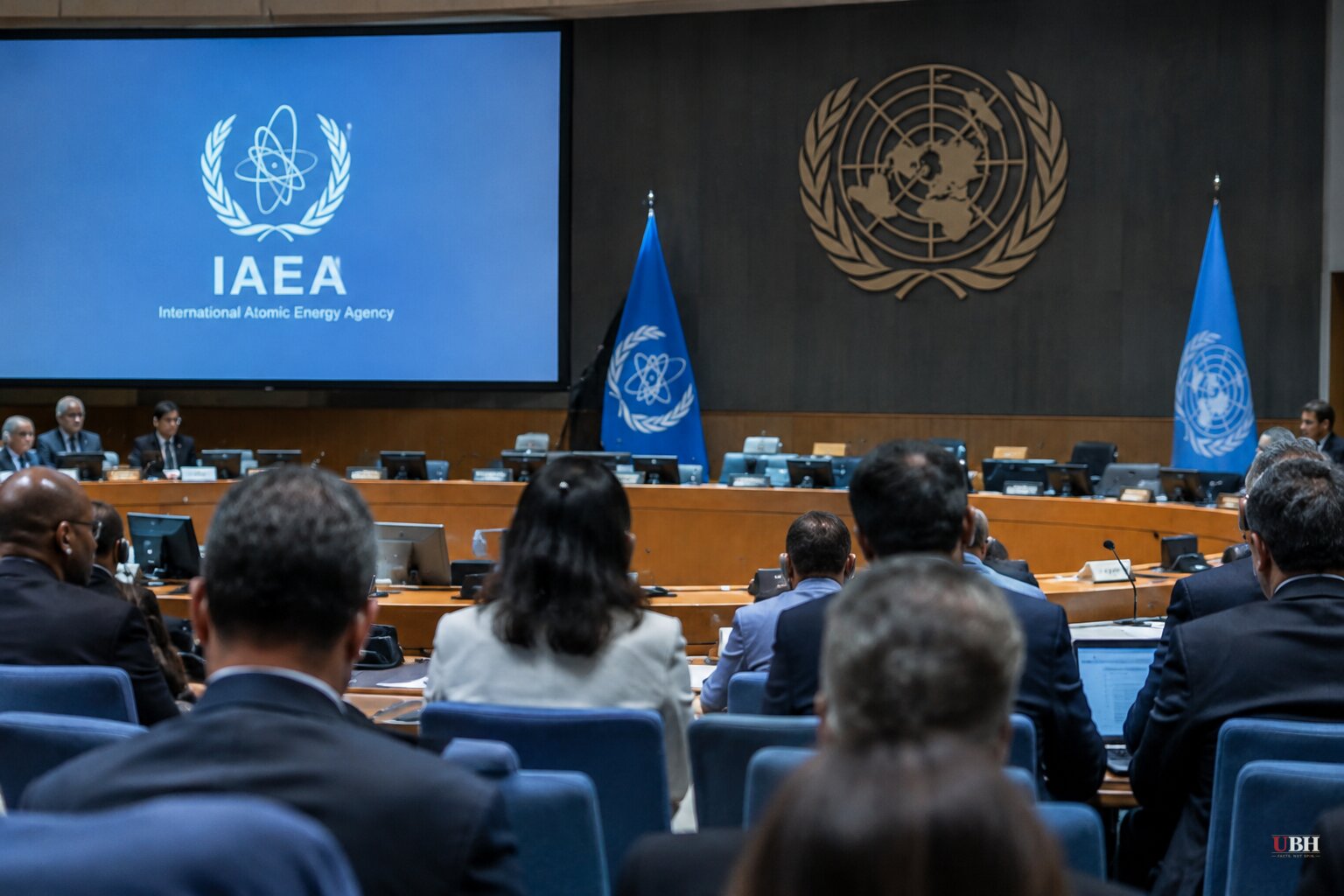
The International Atomic Energy Agency still cannot say where Iran's most dangerous nuclear material is.
Addressing the UN Security Council today, Oct. 27, IAEA Director General Rafael Grossi said: "As of today, the IAEA has not been able to verify that there has been no diversion of nuclear material" that Iran is required to safeguard. "This can, and must, be rectified," he added.
The 440 kilograms
Before Israel and the United States struck Iranian nuclear sites in June 2025, the IAEA calculated that Iran held about 440 kilograms of uranium enriched to 60 percent. That is close to the 90 percent needed for a weapon and far above the 3.67 percent cap in the now-defunct 2015 deal.
The stockpile's fate has been uncertain ever since. Grossi called it an area of "particular concern."
Inspectors left Iran by the end of June 2025 for safety reasons. Grossi said they have been ready to return "for many months now." Iran has not provided the information and access needed to verify declared material at its safeguarded facilities, he said, whether or not those facilities were bombed.
The agency is also seeking access to the Isfahan Fuel Enrichment Plant, which Iran declared just before the June 2025 strikes. Grossi said the outstanding safeguards questions have dragged on for more than five years.
He also said the agency has seen no sign of work to repair or rebuild the damaged sites. But satellite monitoring, he said, is no substitute for access on the ground.
Bushehr is the exception
The one place inspectors are working is the Bushehr nuclear power plant. Grossi said Iran's atomic energy organization has cooperated in delivering the safeguards equipment needed to verify spent fuel before it moves to a new dry storage facility, expected early next year.
Bushehr is also the center of Iran's nuclear partnership with Russia. Russia's state nuclear corporation Rosatom evacuated most of its workers after the war began on Feb. 28. By Oct. 11 it reported 135 engineering and technical specialists back on site.
Rosatom says work on a second Bushehr unit is more than 60 percent complete, with operations targeted for 2029. A third unit is also under construction.
The two countries' Comprehensive Strategic Partnership Treaty entered into force in October 2025. Carnegie Endowment analyst Nikita Smagin wrote in November 2025 that "the balance in the relationship is once again shifting in Russia's favor," and that Iran needs investment and "Russia remains one of the few available sources."
Researchers Dmitry Kovchegin and Arkady Mil-Man of Israel's Institute for National Security Studies described Moscow's approach to Iran's nuclear program in a June analysis as a "calculated balancing strategy."
Iran's answer
Iran rejects the framing. Its UN ambassador, Amir Saeid Iravani, criticized the Council's "silence" on the US-Israeli strikes. "Today's meeting is an illustration of an established double standard in which the aggressor is shielded with impunity, the victim is placed under criticism, and the language of non-proliferation is cynically appropriated to advance geopolitical objectives," he said.
Tehran has called last month's IAEA board resolution political and unlawful.
That resolution passed on Sept. 9 by a vote of 23 in favor, three against and eight abstentions. Britain, France, Germany and the United States submitted it. China, Russia and Niger voted no. It was the first referral of Iran to the Security Council in 20 years for failing to meet its nuclear obligations.
Russia and China also opposed adopting today's Security Council agenda. The vote was 11 in favor, two against, and two abstentions from Pakistan and Somalia. Both countries hold vetoes, which is why the referral has been widely seen as largely symbolic when it comes to sanctions.
The diplomatic track
Grossi pointed to mediation by Oman, Pakistan, Qatar and Egypt. He called for reviving the Cairo Agreement he signed with Iranian Foreign Minister Abbas Araghchi on Sept. 9, 2025, under Egyptian President Abdel Fattah El-Sisi. He described it as a practical way to address Iran's security concerns after the airstrikes.
"Only diplomacy, underpinned by IAEA verification, can prevent nuclear proliferation in the long term," he said.
The military track is running at the same time. President Donald Trump said in a Fox News interview Sunday: "Do I make a deal with them, or do I finish them off? That's my -- it's the only question." He has threatened to renew strikes, possibly after the midterm elections next week.
Speaking today at the Port of Corpus Christi, Texas, Trump said the US is "in the throes of having an even greater victory against Iran and stopping them from ever having a nuclear weapon." He said America "did not start the war" and blamed earlier presidents for lacking "the courage or intelligence" to confront Tehran.
The war has spread beyond Iran's borders. The State Department issued an alert ordering non-emergency US government personnel and their families to leave Saudi Arabia after missile and drone strikes by Iran-backed Houthi forces on civilian airports and infrastructure. Flights at Riyadh's King Khalid International Airport are severely limited, with delays at Jeddah and Dammam.
What comes next
The scheduled move of Bushehr's spent fuel to dry storage early next year will be verified by inspectors. Beyond that, no date has been set for inspectors to return to the bombed sites. The 440 kilograms remain unverified.
Whether the next step is a revived Cairo arrangement or renewed strikes may be settled in the days after the midterms.
Sources used for this briefing
7 links from 7 independent newsrooms (syndicated copies of the same report count once)
These are the sources it draws on, linked so you can verify.


