
Unbiased headlines. Facts, not spin.
Unbiased Headlines is an independently owned news organization. We bring you the facts, not opinions, written fresh from 110+ named sources. Sources linked so you can verify it yourself.
 defense
Major Story (7/10)
Pezeshkian Tells Putin the Middle East Can Solve Its Problems Without the US, While US-Iran Talks Stay Stalled
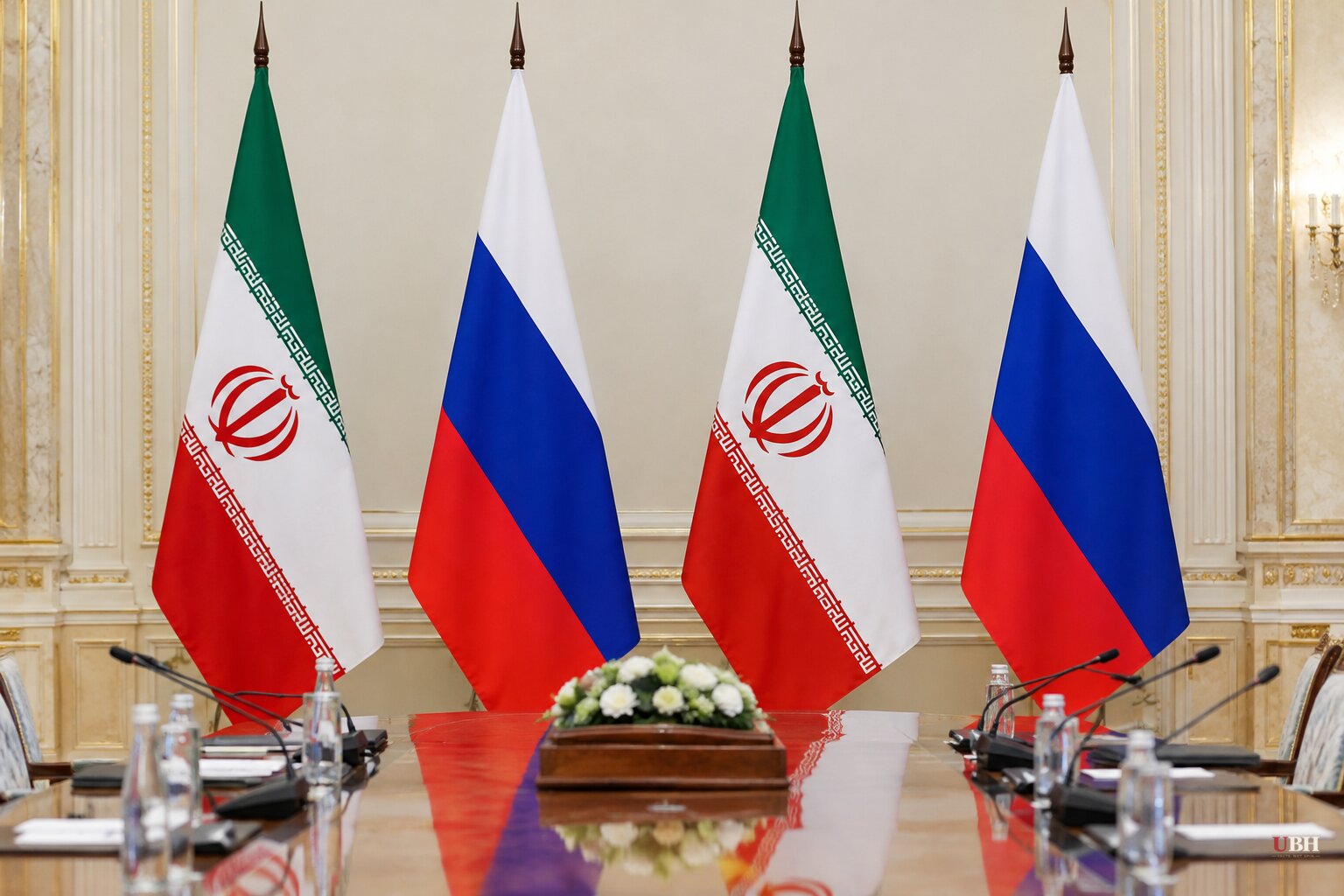
Since U.S.-Israeli strikes on Iran began on Feb. 28, Moscow has tried to cast itself as a broker between Tehran and Washington. Today, Oct. 27, Iran's president used a meeting with Putin to argue that Washington isn't needed at all.
What Pezeshkian said in Moscow
Pezeshkian met Putin on the sidelines of a Gas Exporting Countries Forum summit. "I believe we are capable of resolving our problems in the region without relying on the United States," he said.
He went further on Russia. "If there is the will, and I am convinced that there is, we will be able to support one another in all areas and develop our scientific, economic, industrial, cultural and military relations," he said.
Pezeshkian also said U.S. actions in the region were pushing Russia, Iran and other countries under unilateral U.S. sanctions closer together. According to Xinhua's account of the meeting, he said: "Once the Americans began taking aggressive steps in the region, it became clear to everyone that we must work toward the formation of a multipolar world."
Putin was more restrained. He said he had spoken with Pezeshkian one-on-one about "the situation in the region," which he called "undoubtedly a cause for concern." He said he hoped it would "evolve in a positive direction."
Putin did not announce a new mediation initiative at the meeting. He had told Pezeshkian in early October that Russia was ready to contribute to mediation between Iran and the U.S.
Russia and Iran tighten ties
Foreign Minister Sergei Lavrov visited Iran last week, his first trip there since the war began. He said Russia's efforts were "aimed at preventing the return of a large-scale war."
Iranian Foreign Minister Abbas Araghchi said afterward that Russia and Iran had "never" worked so closely. Military and economic cooperation between the two countries has grown since Russia's 2022 invasion of Ukraine.
Negotiations between Washington and Tehran have been stalled for months. Both the U.S. and Israel have threatened to resume strikes on Iran.
Washington's stated position
Vice President JD Vance laid out the U.S. view in a CBS town hall on Saturday. He said the U.S. had destroyed Iran's nuclear program and that "in some ways we have won decisively, but they're the Iranians. You know, the enemy gets a vote here."
Vance named two remaining goals: a long-term, verifiable Iranian commitment not to rebuild its nuclear capabilities, and preventing a global energy crisis. He credited the U.S. Navy with keeping oil and gas moving through the Strait of Hormuz and said gasoline prices "would be three times as high" without it.
That claim is the vice president's own estimate. The market data shows how tense supply remains. Brent crude settled at $109.86 a barrel on Friday, up 3.7%, and West Texas Intermediate closed at $101.41, up 3.5%, according to Reuters figures. Traders pointed to Hormuz shipping risks, continued Houthi attacks on Saudi Arabia and uncertainty over Russian energy supplies.
The mediator question
Pezeshkian's pitch that regional states can settle things themselves has critics inside the region. Yemeni official Afrah Al-Zouba rejected an Iranian offer to mediate the conflict in Yemen on Saturday.
"Whoever arms a party to a war cannot be its mediator. And whoever wants peace in Yemen should begin by stopping the weapons with which Yemenis are being killed," Al-Zouba wrote on X.
Al-Zouba accused Tehran of supplying the Houthis with missiles, drones and military expertise. Iran's response to those accusations was not part of the account. She called on the international community to enforce existing arms embargoes, cut off Houthi financing and back Yemen's internationally recognized government. She also voiced solidarity with Saudi Arabia over the Houthi attacks.
What remains open
Pezeshkian's Moscow remarks offer no new proposal for resuming talks with Washington. They signal that Tehran is building its alternatives around Russia and a "multipolar" bloc of sanctioned states.
Vance's two conditions, a verifiable no-rebuild pledge and open shipping lanes, are the terms Washington says any deal must meet. Neither has been satisfied, and Russia's standing offer to mediate has not restarted the stalled negotiations.
Sources used for this briefing
6 links from 6 independent newsrooms (syndicated copies of the same report count once)
These are the sources it draws on, linked so you can verify.


