
Original briefings. Zero spin.
Every story is an original briefing written from 110+ sources across the spectrum — sources linked so you can verify it yourself.
 energy
Major Story (8/10)
Event date: August 26, 2026
energy
Major Story (8/10)
Event date: August 26, 2026
Iran Blacklists 45 Tankers Over Hormuz Transfers, Indian Refiners and Chinese State Shippers Start Rerouting
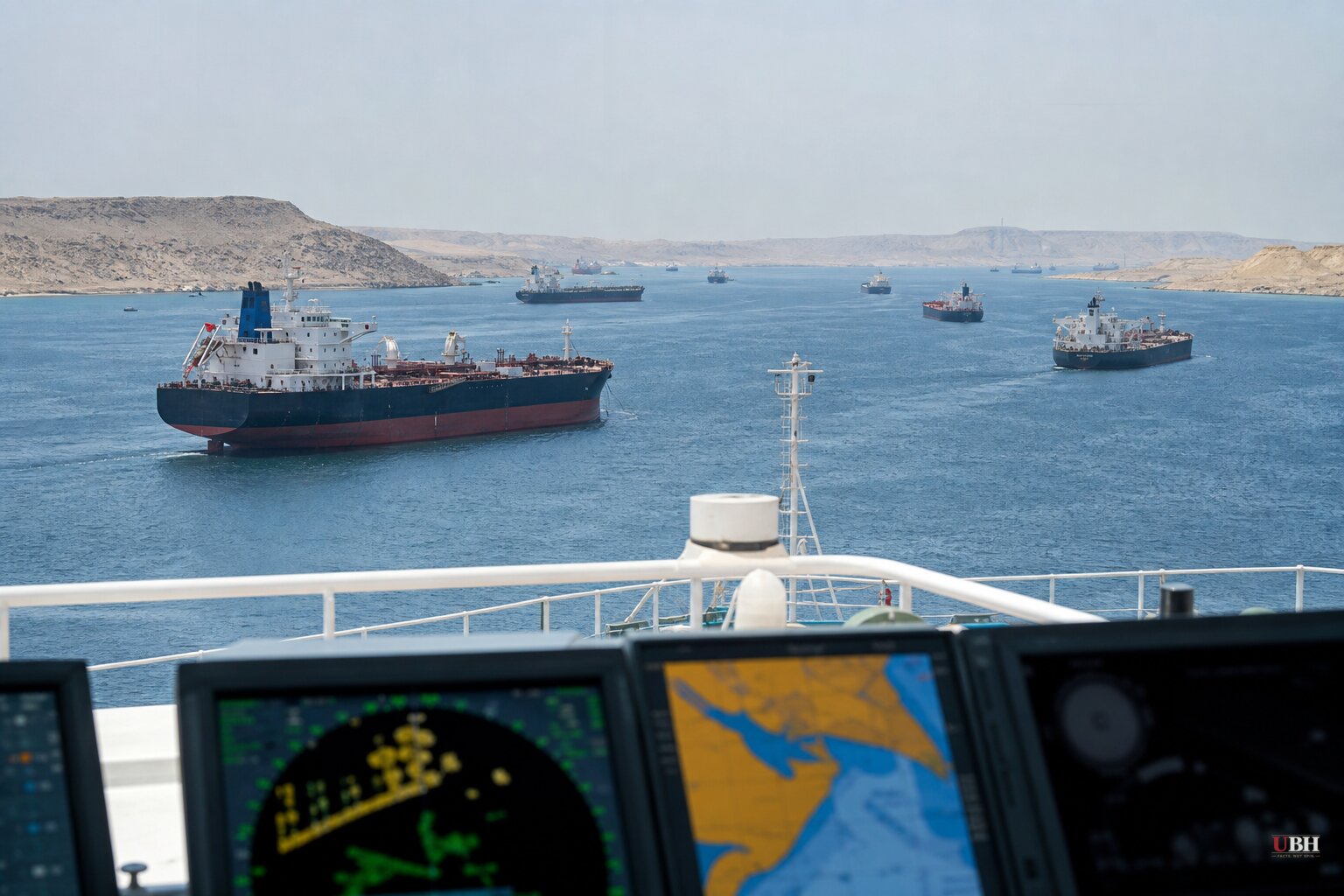
Since the U.S. struck an Iranian island and Tehran fired back last week, Iran has widened its campaign against oil traffic in the Gulf. On Sunday, Aug. 30, Iran's newly created Persian Gulf Strait Authority announced a blacklist of 45 ships it accuses of violating its rules for crossing the Strait of Hormuz, threatening fines, detention and cargo seizure for any vessel caught doing ship-to-ship transfers with them, according to a post from the authority on X and reporting from Boereport.
Buyers are already responding. At least three Indian oil refiners and a global energy major plan to stop chartering blacklisted vessels, including for ship-to-ship transfers, four sources with direct knowledge of the matter told Boereport this week. "We will avoid our chartered vessels dealing or STS or anything to do with non-compliant ships for Middle Eastern cargoes," one source at an Indian refinery said.
Some of the targeted tankers are owned or chartered by Saudi Aramco and Abu Dhabi National Oil Co., companies that have used them for the "shuttle run" system that hauls crude out of the Gulf through Hormuz for transfer off Fujairah, UAE, or Sohar, Oman. Aramco and ADNOC declined to comment to Boereport. At least 12 of the blacklisted vessels are Very Large Crude Carriers, according to the outlet.
Ana Subasic, a trade risk analyst at ship-tracking firm Kpler, told Boereport that the most compliance-sensitive buyers will likely avoid the listed vessels going forward, but she said the oil trade is more likely to reroute through different tonnage, counterparties or transfer locations than to actually shrink. One Gulf crude buyer told Boereport it would now be safer to buy oil delivered to a final destination rather than free-on-board at a Gulf of Oman transfer point. Formosa Petrochemical Corp. President KY Lin said the company's internal departments are "still in discussion on how to proceed with crude deliveries from the Strait of Hormuz via ship-to-ship transfers in the long term."
China's State Shippers Already Pulled Back
China's two biggest state shipping firms, COSCO and CMES, had already begun avoiding both Hormuz and the Bab el-Mandeb strait before Iran's blacklist, according to Breitbart, which cited industry executives and ship-tracking services who spoke to Reuters. CMES quietly made the call on Hormuz in late July after consulting Beijing on security risk, though the decision was never formally announced, the executives said.
COSCO and CMES together operate more than 100 Very Large Crude Carriers with a combined capacity above 200 million barrels. A state shipping executive told Reuters the ships "remain engaged" but are taking much longer routes to dodge the conflict zone, frustrating refinery customers who need the crude. The workaround gaining traction, per Kpler data cited by Breitbart, is collecting oil through ship-to-ship transfers in the Gulf of Oman, outside Iran's attack range, then sailing straight to China. One Chinese shipping executive called the results "low risk and good profits." Four COSCO VLCCs and one CMES vessel completed Fujairah transfers in July, with roughly a dozen more scheduled by mid-September.
The "Dark Transit" Workaround Keeps Growing
The broader industry has leaned on a riskier tactic for months: switching off ship transponders and running Hormuz at night under U.S. Navy escort. CNN Business tracked one example, the supertanker Kiku, which loaded at Qatar's Mesaieed terminal on July 25, crossed the strait on AIS on July 29, went dark off Dubai on July 31, and reappeared on the far side of Hormuz the next morning. CNN observed more than a dozen ship-to-ship transfers over two days in the Gulf of Oman, feeding tankers bound for China, Taiwan, South Korea, the Philippines, Vietnam and Thailand.
The U.S. Department of Energy says the dark-transit strategy has pushed Hormuz traffic to 8 to 9 million barrels a day, roughly double what Kpler's transponder-based tracking would suggest, CNN reported. Official U.S. estimates diverge sharply from independent tracking data, with neither side offering a fully verifiable count since much of the traffic is, by design, invisible to trackers.
Diplomacy Still Stuck, Attacks Still Happening
A tanker was struck by an unidentified projectile in the Strait of Hormuz on Aug. 27, according to the UK Maritime Trade Operations authority, which said the resulting fire was brought under control and no crew were hurt. The strike came as Iran and Oman negotiate a temporary transit arrangement: Iranian Deputy Foreign Minister Kazem Gharibabadi said on Aug. 25 that inbound vessels would pass through Iranian waters and outbound vessels through a mix of Iranian and Omani waters, with a permanent plan targeted for 30 to 60 days out, according to the Epoch Times. President Trump has said the strait is still "functioning," citing roughly 10 million barrels moved on Aug. 26, and warned the U.S. would bomb Oman if it "gets in the way" of American operations there.
What happens next depends on whether Iran actually enforces its blacklist against Aramco- and ADNOC-linked ships, an untested move that could pull the Gulf's biggest producers directly into a confrontation they've so far avoided by working around Iran rather than through it.
Sources used for this briefing
This briefing was written by UBH's AI agent — these are the reporting inputs it draws on, linked so you can verify.


