
Unbiased headlines. Facts, not spin.
Unbiased Headlines is an independently owned news organization. We bring you the facts, not opinions, written fresh from 110+ named sources. Sources linked so you can verify it yourself.
 energy
Major Story (8/10)
Event date: October 20, 2026 ·
IEA's Birol Sees No Credible Path to Energy Normalization in 2027 as US Stock Futures Point Lower Before the Open
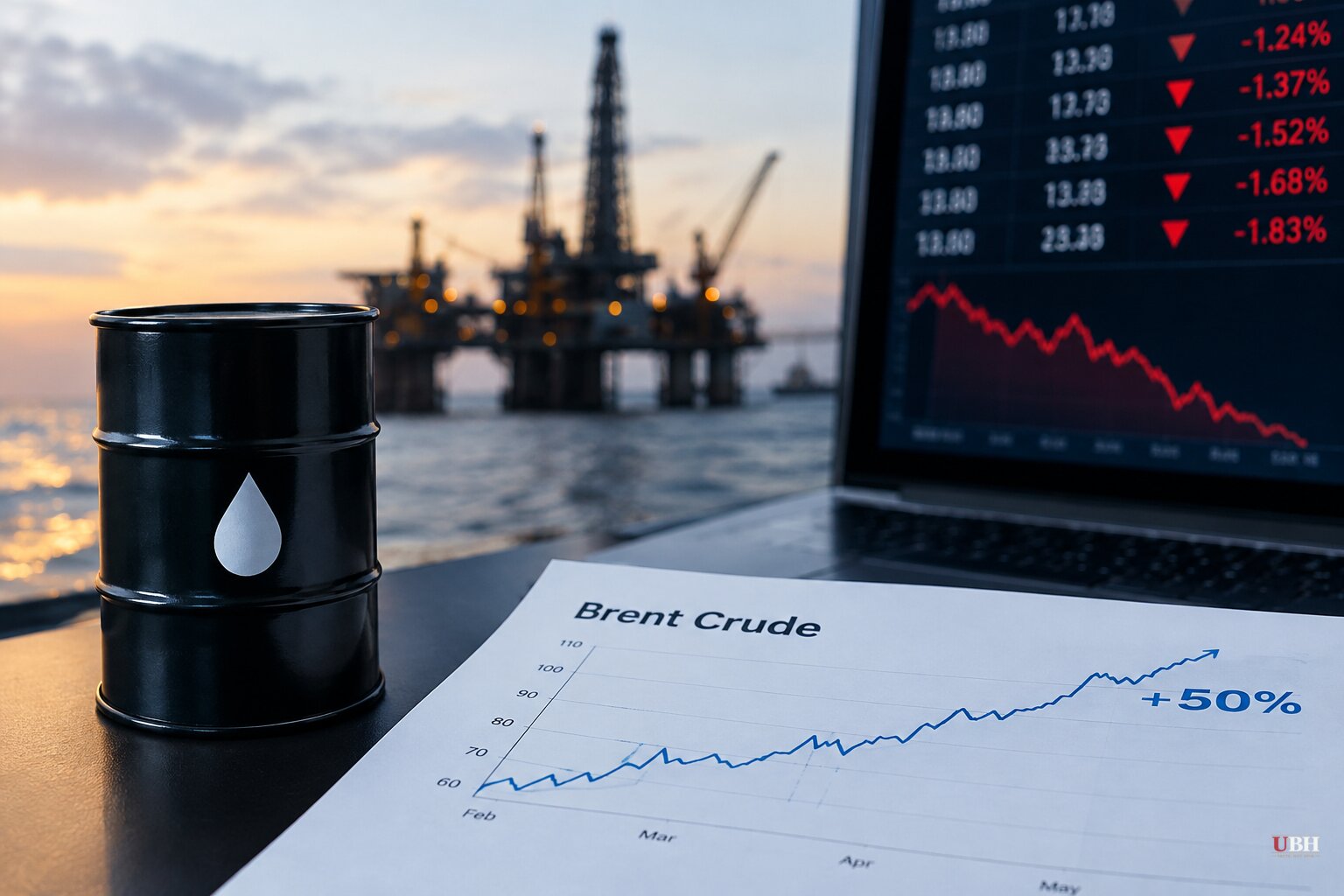
Since the U.S.–Iran war began Feb. 28, Brent crude has risen more than 50%, and the latest warning on how long that lasts came from the world's top energy forecaster.
"I don't see any credible pathway that 2027 will be a year of normalisation," International Energy Agency Executive Director Fatih Birol told the Financial Times Energy Transition Summit in London on Tuesday. The Strait of Hormuz has been closed once, he said, and "it can be closed again."
Before the war, the waterway carried about a fifth of the world's oil and natural gas supply.
Diesel is the problem, not crude
Birol called it "myopic" to judge the crisis by crude prices alone. Crude has not hit the $200 a barrel some analysts predicted at the start of the war. "We don't use crude oil, we use products," he said.
Diesel prices have roughly doubled from prewar levels, Birol said, largely because of the Iran war and partly because of attacks on Russian refineries. He also noted that diesel demand typically rises this time of year and that many large refineries have planned maintenance.
The numbers back him up. Diesel averaged $6.17 a gallon as of Oct. 12, up from a January low of $3.45, according to Federal Reserve Bank of St. Louis data. Regular gasoline averaged $4.30 nationally on Oct. 17, against $3.05 a year earlier, according to AAA.
A Daily Wire report, citing the Wall Street Journal, put crude moving through Hormuz at about 76% of prewar levels. Refined products such as diesel made up only 11% of cargoes, down from more than 20% before the war.
Crude flows are up, but the strait is contested
There is a counterpoint in the flow data. The seven-day average of oil leaving the Middle East, including via Hormuz, the Red Sea and the Gulf of Oman, was just over 24 million barrels a day on Tuesday, above the prewar average, according to Kpler. A restoration of Saudi pipeline exports has helped, even though tanker crossings of the strait remain well below prewar levels.
That has not calmed the market. Brent hit almost $110 on Oct. 16, closing at about $109.69, up more than 3.5% on the day. On Thursday it rose 3.3% to $112.38, its highest in five months, after yo-yoing between $97 and $112 through October. By midday Friday it had surged to $114.40 a barrel, from $111.18 late Thursday afternoon.
ING's Warren Patterson and Ewa Manthey wrote Oct. 16 that the market is "pricing in a significant risk premium." Their conclusion: "In order to see a full removal, there needs to be some kind of agreement between the U.S. and Iran."
No such agreement has been announced. Iran has signaled it is preparing for another round of war and has issued public threats against Washington, apparently to deter President Donald Trump from reigniting the stalemated conflict, according to CNN.
Attacks on shipping and Saudi Arabia
Ships keep getting hit. Five vessels were damaged Oct. 11, four in the Strait of Hormuz and one off Oman. Four were oil tankers flagged in Liberia, Panama and the Bahamas, and one was an Indian-flagged container ship. On Oct. 13, three container ships were struck in the strait and one sank. On Thursday, Tehran said seven oil tankers caught fire or were damaged in the strait after being hit by Iran or striking naval mines, according to the Associated Press.
Saudi Aramco came under attack Oct. 13. Authorities did not say who was behind it. Saudi Arabia's conflict with Yemen's Iran-backed Houthis has intensified in recent weeks, and the kingdom called off its Future Investment Initiative conference, planned for later this month, about a week before it was due to open.
Stockpiles are thin
The Energy Department puts the U.S. Strategic Petroleum Reserve at 283.8 million barrels. It typically holds 500 million to 600 million, with a maximum capacity of 714 million. The drawdown is part of the 172-million-barrel release Trump ordered in March.
Saudi Aramco CEO Amin Nasser called the world's supply cushion "scarily thin," according to the Financial Times.
The administration has tried to hold down fuel costs. Secretary of Energy Chris Wright said the Energy Department's emergency exchange would help "maintain refinery operations, limit disruptions to fuel supplies." Trump said the White House would not impose a diesel export ban. Andy Lipow of Lipow Oil Associates told NBC News that a G-7 emergency release of 100 million barrels could cut diesel prices by about 25 cents a gallon but "does little to increase refinery capacity to produce more."
Markets before the bell
Regular U.S. trading has not started. Futures indications, which are not opening prices, show the Dow called down 0.6%, the S&P 500 down 0.2% and the Nasdaq Composite flat. The Nasdaq fell 2.6% Thursday.
In Europe, the FTSE 100 was down 60.41 points, or 0.6%, at 10,664.62, and has lost 2.0% on the week. Paris's CAC 40 was down 0.7% and Frankfurt's DAX 40 down 0.9%.
"The FTSE 100 rapidly surrendered some modest early gains as global markets contend with concerns around surging oil prices and the sustainability of AI spending," AJ Bell analyst Danni Hewson said. She added that tensions in Ukraine and winter energy demand were putting upward pressure on oil and gas.
The U.S. 10-year Treasury yield was quoted at 4.99%, down from 5.02% late Thursday, and the 30-year at 5.30%. SPI Asset Management's Stephen Innes said the AI trade "has developed a peculiar habit of solving one problem by creating another": rallies raise worries about borrowing and bond supply, while selloffs ease them.
One bright spot came from Britain. The S&P Global flash composite PMI rose to 53.1 in October from 52.0, the best reading in eight months and above the 51.8 forecast.
A U.S. flash PMI reading is due later Friday, at 1445 BST, followed by the University of Michigan's consumer sentiment tracker at 1500 BST.
Sources used for this briefing
6 links from 6 independent newsrooms (syndicated copies of the same report count once)
These are the sources it draws on, linked so you can verify.


