
Unbiased headlines. Facts, not spin.
Unbiased Headlines is an independently owned news organization. We bring you the facts, not opinions, written fresh from 110+ named sources. Sources linked so you can verify it yourself.
 energy
Major Story (8/10)
Event date: October 25, 2025 ·
Trump Declares Oil Production and Refining Essential to National Defense, Invokes Defense Production Act
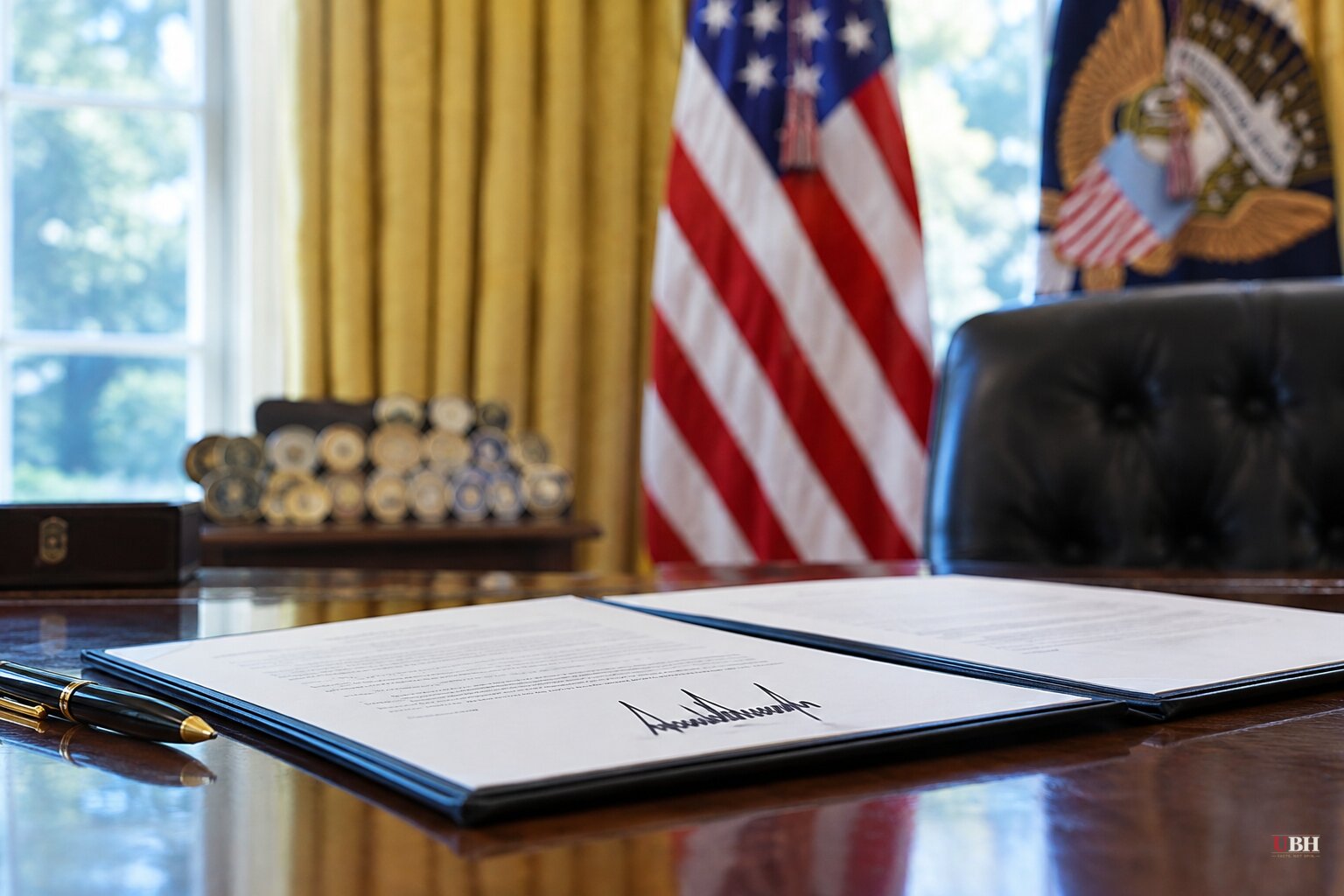
Since the U.S. and Israel attacked Iran at the end of February, crude and diesel prices have surged, and the administration's answer arrived Thursday, Oct. 22, in the form of a presidential memo.
Trump determined that petroleum production, refining and related activities are essential to national defense. He also invoked part of the Cold War-era Defense Production Act. That allows him to provide financial incentives for oil-related activities, pipelines and storage of liquid fuels.
The determination could open the door to federal funding for fossil fuel projects.
What the memo says
The memo's stated rationale is a capacity problem. Without these actions, it says, the U.S. cannot provide enough of these energy services in a "timely manner due to constrained financing, long lead times, permitting and infrastructure bottlenecks, and supply chain limitations."
The memo does not name specific projects that could receive money. It does not put a dollar figure on the incentives.
There is one funding number on the table already. Legislation Trump signed last year included $1 billion in Defense Production Act funding for energy-related projects deemed critical to national security.
The Delek refinery
The closest thing to a named project came last week. Vice President JD Vance said the administration would use the Defense Production Act to expand capacity at a Texas refinery owned by Delek US Holdings.
The memo itself does not mention Delek. Whether that expansion draws on the $1 billion pool or on some other mechanism has not been spelled out by the White House.
Prices, the war and the calendar
The conflict with Iran has limited energy shipments globally. Ukrainian attacks on Russian refineries have made fuel shortages worse.
The U.S. is the world's largest crude producer, averaging about 13.6 million barrels a day in 2025. Output is not the main constraint. Refining, pipeline and storage capacity are what the memo targets, along with the permitting and financing delays it cites.
The political backdrop is plain. Republicans are trying to hold both chambers of Congress on Nov. 3. The Reuters/Ipsos poll that closed Monday found just 36% of Americans approve of Trump's handling of the economy.
Earlier, three industry sources told Reuters that Trump would direct department heads to find ways to control diesel prices, which were near record highs. According to those sources, the directive would push officials to find ways around state and local regulations that block energy production and to use the Defense Production Act to raise oil and fuel output. The memo released Thursday cites permitting bottlenecks as a problem. It does not, on its face, say how any state or local rules would be overridden.
What taxpayers should watch
The Defense Production Act is a real tool with a long history. Using a national-defense finding to speed up refineries and pipelines is a defensible use of executive authority when fuel supply is tight and a war is disrupting global shipments.
The open question is the same one that follows every federal incentive program. Washington will be choosing which companies and projects get taxpayer dollars. A memo that names none of them leaves that selection entirely to the executive branch.
Republicans who talk about smaller government and fiscal discipline now own a program in which the government picks winners in the oil patch. Democrats who have criticized fossil fuel subsidies will have their own arguments to make.
The practical timeline matters too. Refinery expansions, pipeline segments and storage tanks take time to build, and the memo cites long lead times as one of the very problems it aims to address. Nothing in the memo suggests a project funded now would lower diesel prices before the Nov. 3 elections.
The next concrete marker is the first award. The administration has not said which projects will receive Defense Production Act money, how much of the $1 billion it plans to spend, or whether the Delek expansion is first in line.
Sources used for this briefing
7 links from 6 independent newsrooms (syndicated copies of the same report count once)
These are the sources it draws on, linked so you can verify.


