
Unbiased headlines. Facts, not spin.
Unbiased Headlines is an independently owned news organization. We bring you the facts, not opinions, written fresh from 110+ named sources. Sources linked so you can verify it yourself.
 energy
Major Story (7/10)
Event date: October 14, 2026 ·
Justice Department Asks Courts to Send Back Approvals for Offshore Wind Projects, Weeks Before Senate Permitting Vote
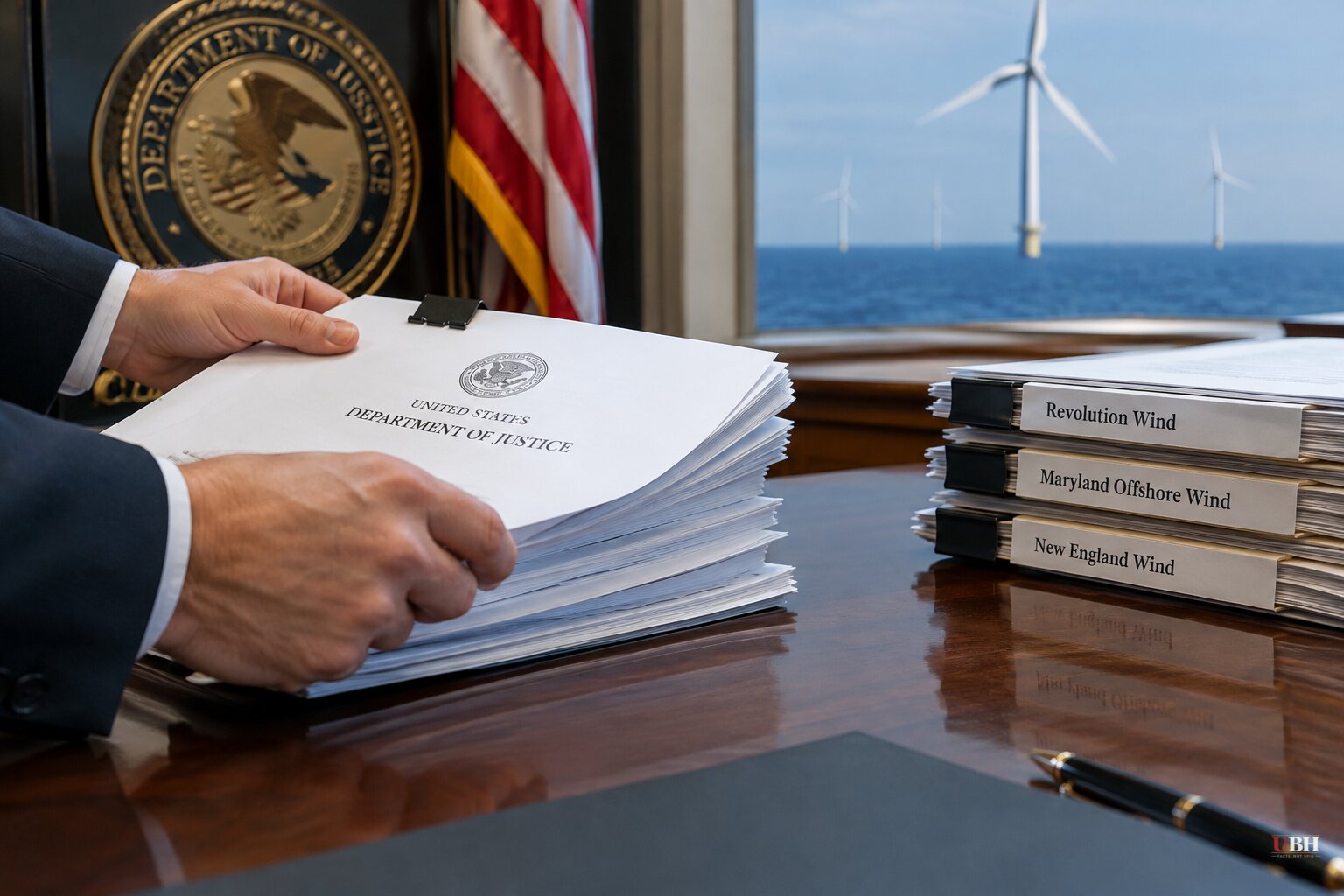
The Justice Department is asking federal judges to send back the construction approvals for at least three offshore wind projects. The filings land weeks before the Senate takes up a permitting bill that the White House says it supports.
The targets are Revolution Wind off Rhode Island, US Wind's Maryland Offshore Wind, and Avangrid's New England Wind off Massachusetts. The trade publication Maritime Executive counts the New England Wind filing as the fourth such move in a matter of days.
What DOJ filed
In each case, DOJ asks the court to remand the Construction and Operations Plan (COP) approval to the Interior Department. Interior would then reassess whether the approval complied with the Outer Continental Shelf Lands Act. Critics read that as a step toward revocation. Remand itself is not revocation.
The motions were filed in lawsuits brought by other parties. The Revolution Wind filing came in a 2024 case from Green Oceans, an anti-wind group. In that filing, Interior said remand "is warranted so that the agency can reevaluate its compliance with the Outer Continental Shelf Lands Act." The Maryland motion was filed in a suit by the mayor and city council of Ocean City. The New England Wind motion was filed in a case brought by ACK For Whales.
In the Maryland case, DOJ wrote that the Bureau of Ocean Energy Management's decision documents list "moderate adverse" and "major adverse" impacts to certain resources, including endangered species, yet concluded the plan could be approved anyway. "For those reasons, the COP needs to be reconsidered," DOJ wrote.
On New England Wind, DOJ argues the July 1, 2024 approval "did not properly consider or explain how the COP 'provides for'" the statute's required factors. That approval covered up to 2,600 MW, up to 129 turbines and up to five export cables.
Interior pushed back on the reading that this is a policy shift. "The Department of the Interior is complying with a briefing schedule, not announcing a policy change," the department said in a statement. It added that its position "has remained consistent throughout this administration."
A project that is nearly finished
Revolution Wind is a 50/50 venture between Ørsted and Skyborn Renewables. Its 65th and final turbine went up in September. It has fed power into the New England grid since March, and developers say it will reach its full 704 MW by the end of this year. It is backed by contracts with utilities in Connecticut and Rhode Island.
Ørsted spokesperson Karl-Erik Stromsta said offshore construction was recently completed. More updates will come on the company's Nov. 5 earnings call.
The other two projects are earlier in development, and neither developer has announced the start of construction. In a February filing, U.S. District Judge Stephanie Gallagher noted that US Wind was not taking next steps. The cost is significant, she wrote, and the developer risks losing that investment if the approval is revoked.
This follows earlier moves against the sector. A December stop-work order halted construction on five projects. The administration has also tried to buy back leases, with payment generally contingent on developers investing an equal amount in other U.S. energy such as oil, gas and geothermal. Pasha Feinberg of the Natural Resources Defense Council says those efforts failed to halt projects under construction. He calls the new tactic "Ooops, they did it again."
The permitting bill
The timing matters because of the Bipartisan American Affordability and Jobs Act. Senate negotiators announced the 417-page text on Sept. 30, the product of talks among the leaders of the Energy and Natural Resources and Environment and Public Works committees.
The bill would make the biggest changes to NEPA since 1969. It sets agency review deadlines, caps judicial review at 150 days, and limits standing and remedies for litigants. It also includes language protecting against a "pattern of disparate treatment" of specific technologies.
Sen. Shelley Moore Capito, R-W.Va., said the current system has "stood in the way of energy reliability, secure jobs, modern infrastructure, and economic growth." Whitehouse, the ranking Democrat on her committee, said the bill would help "flood the grid with clean, affordable energy." A White House official said the administration supports the deal and wants to see it "pass quickly."
Whitehouse said of the DOJ filings: "this is how you blow up a permitting deal." On Sept. 30 he had already said the administration's renewable energy policies complicated the talks and that discussions with the White House were ongoing.
Tony Irish, a former Interior associate solicitor now at Public Employees for Environmental Responsibility, says the filings upend the "settled expectations of Congress" behind the deal. The National Ocean Industries Association, which represents wind, oil and gas companies, struck a more measured tone. President Erik Milito said the government has a responsibility to review projects, but "predictable regulatory processes and timely decisions are important for offshore energy development of all kinds." He urged Congress to vote.
NRDC's Feinberg argues the administration's "war on clean energy is backfiring" and says electricity bills keep rising while the country struggles to meet growing demand.
The vote count
The bill needs 60 votes in the Senate, which means Democratic support. Greenberg Traurig's analysis of the bill says the outcome of the talks with the administration may decide whether that support materializes.
The bill has its own critics on the other flank. Justin Pidot, co-director of the environmental law program at the University of Arizona, writes that despite its elaborate judicial review structure, the bill would "effectively eliminate judicial review of most NEPA claims." He says the text should be clearer about that.
The House is in recess until after the midterms and has not passed the bill. The Senate is scheduled to hold a procedural vote when it returns Nov. 9. Capito has said the goal is for the bill to be the first vote back.
Two questions remain open. One is whether DOJ and Interior pull back before then. The other is whether Whitehouse and other Democrats still deliver the votes with the Revolution Wind remand request pending in court.
Sources used for this briefing
7 links from 7 independent newsrooms (syndicated copies of the same report count once)
These are the sources it draws on, linked so you can verify.


