
Unbiased headlines. Facts, not spin.
Unbiased Headlines is an independently owned news organization. We bring you the facts, not opinions, written fresh from 110+ named sources. Sources linked so you can verify it yourself.
 energy
Major Story (8/10)
QatarEnergy Signs Deal to Buy 4 Million Tons a Year of US LNG From Cheniere Through 2054
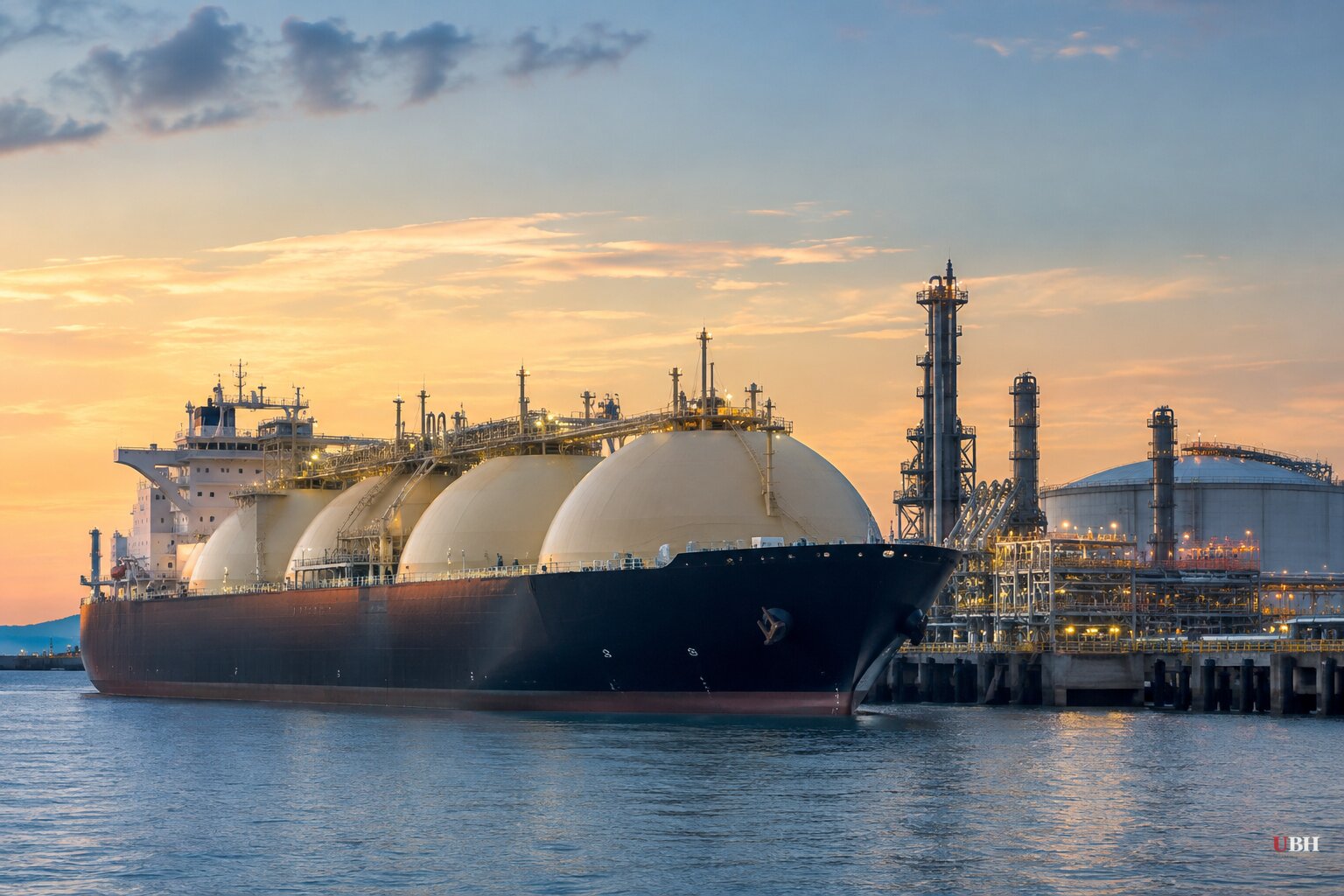
One of the world's biggest LNG exporters just signed up to buy American gas.
QatarEnergy announced Thursday, Oct. 22, that it signed two long-term sale and purchase agreements with Cheniere Energy (NYSE: LNG) for a total of 4 million tonnes per annum of LNG through 2054. It is QatarEnergy's first US offtake deal.
What the contracts say
The volumes split evenly. QatarEnergy will take 2 million tonnes a year from Cheniere's Sabine Pass terminal in Louisiana and 2 million from Corpus Christi in Texas.
QatarEnergy buys on a free-on-board basis, so it is responsible for shipping the cargoes once they are loaded at the US terminals. The price is indexed to the Henry Hub natural gas benchmark plus a fixed fee.
Deliveries start in the early 2030s. QatarEnergy's statement puts the start at 2031, and they run through the end of 2054.
One catch: 1 million tonnes a year of the Sabine Pass agreement depends on a positive final investment decision on the first phase of Cheniere's Sabine Pass expansion. That phase is a single train, Train 7, with over 6 million tonnes a year of capacity. Cheniere signed a lump-sum, turnkey construction contract with Bechtel Energy in May 2026 and released Bechtel to begin early engineering and procurement. No final investment decision has been announced.
Saad Sherida Al-Kaabi, Qatar's minister of state for energy affairs and QatarEnergy's CEO, signed for Qatar. Jack Fusco, Cheniere's chairman, president and CEO, signed for Cheniere.
"This major long-term purchase will expand and diversify our global LNG portfolio and advance our ability to meet the evolving requirements of the market," Al-Kaabi said.
Fusco called the agreements "a major long-term commercial commitment" that reinforces Cheniere's position "as the leader in U.S. LNG." Cheniere operates about 56 million tonnes a year across Sabine Pass and Corpus Christi, with another 5 million under construction.
Why Qatar is shopping in Louisiana and Texas
Iranian missile strikes hit Ras Laffan Industrial City in March. Two LNG production trains with a combined 12.8 million tonnes a year of capacity were damaged, roughly 17% of Qatar's export capacity. QatarEnergy has warned that repairs could take three to five years and cost as much as $20 billion a year in lost revenue.
The damage came on top of a broader shutdown. Qatar had already halted most LNG output at Ras Laffan and at Mesaieed because of the threat of Iranian missile and drone attacks. Shipping through the Strait of Hormuz remains in turmoil, and QatarEnergy is still citing force majeure to cancel major LNG shipments to Asia and Europe.
US Gulf Coast cargoes don't pass through Hormuz. That is the practical value of the deal for a Gulf producer whose customers have had shipments disrupted.
The money hit at home
Qatar's Emir Sheikh Tamim bin Hamad al-Thani told the Shura Council that government revenue fell 42% in the first half of 2026 while spending fell 14%.
"The closure of the Strait of Hormuz, along with direct damage to some energy facilities in Ras Laffan Industrial City, has disrupted a significant portion of the country's exports," he said. He added that Qatar did not cut essential services or change development priorities, and credited reduced public debt and non-oil revenue streams for cushioning the blow.
The IMF and World Bank have estimated that Qatar will suffer more proportional economic damage from the war than any country except Iran. Qatar had expected 6.1% GDP growth this year. If current trends hold, the estimate is an 8.6% contraction.
Restart timeline is contested
QatarEnergy has said it could restart full LNG production within weeks of the Strait of Hormuz being officially reopened. Reuters quoted industry experts on Monday who were skeptical of that claim.
The skeptics' argument is about plant mechanics. LNG is harder to restart than oil exports because the production chain is more intricate and fragile. Qatar also lacks the storage to absorb a large backlog if anything stalls along the chain.
The Cheniere deal doesn't settle that dispute. It is a 2031-and-beyond contract that gives QatarEnergy a supply source outside the Persian Gulf. It does nothing for the cargoes Qatar's customers are missing now.
What it means for Cheniere
Cheniere gets a multi-decade customer. Because the price is Henry Hub plus a fixed fee, Cheniere's per-unit margin is set in the contract regardless of where global LNG prices go. Qatar carries the shipping and market risk once the gas is loaded.
QatarEnergy described the purchase as part of a strategy to diversify its portfolio and to strengthen its role as an international LNG trader as well as a producer.
The next concrete marker is Cheniere's final investment decision on Train 7, which determines whether the contingent 1 million tonnes a year is ever delivered. Cheniere has not announced a date.
Sources used for this briefing
7 links from 7 independent newsrooms (syndicated copies of the same report count once)
These are the sources it draws on, linked so you can verify.


