
Unbiased headlines. Facts, not spin.
Unbiased Headlines is an independently owned news organization. We bring you the facts, not opinions, written fresh from 110+ named sources. Sources linked so you can verify it yourself.
 energy
Major Story (7/10)
IUCN Rates 96% of Shallow-Water Coral Reef Ecosystems Critically Endangered Under Projected Warming
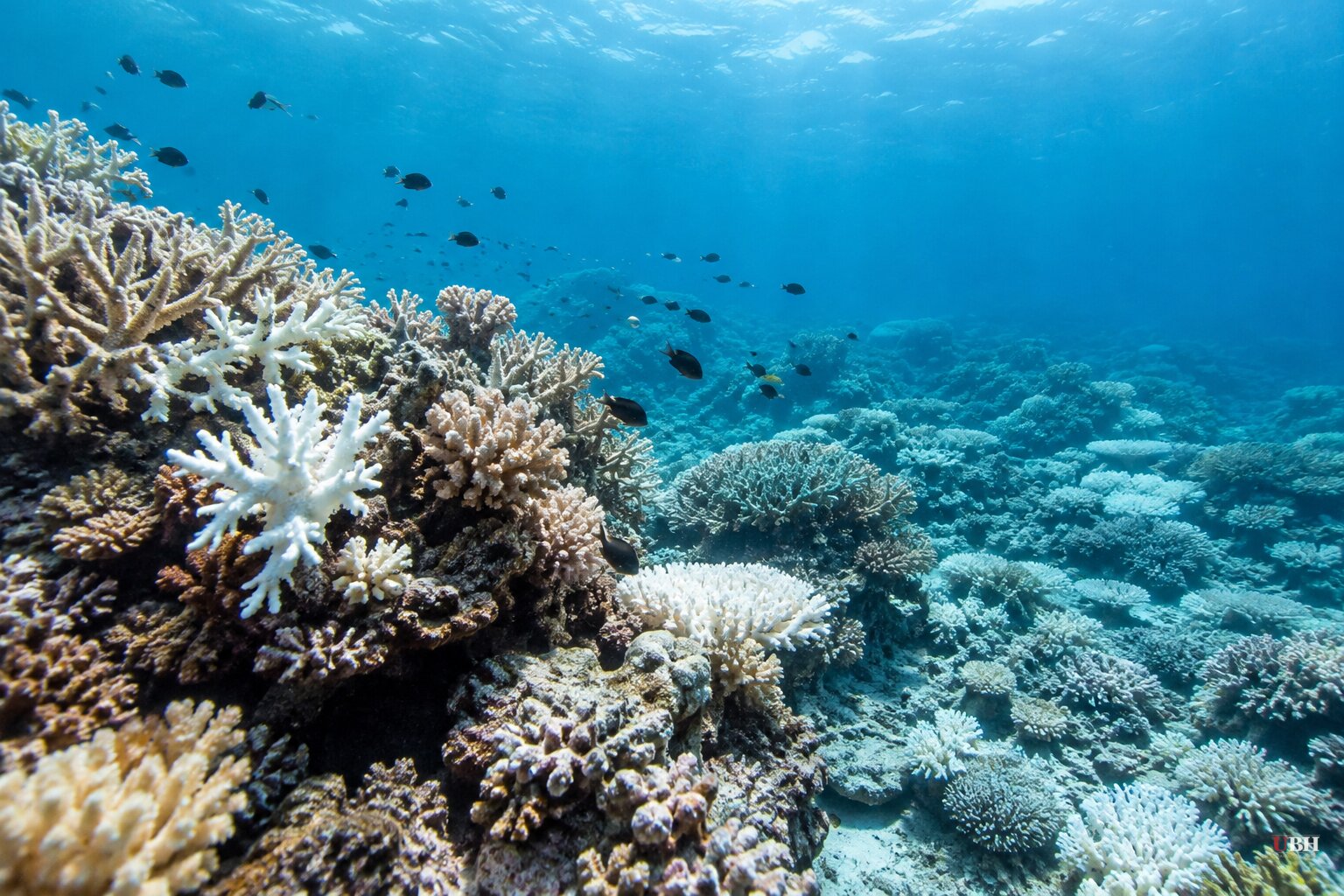
The International Union for Conservation of Nature said Thursday, Oct. 22, that nearly every shallow-water coral reef ecosystem on Earth faces an "extremely high risk" of collapse by 2075. It is the first global assessment of its kind under the IUCN Red List of Ecosystems.
The group classified 96% of the reef systems it studied as "critically endangered," its highest threat category. The findings were released at the UN's COP17 biodiversity summit in Yerevan, Armenia.
What the assessment measured
The IUCN analyzed 127 tropical and subtropical reef ecoregions covering 188,362 square kilometers (72,726 square miles).
The headline number has two parts. Looking only at what has already happened over the past 50 years, 24% of those ecosystems qualify as critically endangered. Add projected climate impacts and the share jumps to 96%.
The projection rests on the "middle-of-the-road" scenario from the UN's climate panel, which has global temperatures rising 2.7°C above pre-industrial levels by 2100. The United Nations said Wednesday that current national commitments put the world on track for about 2.6°C this century.
The IUCN defines a collapsed reef as one that can no longer sustain itself because hard, reef-building corals have almost entirely disappeared. Algae, rubble and sponges take their place, and the diverse fish and invertebrate community goes with them.
Which reefs are on the list
The critically endangered category includes the planet's biggest and most biodiverse systems:
- Australia's Great Barrier Reef
- The Coral Triangle in Southeast Asia and the western Pacific
- The Mesoamerican Barrier Reef System in the Caribbean
- The Red Sea reefs
The western Galápagos reefs have already collapsed, according to the IUCN. Four regions lacked enough data to be assessed at all, and the IUCN said the critically endangered share would likely be higher if they were included.
Heat is the main driver, but not the only one
The IUCN called heat stress from climate change "the single most consistent threat driving coral reef decline worldwide." Warming oceans trigger bleaching, when corals expel the symbiotic algae that feed them and give them color. Bleaching is not always fatal, but it weakens corals and leaves them more vulnerable to disease.
The organization also pointed to threats that governments control directly. Overexploitation of reef fish, including parrotfish and groupers, threatens 63% of the ecosystems assessed, because herbivores and predators keep algae in check and hold the ecological balance together. Coastal development, pollution, tourism and more frequent storms add to the pressure.
The assessment did not fully account for the fourth global mass bleaching event, which ran from early 2023 to mid-2025. The U.S. government's Coral Reef Watch program confirmed it as the most widespread on record. That event included a record bleaching in Western Australia, where a marine heatwave killed coral across a 1,500-kilometer stretch.
Mishal Gudka, the assessment's scientific lead and research director at CORDIO East Africa, also flagged the emergence this year of a "super" El Niño as an added risk. He made the comment at a COP17 news conference.
Not a done deal, according to the authors
The scientists behind the report pushed back on the idea that the verdict is final.
"The risk of coral reef collapse is escalating, but this must be a wake-up call rather than a cause for despair," Gudka said. "Coral reefs have shown a remarkable ability to bounce back from devastating bleaching events. Pockets of surviving, resilient coral reefs can still remain in the future, so we must do everything within our reach to set them up for success."
The IUCN itself said reefs in most parts of the world "are not yet lost." It said they could survive with rapid cuts to fossil fuel use alongside strong local conservation.
Grethel Aguilar, the IUCN's director general, called coral reefs "one of the clearest vital signs of the ocean's health."
The stakes
Reefs cover a tiny fraction of the seafloor but hold roughly a quarter of known marine species. They supply food to hundreds of millions of people, shield coastlines from storms and erosion, and anchor tourism economies from Queensland to the Caribbean.
The assessment lands in a busy stretch of reef science. A study in the journal Nature last week, led by the IUCN, found nearly 44% of reef-building coral species face an elevated risk of extinction, with climate change the main driver. A year ago, a survey found harmful bleaching had reached 84% of the world's reefs. 2024 was the hottest year on record, and the oceans absorbed much of that heat.
The 24% versus 96% split matters for policy. The first number is observed damage. The second depends on how fast emissions actually fall, and on whether the reef-by-reef fixes within a government's reach, like fishing limits, pollution controls and coastal planning, buy corals time.
Delegates at COP17 are under pressure to make progress on the landmark pact to halt and reverse biodiversity loss by 2030. The IUCN has not said when it will update the assessment to fold in the 2023 to 2025 bleaching event or the four unassessed regions, so the 96% figure could still move.
Sources used for this briefing
7 links from 7 independent newsrooms (syndicated copies of the same report count once)
These are the sources it draws on, linked so you can verify.


