
Unbiased headlines. Facts, not spin.
Unbiased Headlines is an independently owned news organization. We bring you the facts, not opinions, written fresh from 110+ named sources. Sources linked so you can verify it yourself.
 energy
Major Story (8/10)
Iran's Floating Oil Storage Falls to 866,000 Barrels as Germany Shuts Bank Saderat's Hamburg Branch
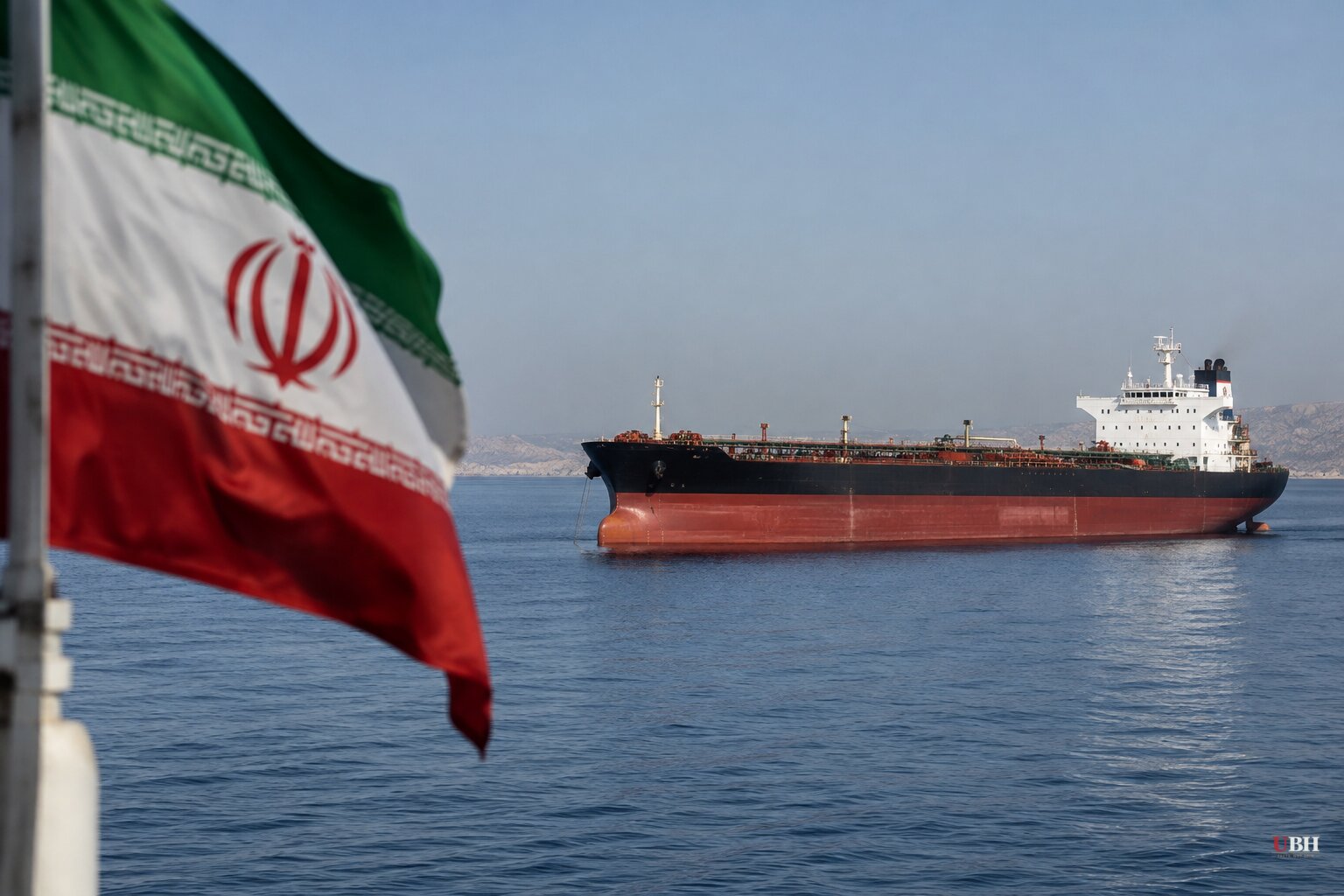
Since the U.S. reimposed its naval blockade on Iranian ports in mid-July, the squeeze on Tehran has moved from the oil market into European banking. On Thursday, Oct. 22, Germany's financial regulator BaFin said it had revoked the license of Bank Saderat Iran's Hamburg branch and ordered its liquidation in the wake of sanctions.
The same day, the Greek finance ministry said it is implementing sanctions linked to Iran and backs efforts to combat money laundering and terrorist financing. That statement followed Wednesday's U.S. Treasury action against Karnakis & Karnakis, a law firm based in Greece and Panama that Treasury says provided legal assistance to Iranian shipping networks for years.
Treasury also said the Financial Crimes Enforcement Network issued an administrative subpoena in an investigation of a Greek bank. Treasury did not name the bank. No charges have been announced against the law firm or any bank.
The storage numbers
The clearest measure of the blockade is Kpler's tally of Iranian crude sitting on tankers in Asian waters. Before the U.S. imposed its first blockade in April, Iran held close to 150 million barrels in floating storage. By mid-June, when the blockade was lifted under a ceasefire deal, that was under 50 million.
The deal collapsed in mid-July, hostilities resumed and the blockade returned. By mid-October, floating storage stood at 866,000 barrels, according to Kpler data cited by the Wall Street Journal.
"There's no more oil to discharge to China anymore," said Homayoun Falakshahi, Kpler's head of crude oil analysis.
Other tallies use different baselines. One summary of Kpler data put the peak of floating reserves at nearly 90 million barrels, falling below 1 million by Oct. 5. Kpler's Matt Smith told CNN that Iranian oil outside the blockade zone fell from 100 million barrels in July to 10 million. Onshore, he said, stockpiles are near record highs at about 70 million barrels, because Iran has nowhere to sell new production.
Iran loaded no crude for export in September, the first such month since Kpler began tracking in 2013. Its last successful loading was Aug. 25.
What Washington says it has cost Tehran
CENTCOM commander Adm. Brad Cooper said in a video update that the blockade has denied Iran at least $25 billion in oil exports. He said U.S. agencies, with CENTCOM's help, have frozen nearly $350 million in cryptocurrency.
Cooper also said Iran is "withholding salaries, pensions, and benefits" across several industries, including the IRGC. He cited reports that Iran-aligned militias are withholding their own fighters' pay to send money back to the IRGC. Those militia reports are unverified.
Treasury Secretary Scott Bessent said in the Wednesday announcement: "If you are supporting the Iranian regime, we will find you and sanction you." Treasury also sanctioned shipping agents based in Singapore and the UAE.
Tehran's answer
Iran's central bank governor, Abdolnaser Hemmati, rejects the collapse narrative. "The Iranian economy has demonstrated very good resilience, and the claim that Iran's economy is collapsing is nothing more than an illusion," he said, as quoted by the Wall Street Journal.
The numbers Iran's own government has published point the other way. Iranian data show the economy shrank at a 10% annual rate between March and June, and inflation hit 90% last month. Peterson Institute fellow Adnan Mazarei told CNN that Iranians spend cash immediately because it loses value so fast.
Still, no concession on the nuclear program has surfaced, and talks on transit through the Strait of Hormuz have repeatedly stalled. Iran's president and foreign minister have signaled they cannot trust Washington. Iran's UN ambassador, Gholamhossein Darzi, has demanded UN condemnation of the blockade.
Oil and escalation
Brent crude traded above $111 a barrel on Thursday, with price tickers showing about $112, and WTI near $99. Gulf shipments through Hormuz are flowing, but the security picture is not calm.
Iran's IRGC Navy claimed Thursday that seven vessels, including oil tankers, were hit by Iranian forces or struck mines in the Persian Gulf over the past day. That claim is the IRGC's own and has not been independently confirmed in these documents. Market reports also say the U.S. is reportedly planning to resume strikes on Iran. No U.S. official has confirmed that.
Falakshahi laid out the American bet plainly: the economy either pushes the regime back to negotiations on a nuclear deal, or sparks internal protests the regime struggles to contain. A third path is that Tehran uses energy disruption as leverage, since it has fewer economic options left.
One cushion remains. Chinese payments can take around two months to arrive, so Tehran may still collect on past sales in the coming weeks. How long that money lasts, and whether the regime bends before it runs out, is the open question.
Sources used for this briefing
7 links from 6 independent newsrooms (syndicated copies of the same report count once)
These are the sources it draws on, linked so you can verify.


