
Unbiased headlines. Facts, not spin.
Unbiased Headlines is an independently owned news organization. We bring you the facts, not opinions, written fresh from 110+ named sources. Sources linked so you can verify it yourself.
 energy
Major Story (7/10)
UAE Closes Umm Al Quwain Beaches After Tanker Oil Spill. Ministry Has Not Named the Ship
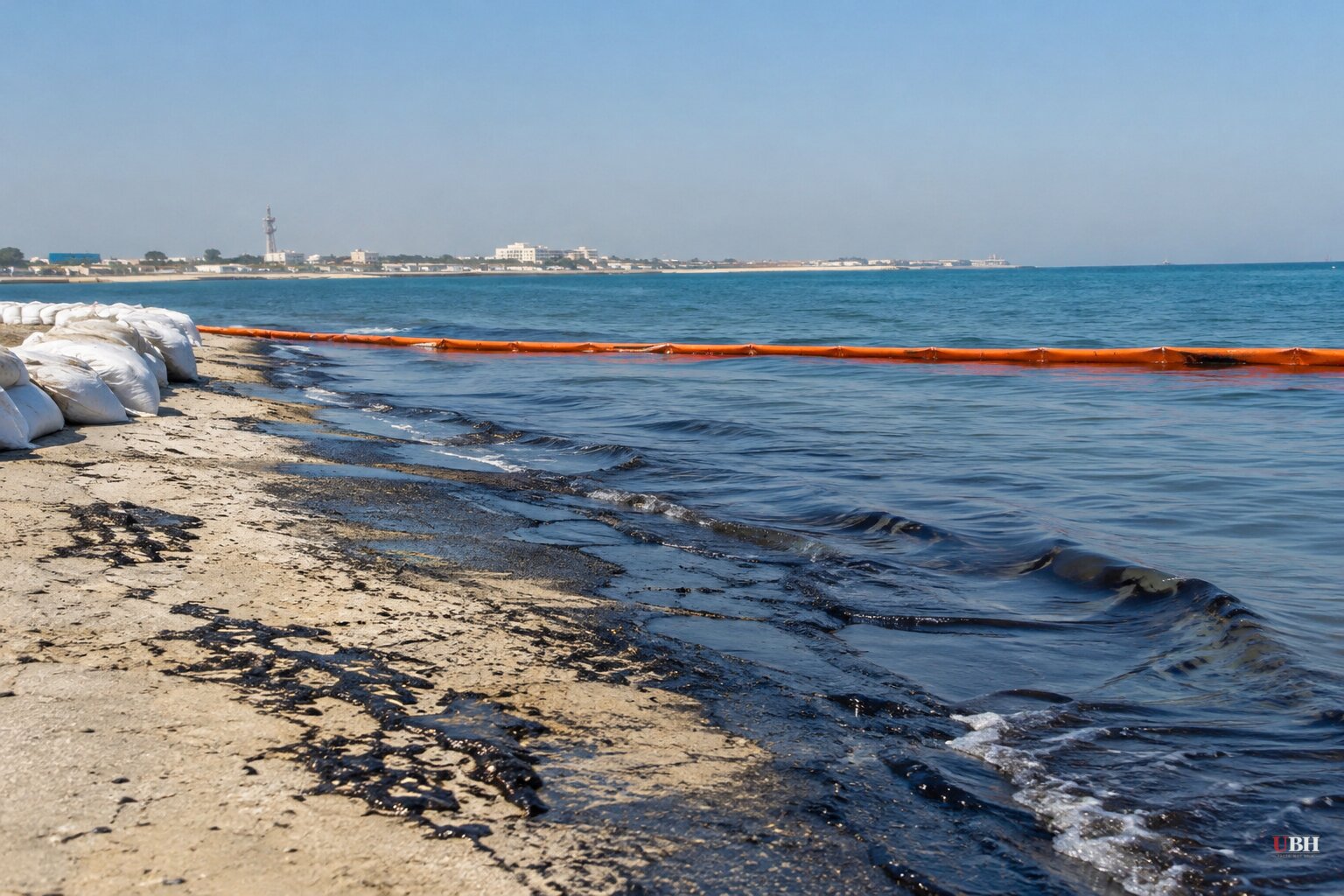
Since the war began with US-Israeli strikes on Iran in late February, the fighting over Hormuz has been counted in burning ships and shipping lanes. On Friday, Oct. 23, it showed up on a beach.
The UAE's Ministry of Climate Change and Environment said its monitoring system "detected a tanker oil spill affecting Umm Al Quwain's beaches." Umm Al Quwain is an emirate north of Dubai. The ministry said teams "immediately began containment, cordoning, clean-up and remediation" to limit environmental damage.
All beaches and coastal areas in the emirate are closed until technical teams finish their assessments and decide what safety and marine protection measures are needed. Survey operations are continuing as a precaution, the ministry said.
What the UAE has and has not said
The ministry did not identify the tanker or say how much oil was released. It also did not say whether the leak is tied to an attack on a vessel.
Residents in the country's north have posted about oil-like smells on social media for several days, including in northern districts of Dubai. The ministry said odors reported in Sharjah, Ajman and Umm Al Quwain pose no health risk.
It told fishermen and other sea users to follow official instructions and stay out of affected fishing areas. It also asked the public to rely on official channels and not spread rumors.
A crowded stretch of water
The UK maritime security agency UKMTO reported on Oct. 9 that a vessel was hit by a projectile off the UAE coast, starting a fire that was later brought under control. The maritime security firm Vanguard identified that ship as the Panamanian-flagged tanker GEM NO.2. No one has publicly linked that ship to the spill.
The UAE sits roughly 40 to 50 nautical miles from the narrowest point of the Strait of Hormuz. About a fifth of the world's oil moved through the strait before the war. Both Tehran and Washington have since imposed blockades there.
Shipping attacks have kept coming. Oman's defense ministry said the Panamanian-flagged tanker On Peace was attacked, presumably by Iran, about nine nautical miles off the Omani port of Limah. UKMTO reported a fire in its engine room. Oman's air force evacuated the crew, 17 of whom are Indian nationals. India's Foreign Ministry said at least 12 crew members were injured, 11 of them Indian.
Ship-tracking data suggests On Peace was running with its transponder off. Seatrade Maritime News noted it is one of 81 ships on a blacklist issued by Iran's self-declared Persian Gulf Strait Authority. The authority has threatened blacklisted ships with "fines, detention, or confiscation."
Tehran's position on the route
Iran's account is that it controls a passage through its own territorial waters and that ships going around it are acting without authorization. Earlier this week, the IRGC said it targets tankers using what Tehran calls an unauthorized route through the southern part of the strait, near Oman.
On Oct. 17, Iran's IRGC navy said two oil tankers, each carrying about 2 million barrels of crude, caught fire after hitting naval mines. Iranian state media said both ships had switched off positioning and radar systems and tried to cross on an unapproved route.
Washington and the International Maritime Organization reject Iran's framework of tolls and safety fees run by the IRGC as inconsistent with international maritime law. IMO Secretary-General Arsenio Dominguez said the only route recognized and charted is the traffic separation scheme adopted in 1968.
He also said mines remain a danger. "The information that we have is that they still have mines," Dominguez told Fox News Digital. "We cannot guarantee that a vessel that intends to transit that route will not be hit by a mine."
He added that verifying the lanes are clear is hard while the conflict continues.
What comes next
The immediate issue is the source. Until the ministry or another authority names the vessel and the cause, the spill cannot be attributed to a projectile strike, a mine, or an accident. The ministry's survey operations are the first step toward an answer.
The Umm Al Quwain closures have no reopening date. The ministry has tied them to the technical teams' assessment.
Sources used for this briefing
7 links from 7 independent newsrooms (syndicated copies of the same report count once)
These are the sources it draws on, linked so you can verify.


