
Unbiased headlines. Facts, not spin.
Unbiased Headlines is an independently owned news organization. We bring you the facts, not opinions, written fresh from 110+ named sources. Sources linked so you can verify it yourself.
 energy
Major Story (7/10)
Event date: October 20, 2026 ·
LNG Canada Partners Approve C$33 Billion Phase 2, Doubling Kitimat Capacity to 28 Million Tonnes a Year
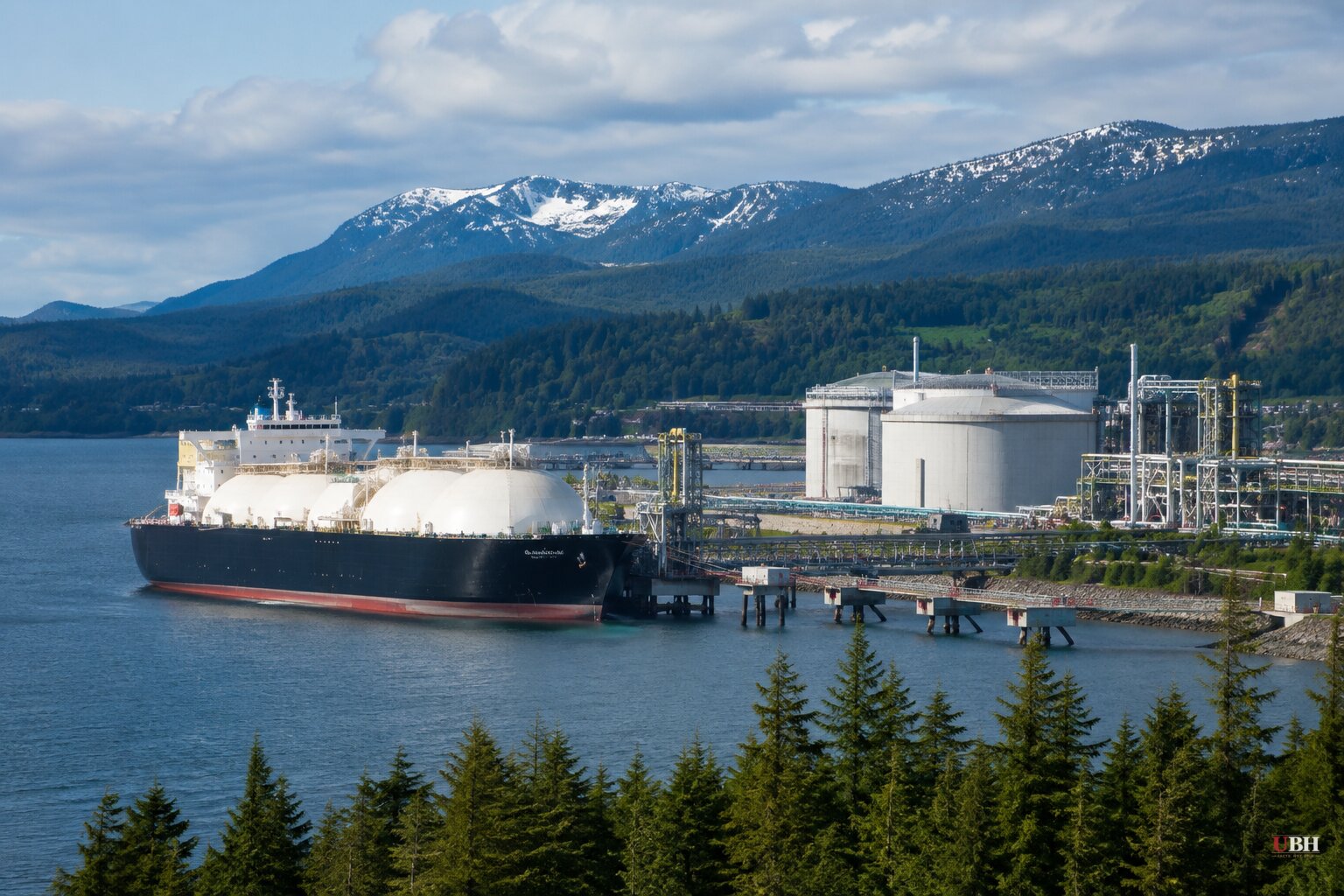
The partners in LNG Canada approved Phase 2 of the Kitimat, British Columbia, export terminal in September. The project will double capacity from 14 million tonnes per year to 28 million.
The price tag is roughly C$33 billion. Ottawa has said the expansion is expected to draw about that much in private capital. Commercial operations are expected to begin in the early 2030s.
What Phase 2 builds
Phase 2 adds two liquefaction trains, another LNG storage tank, a condensate tank, a marine loading berth and expanded utility and process systems. Remaining permitting, consultation and construction work continues as the project moves into execution.
The gas has to come from somewhere. TC Energy is proceeding with Coastal GasLink Phase 2, adding five compressor stations along the existing 670-kilometre line from Dawson Creek to Kitimat. The pipeline currently carries about 2.1 billion cubic feet per day. This month TC Energy announced an agreement giving five First Nations an economic interest in the entity that holds its limited-partner stake in the pipeline.
LNG Canada is owned by Shell (40%), Petronas (25%), PetroChina (15%), Mitsubishi (15%) and Korea Gas Corporation (5%). Shell says its share will bring it nearly 6 million tonnes a year of additional LNG.
The Kitimat plant began exports in 2025. It is Canada's first large-scale LNG terminal.
Why Asia, and why the Pacific coast
Kitimat sits on the Pacific. Cargoes bypass the Panama Canal and the Middle East chokepoints. According to S&P Global, a tanker from British Columbia reaches Tokyo in about 8 to 9 days, against 16 to 18 days from the U.S. Gulf Coast.
Asian buyers are shopping for supply outside the Gulf. U.S. LNG shipments to Asia rose 108% in the first half of 2026 from a year earlier, after closures around the Strait of Hormuz.
Wood Mackenzie projects Asian LNG demand will roughly double, from about 260 million tonnes a year today to about 500 million by 2060. Shell's own LNG Outlook 2026 projects global demand up about 60% by 2040.
Carney framed the decision around diversification. "Today's investment is being made in a different environment: a more dangerous and divided world… A world where Canada fully values export diversification and the greater sovereignty it confers," he said.
The numbers behind that argument are stark. Canada exported a record 4.3 million barrels a day of crude in 2025, and 3.9 million of it, just over 90%, went to the United States, according to the Canada Energy Regulator. The expansion comes amid stalled talks on a revised USMCA and tariffs President Trump imposed last year.
The PetroChina question
Conservative MP Dean Allison is drawing attention to PetroChina's 15% stake in the project. He describes PetroChina as a Chinese state-controlled entity.
The issue first came up in April at a parliamentary committee, when Conservative MP Shannon Stubbs asked Internal Trade Minister Dominic LeBlanc whether Ottawa had run a national security review of the stake.
LeBlanc said he had been "briefed regularly" by the Major Projects Office and national security officials. "I am satisfied, after the briefings I received, that the review is done," he told Stubbs.
The government has not released details of that review. It cites confidentiality rules under the Investment Canada Act.
Dean Baxendale, CEO of the China Democracy Fund, argues Beijing could use Canadian energy exports as leverage. "I think ultimately they'll hold that over our head, just as they have done with canola," he said in an interview. He and Allison point to a 2019 commentary from China's state-run CGTN, which said the Kitimat plant and the Trans Mountain pipeline were built "in large part to serve the Chinese market."
PetroChina also holds interests in Alberta oilsands, gas production and pipeline assets.
The Phase 2 build has a China connection as well. LNG Canada has said large prefabricated sections will be built in China using Chinese steel, because the components cannot be built in Canada.
No charges, investigation or formal complaint has been announced. PetroChina is one of five partners, and the 15% stake is the same one that was in place when the plant was built.
A window that may be closing
With Woodfibre LNG and Cedar LNG, both under construction, Canada expects to export about 33 million tonnes a year by the end of the decade. Cedar is designed to run on BC Hydro electricity, which Wood Mackenzie says supports Canada's lower-carbon pitch to buyers in Japan and South Korea.
That is still well short of Carney's 100-million-tonne ambition under his "energy superpower" agenda, even counting projects such as Ksi Lisims LNG, according to Wood Mackenzie.
The firm, in a whitepaper prepared with Petronas and Energy Asia, warns that more projects are chasing scarce capital to reach their own investment decisions. "Canada's resource advantage is real, but realizing its full potential will depend on competitiveness, execution and timely project delivery," said Joshua Ngu, the firm's Asia Pacific vice chairman. He added that buyers are weighing cost, timeline and execution risk against alternatives that are already further along.
The next test is delivery. Phase 2 must clear its remaining permits and consultations, Coastal GasLink must finish its compressor stations, and the gap between 33 million tonnes and 100 million tonnes remains unfilled.
Sources used for this briefing
7 links from 6 independent newsrooms (syndicated copies of the same report count once)
These are the sources it draws on, linked so you can verify.


