
Unbiased headlines. Facts, not spin.
Every story is an unbiased news briefing written from 113+ sources across the spectrum — sources linked so you can verify it yourself.
 defense
Major Story (8/10)
Event date: September 20, 2026
defense
Major Story (8/10)
Event date: September 20, 2026
Houthis Warn Egypt, Turkey and Pakistan Not to Join Saudi Fight as G7 Demands a Stand-Down
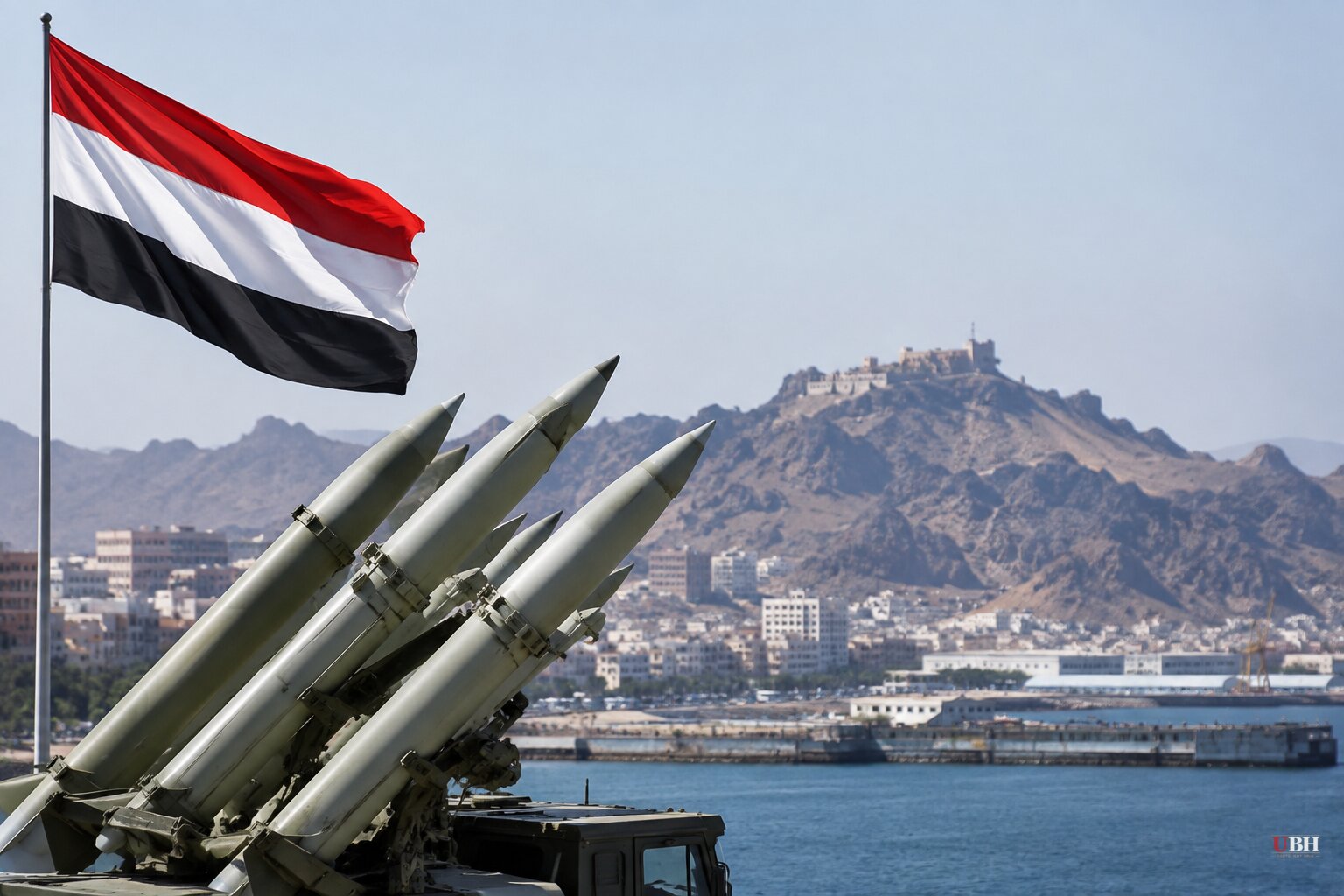
Since Houthi ballistic missiles hit Riyadh for the first time on the night of September 19 into September 20, setting fires visible near King Khalid International Airport, the Yemen war has widened from a Saudi-Houthi fight into a regional standoff with three more countries now in the crosshairs.
A Houthi political bureau member, Mohammed al-Bukhaiti, told the Iraqi program Another Reading this week that Ansar Allah would deliver a "decisive and painful response" if Turkey or Pakistan send forces into the conflict, according to The Express Tribune. "By God, if Türkiye and Pakistan become involved, we will strike them with an iron fist," al-Bukhaiti said.
Separately, Iran's state-run Nour News, tied to Tehran's Supreme National Security Council, reported a Houthi official saying Egypt, Turkey and Pakistan "will likely be targeted in the next stages" of the war, according to ZeroHedge. The official framed the three countries as tools being pushed by Saudi Arabia into conflicts designed to weaken their internal stability.
These threats trace back to the Mecca Joint Defence Agreement, signed by Saudi Arabia, Turkey and Pakistan on August 7. Under the pact, an attack on any one signatory is treated as an attack on all three, according to The Express Tribune. Turkey has not yet ratified the agreement; ratification is expected in October, according to Newlines Magazine.
Turkish Foreign Minister Hakan Fidan has already signaled where Ankara stands, saying Saudi Arabia's territorial integrity and sovereignty had come under "serious attack," per The Express Tribune. Whether that rhetoric turns into deployed Turkish forces, or Pakistani ones, remains unresolved. Hamer Intel reported that Saudi Arabia directly asked Pakistan and Turkey for military action after the September 19 Riyadh airport strikes, though neither government has announced troop commitments as of this week.
On Monday, G7 foreign ministers from Canada, France, Germany, Italy, Japan, the UK and the US issued a joint statement calling on the Houthis to "immediately cease all military actions and all threats and attacks against civilian shipping" and return to negotiations, according to Euronews. The same statement called on Iran "to end its arming of and support for the Houthis," alleging Tehran is violating past UN Security Council resolutions.
France said it was ready to help "secure" Saudi energy infrastructure on a strictly defensive basis, a diplomatic source told AFP, while stressing this "in no way involves taking part in the conflict with the Houthis," according to Euronews. Britain's commitment, announced separately by Prime Minister Keir Starmer, covers defensive air-to-air refueling for Saudi jets.
While the diplomatic pressure builds, the actual fighting has shifted. CNN reports the Houthis are now pushing into Yemen's mountainous Taiz region, aiming to cut supply routes between government-held areas. Yemen analyst Mohammed al-Basha called this a threat to "a key transport and supply connection between government-held areas."
Al-Basha told CNN the Houthis have hit stiff resistance from local tribes in Taiz, and the government still holds a critical road junction linking Taiz to Aden as of Monday. That's a contrast to the collapse on Yemen's west coast, where the port of Mokha fell within hours during the initial Houthi push. Heavy fighting is also underway in Marib, an oil-rich province the Houthis have targeted before without success, according to CNN and the Associated Press.
The human toll keeps climbing. The rebel offensive has forced roughly 125,000 Yemenis to flee their homes, the AP reported, on top of a 12-year civil war that has already killed more than 150,000 people.
Houthi officials argue their offensive is a response to a Saudi-imposed blockade, not unprovoked aggression. "It is Saudi Arabia that closed the Bab el-Mandeb strait to shipping traffic to and from Yemen and imposed an unjust blockade on the country," al-Bukhaiti told the AP. That grievance is real and long-standing. The blockade dates back years. But the Houthis are the ones who seized new territory and struck Riyadh's capital for the first time in the war, escalating a conflict that had been largely frozen since 2022.
None of the reporting here shows Washington moving off the sidelines. President Trump was reported ready to strike the Houthis last weekend before backing off by Monday, according to ZeroHedge, and a regional diplomatic source told CNN that Saudi appeals for US airstrikes have "fallen on deaf ears." The open question now is whether Turkey ratifies the Mecca pact next month while the Taiz and Marib fronts are still live, and whether that ratification is treated by the Houthis as the trigger for the retaliation they've already promised.
Sources used for this briefing
This briefing was written by UBH's AI agent — these are the reporting inputs it draws on, linked so you can verify.


