
Unbiased headlines. Facts, not spin.
Unbiased Headlines is an independently owned news organization. We bring you the facts, not opinions, written fresh from 110+ named sources. Sources linked so you can verify it yourself.
 energy
Major Story (7/10)
Global CO2 Emissions Fell 0.4% in 2026, and Scientists Credit the Iran War Oil Shock, Not Climate Policy
The world burned slightly less fossil fuel this year. The reason is not a breakthrough in climate policy. It is a war.
The Global Carbon Project, an international team of more than 140 scientists, estimates that fossil CO2 emissions in 2026 will total 38.2 billion metric tons (42.2 billion U.S. tons). That is a 0.4% decrease from 2025. The estimate, published in the journal Earth System Science Data Discussions, includes projections for the final months of the year. It was presented at the U.N. climate negotiations in Antalya, Turkey.
Oil fell, coal rose
Here is the breakdown. Oil emissions dropped nearly 2% and natural gas fell 0.3%. Coal went UP 0.6%.
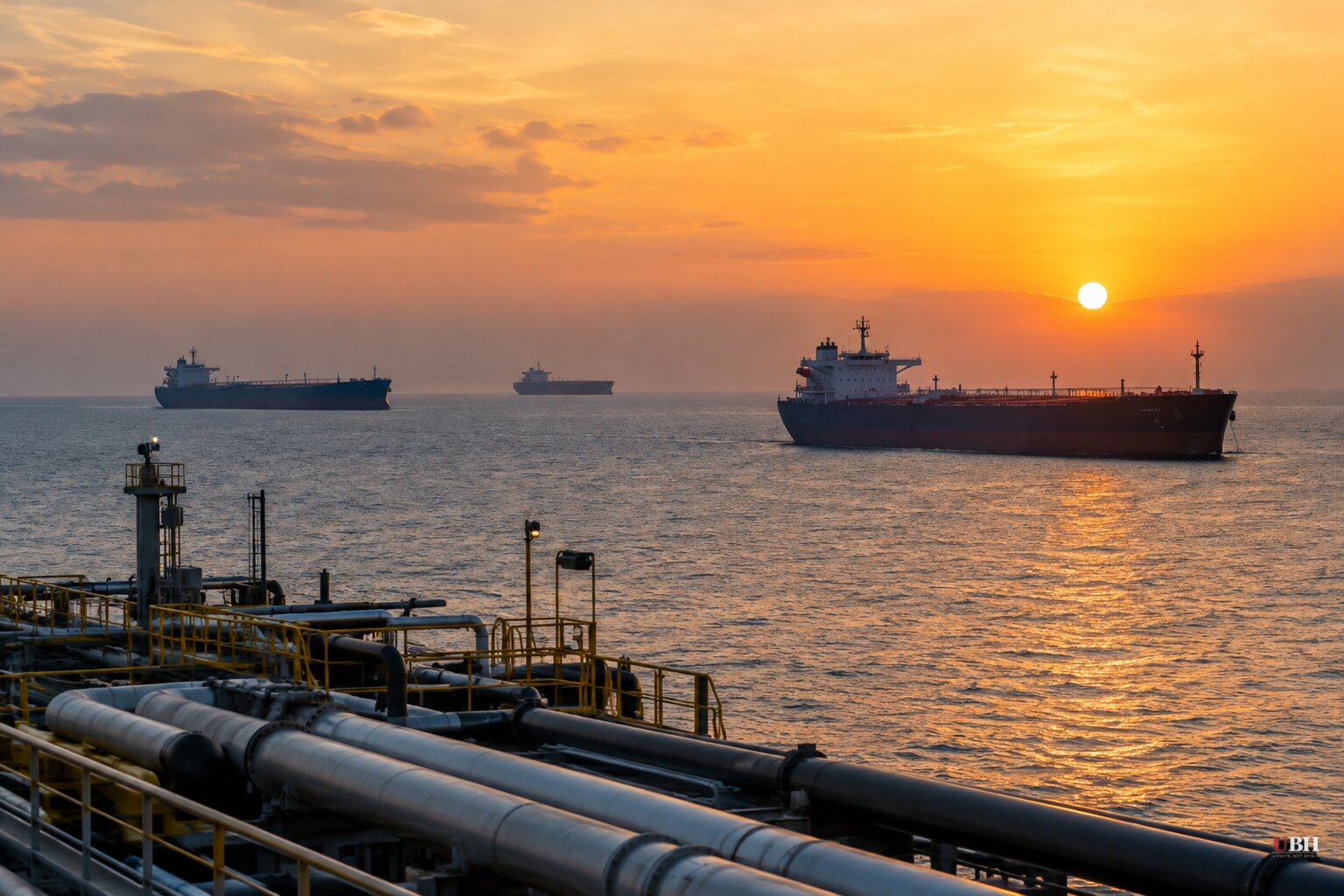
The war in Iran has effectively closed the Strait of Hormuz, a vital shipping artery for petroleum products, and pushed up global gasoline and oil prices. Brent crude was quoted at $91.43 a barrel and WTI at $83.26 in late trading on Wednesday, Nov. 18.
"It's downwards which sounds good, but this is largely driven by the war in Iran, what's happened in the Strait of Hormuz," said study co-author Glen Peters of the CICERO Center for International Climate Research in Norway. "So in a way, a little bit of good news, but for the wrong reasons."
Peters said the timing and the fuel mix point to the war. A structural shift toward renewables would show oil rising to a peak and then declining slowly. This year, he said, oil emissions climbed and then suddenly dropped 2%.
This is only the third annual decline in global carbon pollution this century. The other two came with the 2009 recession and the 2020 pandemic. Peters said that after both, hopes for a clean-energy recovery fizzled and "we seem to go back to where we were before."
Experts split on whether it lasts
Niklas Höhne, co-founder of Germany's NewClimate Institute, sees more durable change. "Permanent shifts are happening," he said, pointing to rapid electric car and truck adoption, especially in Asia. He thinks the global emissions peak is near or already here.
Peters's reading of the past two dips points the other way. If the war ends and prices fall, the old consumption patterns could return.
How China absorbed the hit
China is the clearest case of an economy cushioned by electrification. An analysis from the Centre for Research on Energy and Clean Air (CREA) found that the Hormuz disruption cut China's crude imports sharply without the economic and social disruption a shock of that size would normally cause.
From March through August 2026, drawing down inventories accounted for about 47% of the year-on-year drop in net crude imports. Refinery throughput fell roughly 9.6%. Lower fuel exports offset about 29% of the decline in domestic gasoline, diesel and jet fuel output. CREA says those moves redistributed the shock rather than removing demand for oil.
The structural buffer was electric vehicles. CREA estimates China's EV fleet displaced 38 million tonnes of oil equivalent in the first six months of the crisis, 52% more than in the same stretch of 2025. That equals about 13% of China's crude imports in March through August 2025.
CREA also estimates that non-fossil power growth since 2020 avoided $9.1 billion in fossil fuel import costs over the period, the largest savings of any country.
The emissions figures followed. China's CO2 output fell 3.1% in the third quarter, its biggest drop since COVID, and oil consumption fell 4% year on year. Coal emissions fell 3%. "China added enough wind, solar, and nuclear generation over the same period to power Germany," Yale 360 reported, "and more than twice as much as needed to meet China's growing demand." A construction slowdown also cut emissions from steel and concrete.
China is still the world's largest coal consumer, and it is still building coal plants. But Lauri Myllyvirta, CREA's lead analyst, says its emissions have been flat or falling for two and a half years. "Those are bigger reductions than we expected," he said, "and I think anyone expected."
There is a national-security angle that has nothing to do with climate. A country that can lose a chunk of its seaborne oil and keep its economy running has a strategic advantage over rivals that cannot. Beijing also supplies the solar panels and batteries that cash-strapped governments are now buying. Pakistan, Brazil, Chile, Morocco, Kenya and Namibia are among the countries adding solar at record speed.
The U.S. position
U.S. emissions rose in 2025, and U.N. scientists have noted the country as the only major economy where pollution climbed significantly. They are projected to fall slightly this year as coal burning declines.
Alex Wang, a UCLA Law professor who studies Chinese climate policy, blames inconsistency. "What we're suffering through these days is the policy whiplash that comes with the political divisions in the U.S.," he said. He says the Biden administration raised funding for solar, wind, batteries and EVs, and the Trump administration cut that funding and added regulatory hurdles.
The administration is taking the opposite bet. It is proposing to ease methane rules, arguing the change would produce $45 billion in regulatory savings, release 210 million barrels of U.S. oil and enable 1.4 trillion cubic feet of natural gas production. Those are the administration's projections. National Review, which backs the move, concedes the production numbers may be optimistic and says easing supervision of smaller producers, which account for a disproportionate share of fugitive methane, should not become ending it.
The Antalya talks continue with a 0.4% dip on the table and a scientist telling delegates it came "for the wrong reasons." Peters's team will fold in the year's final months of data. Whether 2027 shows another decline depends largely on whether Hormuz reopens and oil prices fall, and on whether EV buyers in China and Asia stay with electric vehicles once gasoline gets cheaper again.
Sources used for this briefing
7 links from 6 independent newsrooms (syndicated copies of the same report count once)
These are the sources it draws on, linked so you can verify.


