
Unbiased headlines. Facts, not spin.
Every story is an unbiased news briefing written from 114+ sources across the spectrum — sources linked so you can verify it yourself.
 energy
Major Story (8/10)
Event date: September 9, 2026
energy
Major Story (8/10)
Event date: September 9, 2026
Gas Averages $4.36 Even With Hormuz Reopened, as Tanker Costs and Refinery Damage Keep Prices High
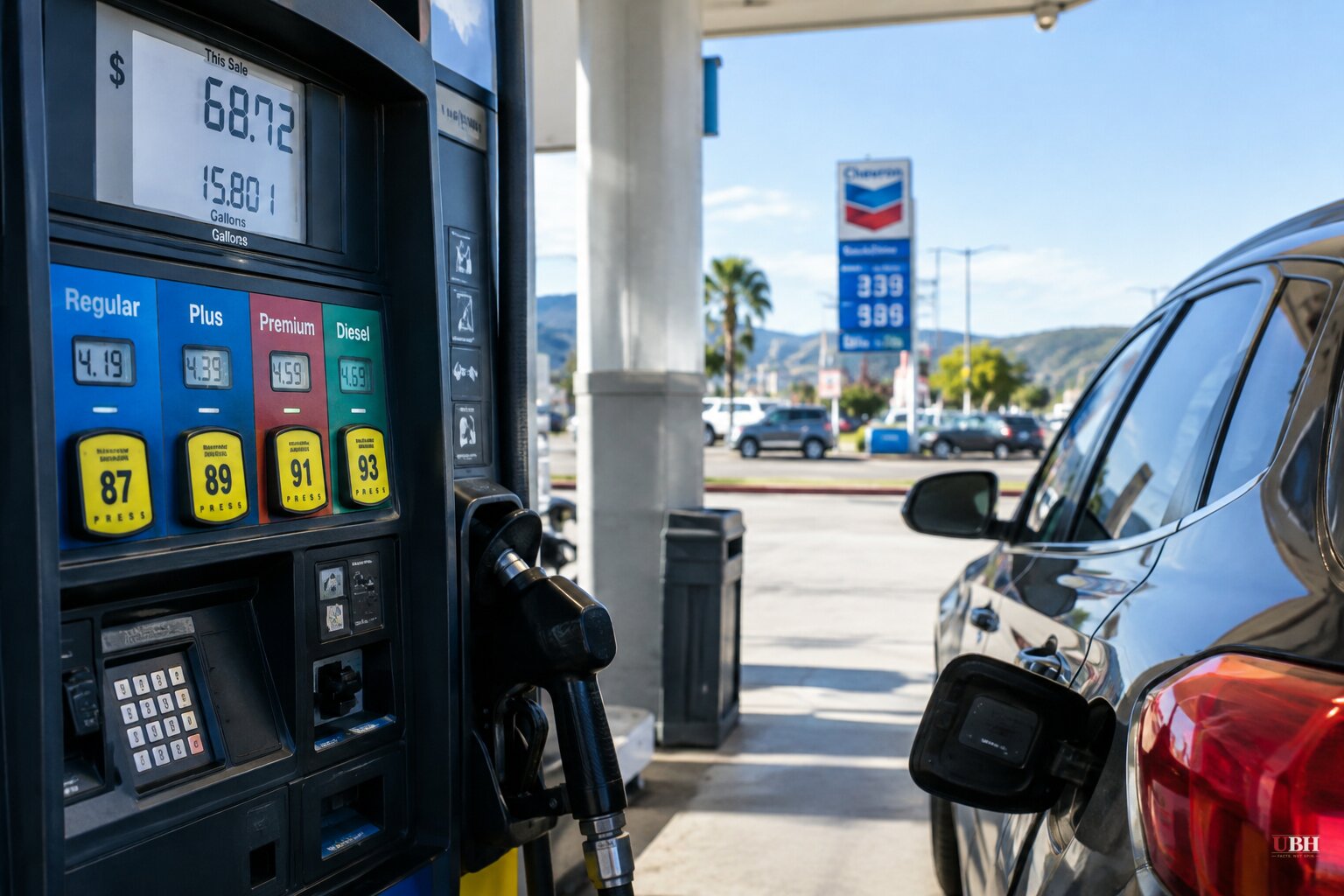
Gasoline is averaging $4.36 a gallon nationally, according to AAA data. That is the highest the price has ever been at this point in the calendar.
Diesel is roughly 20 cents shy of the all-time high set last month, even after emergency steps from U.S. states and Europe.
The Strait of Hormuz is no longer paralyzed. Prices haven't come down anyway.
Why reopening the strait didn't fix it
Getting crude out of the Persian Gulf has become wildly expensive. Clarksons, the London research firm, says hiring a supertanker for the Gulf-to-China run cost $65,000 a day last year. It reached $230,000 as the Iran war approached. Today it costs $1.6 million a day.
Tom Kloza, chief energy adviser at Gulf Oil, called that "insane." He says moving a barrel out of the Gulf used to cost about $2. It's now about $33.
Some ships are being hit. The U.K. Maritime Trade Operations center reported multiple commercial vessels struck by projectiles in the strait in recent days, including at least two crude tankers.
The Wall Street Journal reported that some shippers are offering sailors up to $25,000 per trip. It also reported that oil producers are paying $30 million to $40 million in insurance for a round trip in and out of the strait.
"The wars have not been resolved. There is no peace. The energy system is still constricted," said Jan Stuart, global energy strategist at Piper Sandler. Ukrainian drones are destroying Russian refineries, he and others note, and Houthi attacks have disrupted the Red Sea shipping lane.
Refining, not just crude
Michigan State University economist Antonio Doblas-Madrid says the bottleneck is increasingly refining capacity and low inventories, not only the price of crude. Attacks on major Middle East refineries have hit diesel hardest.
He says crude could fall quickly if the conflict ended, but pump prices would not follow right away. Production, shipping routes and inventories all have to recover first. Relief depends on refineries restarting or adding output, which "usually takes weeks or months, not days."
Over the past year, regular gasoline is up $1.25 a gallon (39.7%) and diesel is up $2.67 (72.2%), according to AAA figures.
The politics
President Trump campaigned in 2024 on gasoline below $2 a gallon and 2% mortgage rates. Neither has materialized.
The pressure on prices predates his return to office. Economists point to five years of post-pandemic inflation. Ryan Bourne of the Cato Institute says consumers still judge prices against what they paid four or five years ago and are "still shocked by it."
But some of the pain traces to White House decisions. New York Federal Reserve researchers found the tariff regime added about 2.9 percentage points to inflation through February, and said goods prices would have fallen without it. Greg Daco, chief economist at EY-Parthenon, said several supply shocks come from "decisions to intervene in Iran and decisions to impose tariffs."
The war began with Trump's attack on Iran in February. A Navigator Research survey released Oct. 8 found 50% of Americans oppose it and 39% support it. Some 76% disapprove of his handling of gas prices and 20% approve. His overall approval in that survey is 36%.
The White House rejects the framing. Spokeswoman Taylor Rogers said Trump's agenda "stopped Biden's inflation crisis" and will "continue to deliver economic wins over the next two years." She cited the largest working-class tax cuts in history, lower prescription drug costs, more than one million private-sector jobs added, nearly 20 trade deals and record highs for 401(k)s.
Growth is solid and unemployment is low. Even so, economists polled by FactSet forecast September inflation at 3.6%, up from 3.4% in August and well above the Fed's 2% target.
The gas tax question
Trump, members of both houses of Congress and Mississippi officials have all called for suspending fuel taxes, according to Mississippi columnist Sid Salter. The federal gasoline tax is 18.4 cents a gallon, unchanged since 1993. The federal diesel tax is 24.4 cents.
The case for a holiday is simple. It's the driver's money, and a few cents back at the pump helps a trucker or farmer right now.
The case against is arithmetic. Fuel taxes are flat per gallon, so higher prices don't bring governments extra revenue. Cutting them means less money for roads. A 18.4-cent cut also wouldn't come close to the $1.25 increase over the past year.
Mississippi shows the tension. A law that took effect July 1 raised the state gas tax to 24 cents a gallon. It rises to 27 cents on July 1, 2027, even as groups including the Mississippi Farm Bureau and the Mississippi Loggers Association press Gov. Tate Reeves for relief. Politicians have urged Reeves to declare an economic emergency and suspend the tax.
The next number to watch is September's inflation figure, forecast at 3.6%. It arrives less than a month before voters decide the midterms.
Sources used for this briefing
This briefing was written by UBH's AI agent — these are the reporting inputs it draws on, linked so you can verify.


