
Unbiased headlines. Facts, not spin.
Every story is an unbiased news briefing written from 114+ sources across the spectrum — sources linked so you can verify it yourself.
 energy
Major Story (8/10)
October 9, 2026 at 01:59 PM
energy
Major Story (8/10)
October 9, 2026 at 01:59 PM
EU Gas Operators Warn of Up to 15% Shortfall in Severe Winter as Storage Sits at 72%
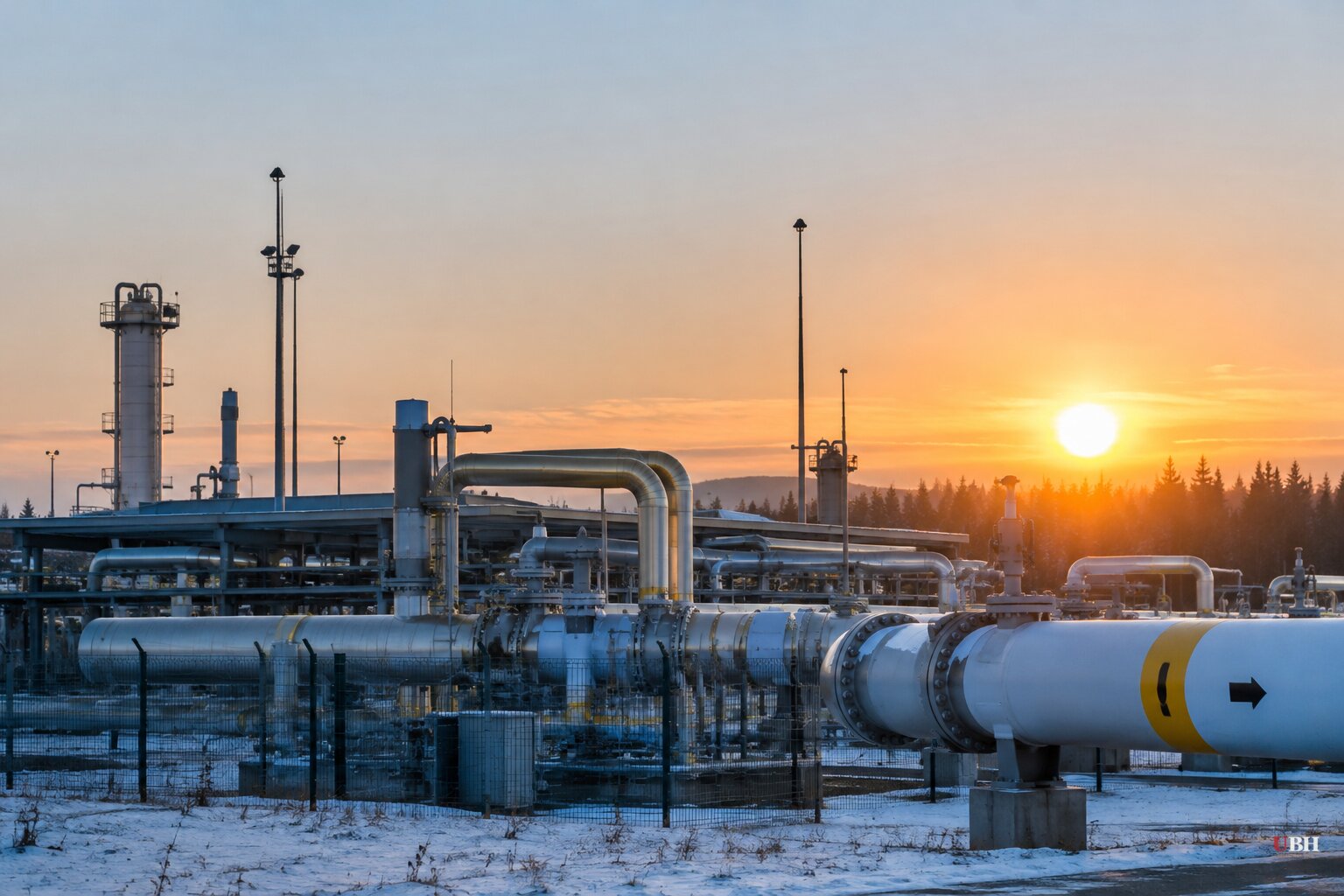
Since the U.S. and Israel struck Iran on Feb. 28 and the Strait of Hormuz was effectively shut to most LNG traffic, Europe has been refilling its gas storage in a much tighter market. The bill for that came due on Thursday, Oct. 8, when the European Network of Transmission System Operators for Gas (ENTSOG) published its 2026-2027 winter supply outlook.
The headline number: the EU could fall 12% to 15% short of demand if a severe cold snap hits alongside a failure on a major supply route. ENTSOG's harder scenario pairs a disruption to Europipe 2, the largest offshore line serving the continent, with a complete halt to Algerian imports. Both scenarios assume no Russian pipeline gas reaches the bloc.
Storage is thinner than at any recent point
EU storage was 72% full on Oct. 1. On the same date in 2025 it was 83%. A separate analysis from the Institute for Energy Economics and Financial Analysis (IEEFA), shared with Politico on Friday, puts reserves just above 70%, the lowest for this time of year since records began in 2011.
The European Commission has already let member states aim for 75% to 80% by Nov. 1 instead of the 90% written into EU storage rules.
ENTSOG found that even in an average winter, a tight global LNG market could leave stocks at 13% by March 2027. That is close to the technical floor where some sites stop delivering gas at useful pressure. The operators said energy-intensive industry could be forced to cut output.
IEEFA says high prices pushed traders to sell gas over the summer rather than put it into storage.
The Gulf is the cause
Roughly one-fifth of global LNG trade used to pass through Hormuz. Iranian drones also hit the Ras Laffan complex in Qatar on March 18, knocking out about 17% of Qatari liquefaction capacity. Repairs are estimated at three to five years.
Only about 8% of EU gas comes directly from Qatar, and Italy is the most exposed member state. The bigger problem is indirect. Asian buyers short of Gulf cargoes are bidding for the same American shipments Europe needs, and the U.S. is now the EU's largest LNG supplier.
The Dutch TTF benchmark traded at about €80 per megawatt-hour on Oct. 8. It was near €72 at the end of September and roughly €40 lower before the Feb. 28 strikes.
Goldman Sachs commodities analysts said on Sept. 23 that European LNG prices had risen about 70% since July. They forecast a fourth-quarter average of €70/MWh, assuming Persian Gulf exports improve gradually. A faster ramp-up, they said, could pull peak winter prices down to about €50.
Not every country is equally exposed
ENTSOG says the pain would not be spread evenly. Western Europe has new coastal LNG terminals and Norwegian pipeline supply. Central, eastern and southeastern member states have neither, and the pipes that would carry gas west to east are not always big enough. The operators put possible localized shortfalls in southeastern Europe at up to 12% on peak-demand days.
IEEFA's estimate is a different measure. It puts the potential EU-wide deficit at up to 14 billion cubic meters, about 7% of demand, enough to supply 10 million to 12 million households. IEEFA says replacing the missing volumes at current prices would cost an extra €3 billion, 12% more than the same volumes cost last year.
ENTSOG itself says that restoring storage to 30% by the end of winter could require curtailing consumption equal to 7% of demand or withholding supply from consumers.
Brussels says the system holds
The Commission's Gas Coordination Group met Thursday and took a more reassuring line. "While gas storage levels are below historical levels, the report confirms that the EU gas system is sufficiently flexible to meet demand this winter," the Commission said. It said EU infrastructure can handle higher LNG imports and offset lower storage.
The Commission also said the situation differs significantly from winter 2021-2022, citing more diversified supply, higher LNG import capacity and lower demand. It added that the decision to import LNG or draw down storage "ultimately lies with the market."
Brussels has urged member states to maximize early-winter storage injections and cooperate so that any curtailments are shared equally. Equinor CFO Torgrim Reitan said in August that he did not expect Europe to hit 80% storage before the cold arrived. The 72% figure is below that mark.
What comes next
A further squeeze is already scheduled. The EU's ban on long-term contracts for Russian LNG takes effect in January and is expected to cut imports by another 7 billion cubic meters, according to IEEFA. The Commission says it will monitor storage, supply and prices "very closely" through the winter.
Whether the 12% to 15% scenario ever materializes depends on two things no one in Brussels controls: how cold it gets, and how quickly LNG moves through Hormuz again.
Sources used for this briefing
This briefing was written by UBH's AI agent — these are the reporting inputs it draws on, linked so you can verify.


