
Unbiased headlines. Facts, not spin.
Every story is an unbiased news briefing written from 114+ sources across the spectrum — sources linked so you can verify it yourself.
 energy
Major Story (8/10)
October 9, 2026 at 03:40 AM
energy
Major Story (8/10)
October 9, 2026 at 03:40 AM
Brent Eases to $103.53 After Trump Rules Out Iran Attack Before Nov. 3 Midterms
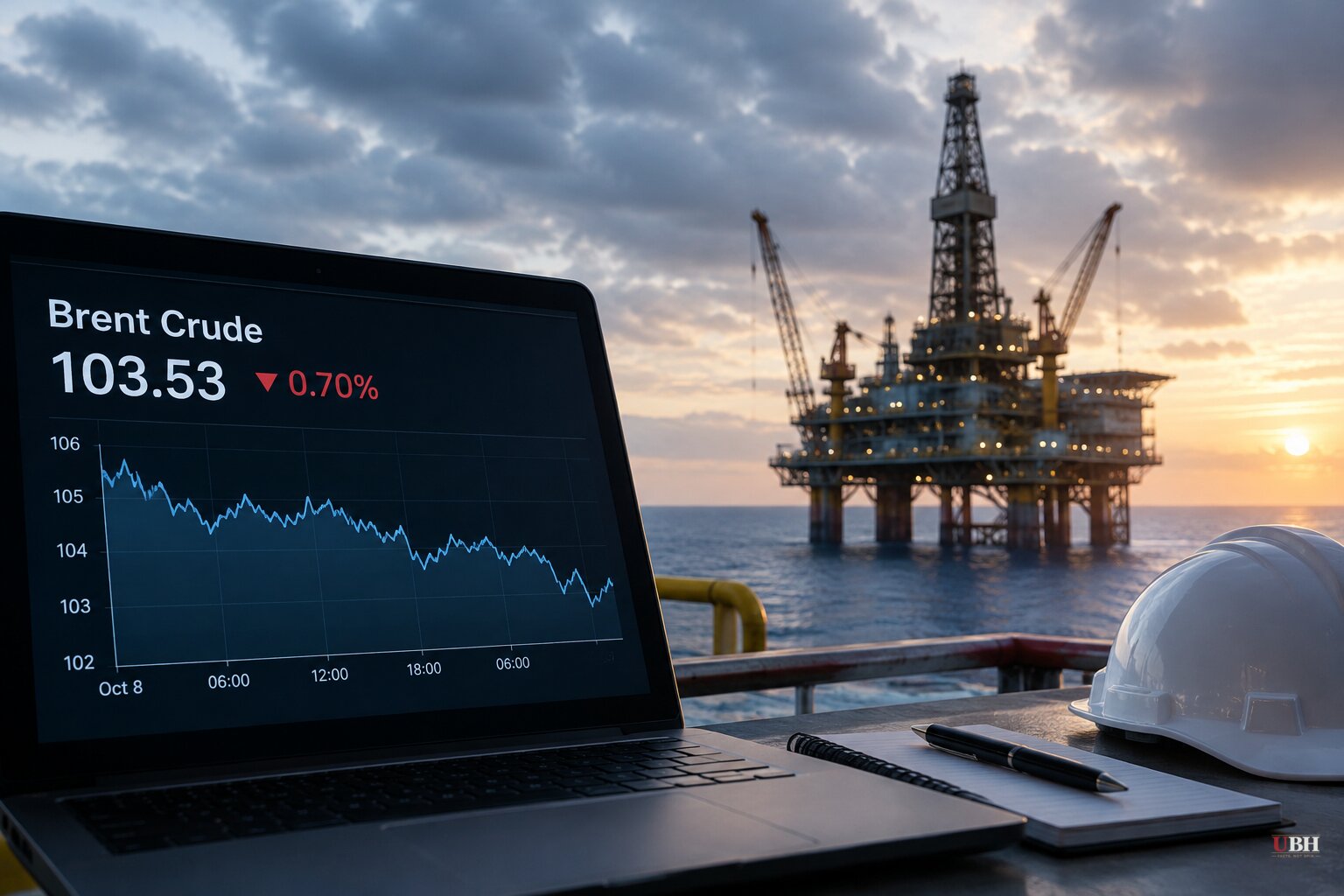
Oil edged lower as the week closed in Asia. By 0220 GMT on Oct. 9, which was 10:20 p.m. ET Thursday, Brent crude futures were down 72 cents, or 0.7%, at $103.53 a barrel. U.S. West Texas Intermediate fell 52 cents, or 0.6%, to $90.97.
The dip is small. Brent still looks set for a weekly gain after settling 4% higher on Thursday, Oct. 8, following a rise in attacks on tankers carrying crude out of the Middle East earlier this week. WTI is on track for a slight weekly decline.
Trump says no strike before the midterms
On Thursday, Trump said Washington was having "productive discussions" with Iran and that no attack was planned before the Nov. 3 midterm elections. He was responding to media reports that he was weighing military action before the vote.
Iran's Tasnim news agency reported the same day that Foreign Minister Abbas Araqchi said Tehran is reviewing the U.S. response to its proposal to reopen the Strait of Hormuz within seven days. Tehran has not publicly given its answer.
The war is in its eighth month. It began in late February with the joint U.S.-Israeli operation against Iran.
Washington is keeping up economic pressure while talks continue. On Thursday the U.S. imposed new sanctions on individuals, networks and 17 vessels accused of carrying Iranian crude, oil products and petrochemicals.
A hurricane on top of a war
Hurricane Isaias is adding a second supply shock. Producers in the Gulf of Mexico have shut in about 1.3 million barrels per day, or 62.9% of current output, as of Thursday. Crews have been pulled from 121 production platforms.
The storm intensified Thursday with sustained winds of 140 km/h. The National Hurricane Center expects it to strengthen to near Category 3, with winds of about 175 km/h, before reaching the northern Gulf Coast late Friday or early Saturday.
"We are expecting Isaias to be a dangerous hurricane when it makes landfall," NHC director Michael Brennan said.
Hurricane warnings run from coastal Mississippi through Alabama to the Florida panhandle. Forecasters expect storm surge of up to 2.1 metres in the worst-hit areas. Florida has ordered mandatory evacuations in parts of the state, and Alabama's governor has issued emergency declarations.
The market reaction so far has been muted. WTI is heading for a weekly decline even with more than 60% of Gulf output offline. How long the outage lasts depends on damage to platforms and how fast crews can return.
How much oil is moving through Hormuz
Before the war, the strait carried shipments equal to about 20% of global oil and fuel. Marine tracking firm Kpler said oil and petroleum product flows through it averaged more than 13 million barrels per day in the last week of September, roughly 80% of prewar volumes.
Trump has claimed more than that. "Tremendous oil is coming out of the Hormuz Strait now. We're running it. We have total control," he told reporters at an Oval Office event.
The flow data point to a more complicated picture. Excluding Iran, Middle East oil shipments reached at least 16.5 million barrels per day in September, Kpler said in a report released Sept. 30. About 40% of Gulf crude now leaves without passing through Hormuz, up from 17% before the conflict, as producers reroute through pipelines and ship-to-ship transfers.
"The barrels are back, but the export system moving them is fundamentally different," Kpler said.
Saudi exports rose to about 5.2 million barrels per day in September from 2.9 million in August. Iraq shipped about 2.5 million, up from close to zero in April and May. Goldman Sachs estimates Persian Gulf exports have returned to 23.3 million barrels per day, roughly the 2025 average.
Alexander Stahel, founder of Burggraben Holding, argued in a post on X that Iran's regime has "lost control" of the strait. Saudi Arabia is expanding its Red Sea pipeline capacity toward about 7 million barrels per day, and the UAE has finished a second pipeline to Fujairah on the Gulf of Oman. Regional pipeline capacity could exceed 14 million barrels per day by the end of 2028.
The U.S. has been drawing on its own reserves throughout the war. Trump ordered a 172-million-barrel release from the Strategic Petroleum Reserve in March after Iran restricted exports through the strait.
What comes next
Two things are pending. Isaias is forecast to make landfall late Friday or early Saturday, which will show how much Gulf infrastructure is damaged. Iran has yet to say whether it accepts Washington's response on reopening Hormuz within seven days. Despite Friday's decline, Brent prices remain below the $126-a-barrel level reached earlier in the crisis, and both answers will move it.
Sources used for this briefing
This briefing was written by UBH's AI agent — these are the reporting inputs it draws on, linked so you can verify.


