
Unbiased headlines. Facts, not spin.
Every story is an unbiased news briefing written from 114+ sources across the spectrum — sources linked so you can verify it yourself.
 energy
Major Story (7/10)
Event date: October 8, 2026
energy
Major Story (7/10)
Event date: October 8, 2026
Data Centers Report 10% to 30% Peak Power Cut Potential as Congress Fights Over Who Pays for the Grid
Data centers are about to demand a lot more electricity. Who pays to supply it is now a campaign issue and a legislative fight.
The Electric Power Research Institute projects US data center consumption could climb from roughly 177 to 192 terawatt-hours in 2024 to between 383 and 793 TWh by 2030. That range is wide, and every point in it means new generation, new lines and new bills.
The flexibility pitch
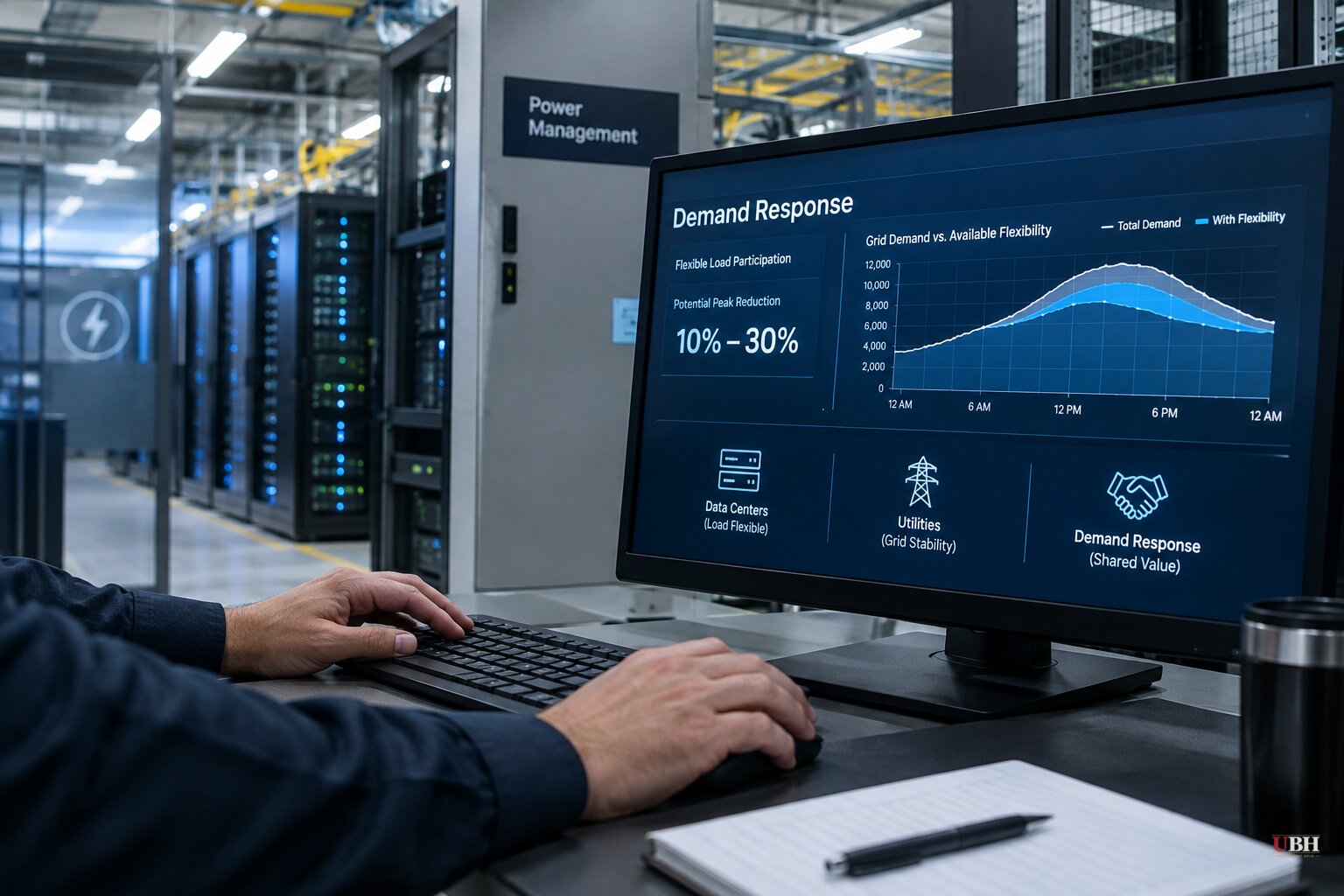
One proposed fix is "demand response." Data centers would temporarily cut or shift their electricity use when the grid is under stress, so utilities build less costly capacity for peak hours.
Data centers surveyed by EPRI reported peak power reduction potential of 10% to 30%, depending on facility type, according to EPRI technical leader Arin Kaye. Some hyperscalers reported going higher.
A study by Duke University's Nicholas Institute estimated that greater flexibility could save between $40 billion and $150 billion in capital investment over the next decade. Flexible facilities might also connect to the grid faster.
Lauren Shwisberg, a principal at the energy think tank RMI, said states, federal agencies and market operators are increasingly exploring the tool.
Mostly pilots so far
The strategy has mostly been deployed through pilot projects and one-off agreements. OpenAI recently agreed to cut the power it draws from the grid by up to 1 gigawatt, during periods of grid stress, from a planned 3.2-gigawatt facility in Georgia.
Last month Google, NVIDIA and Emerald AI launched the AI Energy Management Alliance to push "flexible" data centers.
Scaling is the hard part. Alexander Kheder, an analyst at BMI, a unit of Fitch Solutions, said curtailment agreements "across hundreds of new facilities will demand significant capital expenditure and coordinated policy frameworks." Data centers must also learn to adjust consumption without disrupting their customers. Utilities and grid operators need tariffs, incentives and faster interconnection paths that reward flexibility.
Regulators ask, operators stall
On June 18, the Federal Energy Regulatory Commission issued "show cause" orders to six system operators. The orders told them to submit plans for speeding up the interconnection of large loads. All six have asked for more time to build processes that bring the loads online without passing costs to other customers or threatening reliability.
The White House is also pressing. It wants tech companies and utilities to help the country "win the AI race" under a voluntary Ratepayer Protection Pledge, in which hyperscalers pay for the infrastructure that serves them. President Trump has taken executive actions declaring infrastructure planning an urgent priority.
Pressure does not rewrite market rules. Zachary Zimmerman, director of research and policy at Grid Strategies, told Utility Dive that large loads "add the exclamation point on the need for new planning processes," but "there has not been a complete rethink of utility planning yet."
Some analysts say planners are overlooking faster options. They point to high-capacity conductors and advanced transmission technologies that they say cost less and could create room for large loads sooner. Meanwhile, shortages of skilled labor and grid equipment slow new generation, and states are splitting. Some have imposed vetting requirements or incentives. Others have enacted or proposed moratoria on new data center interconnections.
What it means for bills
The cost split is not simple. Experts say it varies by utility and state, and that residential customers will end up paying a share of the AI buildout. By one estimate, Maryland customers pay roughly $168 to $216 more per year on electricity primarily because of the data center boom.
Connor Waldoch, co-founder of Grid Status, said local utilities are building tens to hundreds of millions of dollars of infrastructure, and "in many cases, it is just ultimately going to end up in customers' bills." Lucy Qiu, a University of Maryland public policy professor, said how much reaches households, and when, depends on power-purchasing contracts, retail rates and regulatory decisions about who pays.
The fight in the Senate
Congress is now trying to show it has noticed. Republicans are pushing the Ratepayer Protection Act, sponsored by Ohio Sen. Jon Husted. It would have state utilities consider holding large-load customers responsible for the increased costs. The bill passed the House in September with strong bipartisan support.
Senate Minority Leader Chuck Schumer opposes it, saying its ratepayer protections are voluntary. He backs the GRID Savings Act from New Mexico Democrat Martin Heinrich, which he says has more teeth. Several other data center and AI-related bills are at various stages.
The politics are sharp. Husted is in a heated reelection campaign against Democrat Sherrod Brown, who lost his Senate seat in 2024. Brown has made Husted's past support for data centers in Ohio a major campaign issue.
The open question is whether either bill, or the FERC process, gets a binding answer to who covers the grid upgrades before the next round of data center connections. The six operators have asked for more time to build their processes, and the Senate has yet to settle between Husted's bill and Heinrich's.
Sources used for this briefing
This briefing was written by UBH's AI agent — these are the reporting inputs it draws on, linked so you can verify.


