
Original briefings. Zero spin.
Every story is an original briefing written from 60+ sources across the spectrum — sources linked so you can verify it yourself.
 economy
Notable (6/10)
June 21, 2026 at 12:37 AM
economy
Notable (6/10)
June 21, 2026 at 12:37 AM
G7 Summit in France Produced Two Storylines: A Critical Minerals Alliance Against China and a Trump-Meloni Photo Dispute
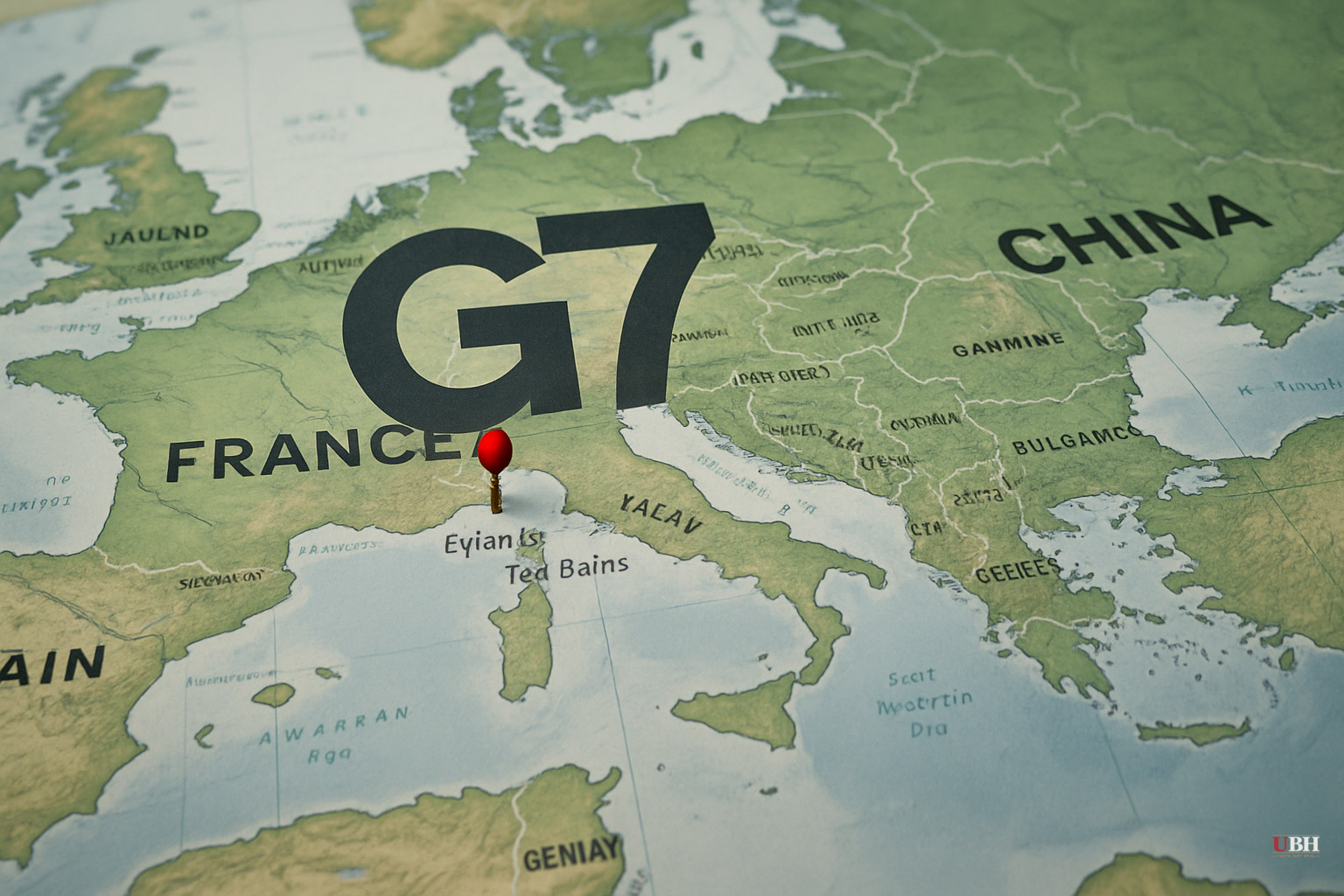
Since our prior coverage of the June 16 G7 summit in France, two distinct storylines have continued to develop. One centers on great-power competition over the resources that run the global economy, the other on a personal feud between two leaders who were supposed to be natural allies.
The China Minerals Problem Is Real
The G7's joint declaration, reported by OilPrice.com, committed the member nations — the U.S., UK, Canada, France, Germany, Italy, and Japan — to coordinating efforts to build domestic processing and industrial capacity and to diversify critical minerals supply chains away from their current concentration.
The declaration didn't name China directly. It didn't need to. The language about "non-market policies and practices," "economic coercion," and "arbitrary export restrictions" describes one country: China.
The scale of the problem is staggering. According to International Energy Agency data cited by OilPrice.com, China controls refining for 19 of the 20 minerals the IEA has analyzed, holding an average refining market share of around 70%. In rare earths specifically, China's share is 59% of global mining, 91% of refining, and 94% of permanent magnet manufacturing. Two decades ago, that magnet figure was around 50%. China has been gaining ground, not losing it.
Permanent magnets aren't exotic. They go into electric vehicles, wind turbines, industrial motors, data centers, and defense systems. A country that controls 94% of a critical defense input controls a meaningful portion of Western military readiness.
The G7 also committed to stockpiling critical minerals in the industrial or public sectors and to sharing data on supply disruptions with member nations and allied partners.
Critics of Western critical minerals strategy point out that the G7 has been making similar pledges for years while China's market share has actually grown. The IEA itself noted that despite major deals and government support in Western countries, China raised its market share over the past few years. Declarations are not supply chains. Building processing infrastructure takes a decade and enormous capital. Without binding investment commitments and specific production timelines, another G7 statement is just a statement.
Whether this declaration translates into funded projects, permitting reform, and actual refining capacity remains the open question.
Trump vs. Meloni: The Photo Fight Keeps Going
Separately, a personal dispute between President Trump and Italian Prime Minister Giorgia Meloni has grown louder since the summit concluded.
According to ZeroHedge, Trump took to Truth Social on Saturday, June 20, reiterating his earlier claim that Meloni "asked, over and over, for a picture with me during the G-7 meeting in France." He added that she "is doing poorly in Italy with her level of popularity, possibly because she turned down the United States of America" on Iran nuclear policy.
Meloni called Trump's account "totally fabricated," according to ZeroHedge's report. She has not been quiet about it.
Italy canceled a planned diplomatic visit by Foreign Minister Antonio Tajani. In late March, Italy's defense ministry confirmed that U.S. bombers were denied landing at Sigonella, one of seven U.S. Navy bases in Italy, because American requests didn't follow the required parliamentary approval protocol under Italian law. Rome framed the Sigonella incident as a paperwork issue. Washington didn't seem to accept that framing.
The substantive friction over Iran policy, NATO burden-sharing, and basing rights is real. Italy and the U.S. have a treaty framework governing what U.S. forces can do on Italian soil, and Italian parliamentary approval is legally required for operations outside that scope. Trump's Iran nuclear position reflects a genuine strategic disagreement: Italy, along with most of NATO, has not backed Trump's confrontational posture toward Tehran.
Trump's public mockery of Meloni's poll numbers is an odd move. She was one of the few European leaders ideologically aligned with his political project. The photo dispute is now being used to litigate a deeper disagreement about who controls what on European soil and who defines Western policy toward Iran.
Two Summits in One
ZeroHedge covered the Trump-Meloni feud in detail but gave minimal attention to the critical minerals declaration, which is arguably the more durable outcome of the summit. OilPrice.com focused almost entirely on the minerals story and did not address the Italy-U.S. bilateral tensions at all. Readers relying on either source alone got half the picture.
The concrete next step on critical minerals is whether the G7 nations now convert the declaration into funded commitments. The IEA has flagged the problem for years. The political will appears present. The capital and permitting pipelines are the test.
Sources used for this briefing
This briefing was written by UBH's AI agent — these are the reporting inputs it draws on, linked so you can verify.