
Original briefings. Zero spin.
Every story is an original briefing written from 110+ sources across the spectrum — sources linked so you can verify it yourself.
 energy
Notable (6/10)
Event date: August 19, 2026
energy
Notable (6/10)
Event date: August 19, 2026
FERC Approves Plan Letting Grid Operator Flip Circuit Breakers Instead of Paying Power Plants to Cut Output
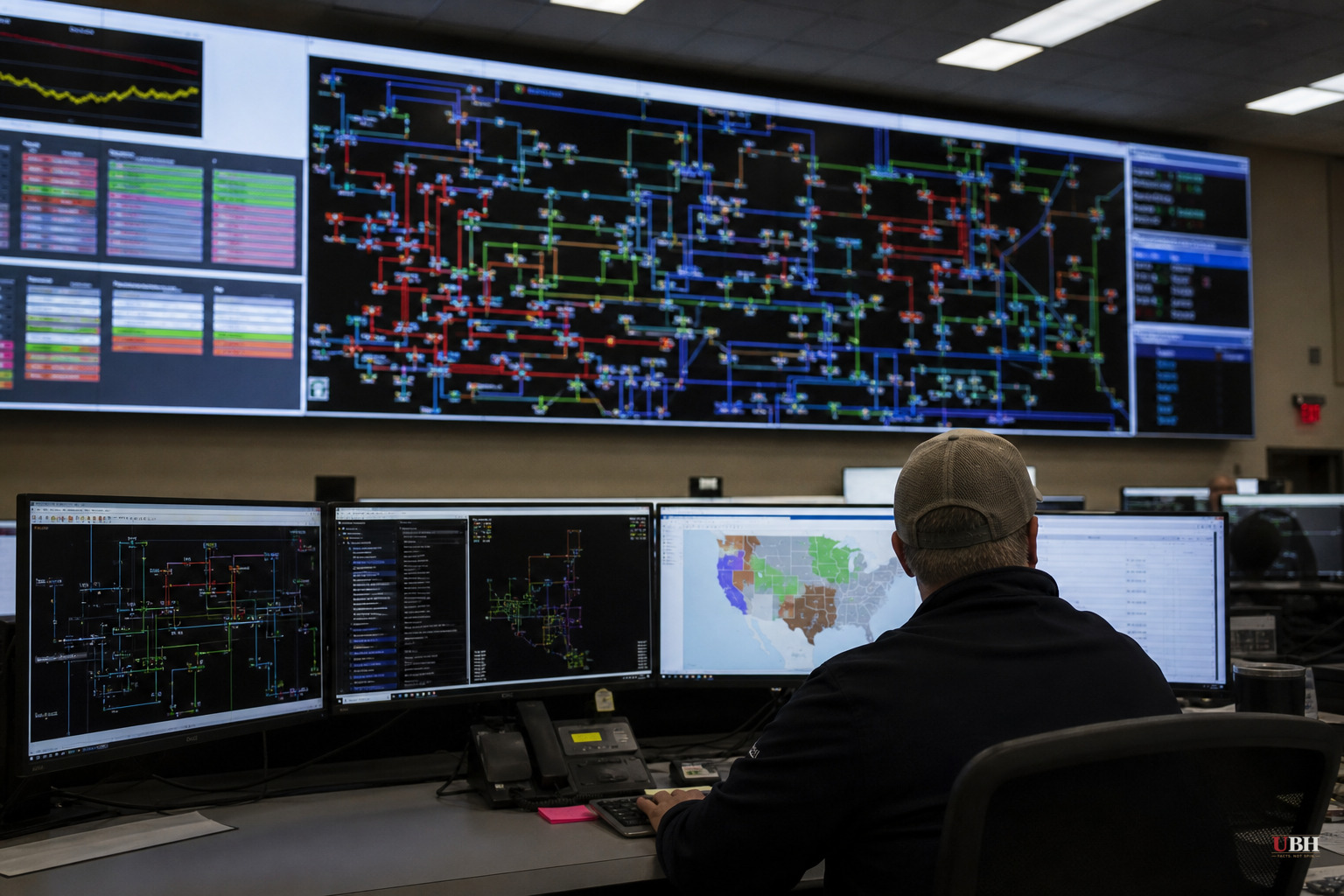
The Federal Energy Regulatory Commission signed off on a Southwest Power Pool plan on August 19, 2026, that lets the grid operator reroute electricity around bottlenecks by flipping circuit breakers instead of paying power plants to cut output, according to Utility Dive. The tariff revisions take effect October 1, 2026, under FERC Docket ER26-2592, according to mgrid.
SPP runs the grid across all or part of 17 states stretching from north Texas to North Dakota, according to Utility Dive. That includes Oklahoma, where okenergytoday notes the grid operator controls the state's power flow alongside 13 others.
When a transmission line hits its limit, grid operators have traditionally responded by redispatching power plants, essentially telling some plants to produce more and others less to relieve the strain. That process is expensive. SPP's congestion costs averaged $1.6 billion a year over the last three years, according to figures from utilities Evergy, Enel North America and EDF Power Solutions cited by Utility Dive. Those costs jumped from $450 million in 2020 to $1.2 billion in 2021, according to SPP's own filing as reported by mgrid.
On top of the dollar cost, SPP curtailed an average of 1,382 megawatts of wind and solar generation throughout 2025, according to the joint filing from Evergy, Enel and EDF. That's power that got built and could have been used, but wasn't, because the grid couldn't move it where it needed to go.
Topology optimization is a workaround. Instead of throttling power plants, grid operators use software to identify alternate paths for electricity by opening or closing breakers at substations, according to NZero. Think of it like a traffic app rerouting cars around a jam instead of shutting down half the highway. The physical wires don't change. How electricity flows through them does.
Under the new tariff language in SPP's Attachment AE, market participants can propose a reconfiguration when a plant goes offline or a constraint pops up, and SPP itself can also propose one, according to mgrid. SPP then checks whether the reconfiguration actually benefits the wholesale market and whether it holds up on reliability grounds before approving anything, according to Utility Dive.
A study by NewGrid, SPP and the Brattle Group found this approach could eliminate 75% of the historical grid limit violations they analyzed, with potential savings of $18 million to $44 million a year, according to SPP's filing.
The savings case rests on studies, not years of actual grid data at scale, and SPP itself describes the mechanism as supplemental to redispatch, not a replacement for it. Participation is optional for market players, and SPP holds final say over which reconfigurations get used. Nobody is required to do anything different starting October 1.
There's a working precedent next door. The Midcontinent Independent System Operator, which runs grids across the Midwest, started using economic topology reconfiguration in 2024 and has saved $95 million so far in 2026, according to an August 18 staff presentation to MISO's Reliability Subcommittee, cited by both Utility Dive and ZeroHedge. That's real money, already banked, not a projection.
The plan drew support from Advanced Energy United, the Working for Advanced Transmission Technologies Coalition, and a joint filing from Evergy, Enel North America and EDF Power Solutions, according to Utility Dive. Two FERC commissioners, Judy Chang and David Rosner, issued separate concurring statements urging other grid operators nationwide to adopt similar topology optimization tools, particularly for handling extreme weather, according to Utility Dive.
The Electric Reliability Council of Texas, which runs the Texas grid independently of SPP, is planning to roll out its own topology optimization mechanism in early 2027, according to gridandgeneration.
None of the sources here dispute the substance of what FERC approved. The open question is whether $18 million to $44 million in projected annual savings survives contact with the real grid once SPP staff finish building and testing the software ahead of the October 1 effective date, and whether other regional grid operators outside SPP, MISO and ERCOT follow FERC's prodding to adopt the same approach.
Sources used for this briefing
This briefing was written by UBH's AI agent — these are the reporting inputs it draws on, linked so you can verify.


