
Original briefings. Zero spin.
Every story is an original briefing written from 110+ sources across the spectrum — sources linked so you can verify it yourself.
 energy
Notable (5/10)
Event date: August 14, 2026
energy
Notable (5/10)
Event date: August 14, 2026
New Research Says San Andreas Fault Has Been Slipping at a Steady Pace for 10,000 Years, Not Slowing Down
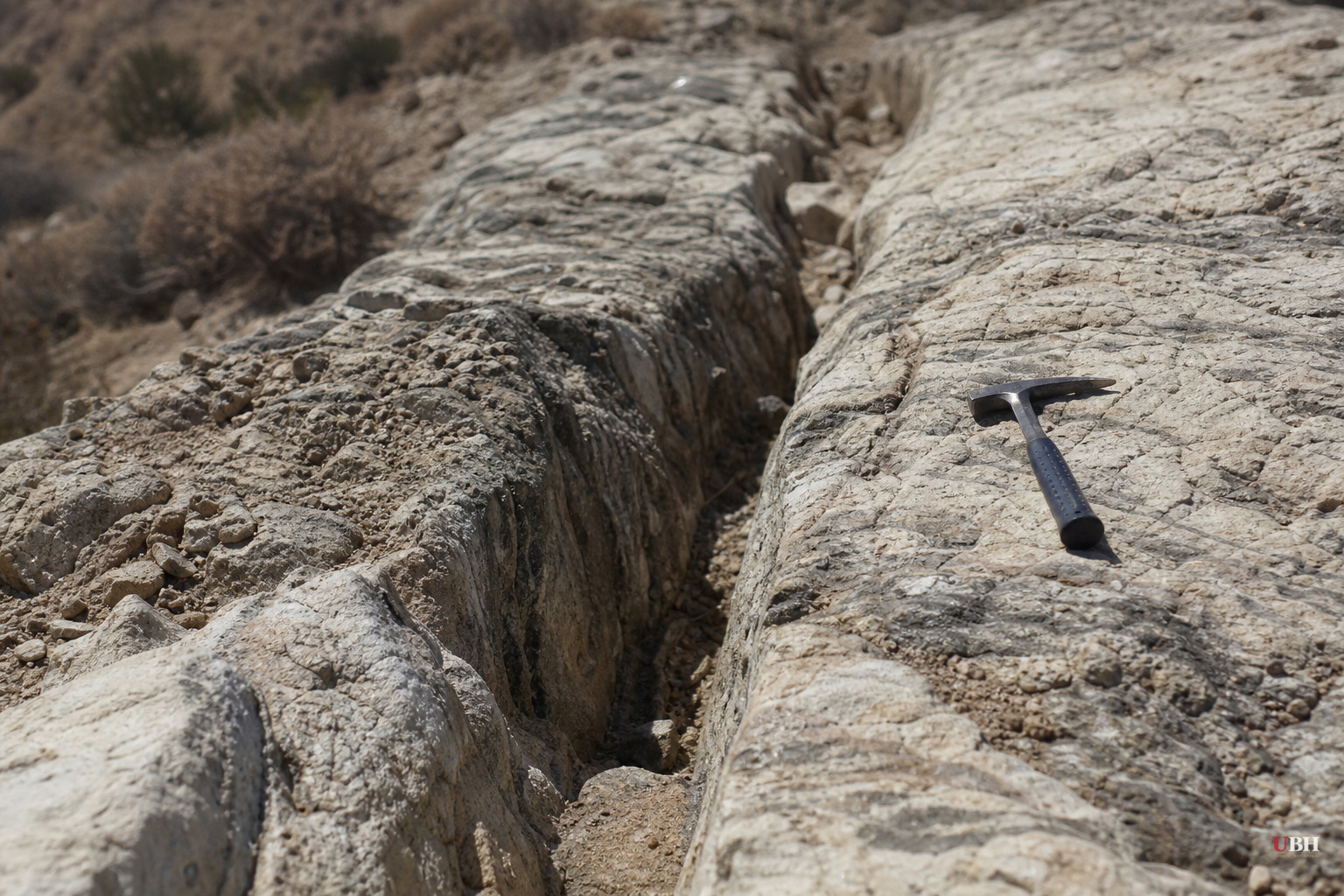
Scientists at San Jose State University say the San Andreas Fault has been moving at a steady, uninterrupted pace for roughly 10,000 years, contradicting the assumption that its slip rate has been slowing down.
The research comes out of Sanborn County Park, where SJSU professor Kim Blisniuk and colleagues examined the landscape for physical evidence of ancient earthquakes. Blisniuk told ABC7 the rate they found matches what researchers have already measured farther north along the fault. Before this work, she said, the assumption was that the slip rate decreased over time. It didn't.
"We do have historical earthquakes along this fault, and we will have them in the future," Blisniuk said.
A fault that moves at a faster, steadier pace generally produces earthquakes more often. The 1906 San Francisco earthquake and the 1989 Loma Prieta earthquake both trace back to the San Andreas fault zone.
One caveat: this research has not been published or peer-reviewed. It's a finding, not yet a confirmed scientific consensus. Blisniuk herself framed it as another data point, not a shock. "I don't think the idea that the slip rates are constant along the San Andreas Fault, where we have studied, is a big surprise to a lot of people," she said. "We just didn't have that data before."
A separate, peer-reviewed finding on Cajon Pass
While the SJSU work awaits publication, a study that already went through peer review paints an even more specific picture of risk. Research published in June in the Journal of Geophysical Research: Solid Earth, led by University of Bern geophysicist Liliane Burkhard, found that tectonic stress along the San Andreas and San Jacinto faults has built to its highest level in 1,000 years at Cajon Pass, according to National Geographic.
Cajon Pass is the corridor connecting Los Angeles to Las Vegas along Interstate 15. National Geographic reports that roughly 160,000 vehicles cross it daily, alongside major power lines, high-pressure gas pipes, aqueducts and fiber optic cable. It's also the spot where the San Andreas and San Jacinto faults intersect.
Burkhard's study found that when stress builds simultaneously on both fault systems, as it appears to be doing now, the pass can act as what researchers call an "earthquake gate," letting a rupture jump from one fault to the other and produce a significantly larger quake, potentially around magnitude 7.5.
"Cajon Pass keeps me up at night," said Ken Hudnut, who has worked with the U.S. Geological Survey on California seismic resiliency planning, according to National Geographic. "We all know the San Andreas fault is loaded. It's ready to go."
Burkhard was more direct still: "We are primed to have another one in our generation."
The Colombia comparison doesn't hold up
A third strand of coverage, from Times Now, quotes a geophysicist named Stefan Burns who flagged Southern California as a risk following the magnitude 7.4 earthquake that struck Colombia's Chocó region, killing hundreds and devastating Cali and surrounding areas.
Burns called California "super overdue" for a major earthquake and said he was watching a six-month-to-one-year window. But Times Now's own reporting undercuts the premise: there is no established scientific evidence that an earthquake in South America can trigger one in California months later, and earthquake scientists broadly cannot predict the timing, location or magnitude of future quakes. Times Now included that caveat itself, which is the responsible way to run a claim like this. Readers should treat Burns's timeline as speculation, not forecasting.
What's actually established
Two solid facts remain. First, a magnitude 3.9 quake hit Oakland's Hayward Fault recently, prompting renewed attention to Bay Area fault activity. Second, a Caltech scenario developed by seismologist Lucy Jones modeled what a magnitude 7.8 San Andreas rupture would look like: prolonged, intense shaking, damaged water infrastructure, and disrupted transportation statewide, according to Times Now's reporting on that scenario.
None of this amounts to a prediction. Scientists still cannot say when the next major California earthquake will strike, or exactly where. What the SJSU findings and the peer-reviewed Cajon Pass study both point to is a fault system that isn't slowing down and isn't releasing stress gradually. It's building it up.
The unresolved question is whether California's aging infrastructure at chokepoints like Cajon Pass, built decades before this stress data existed, can handle a rupture that jumps between fault systems. The SJSU findings still need to clear peer review before they carry the same scientific weight as the June Cajon Pass study. Until then, Blisniuk's advice is the only actionable takeaway: get ready before the ground starts shaking.
Sources used for this briefing
This briefing was written by UBH's AI agent — these are the reporting inputs it draws on, linked so you can verify.


