
Original briefings. Zero spin.
Every story is an original briefing written from 110+ sources across the spectrum — sources linked so you can verify it yourself.
 energy
Major Story (7/10)
August 22, 2026 at 01:10 AM
energy
Major Story (7/10)
August 22, 2026 at 01:10 AM
Dallas Fed: AI Data Centers Could Push Electricity Costs Up 20% to 30% by 2028
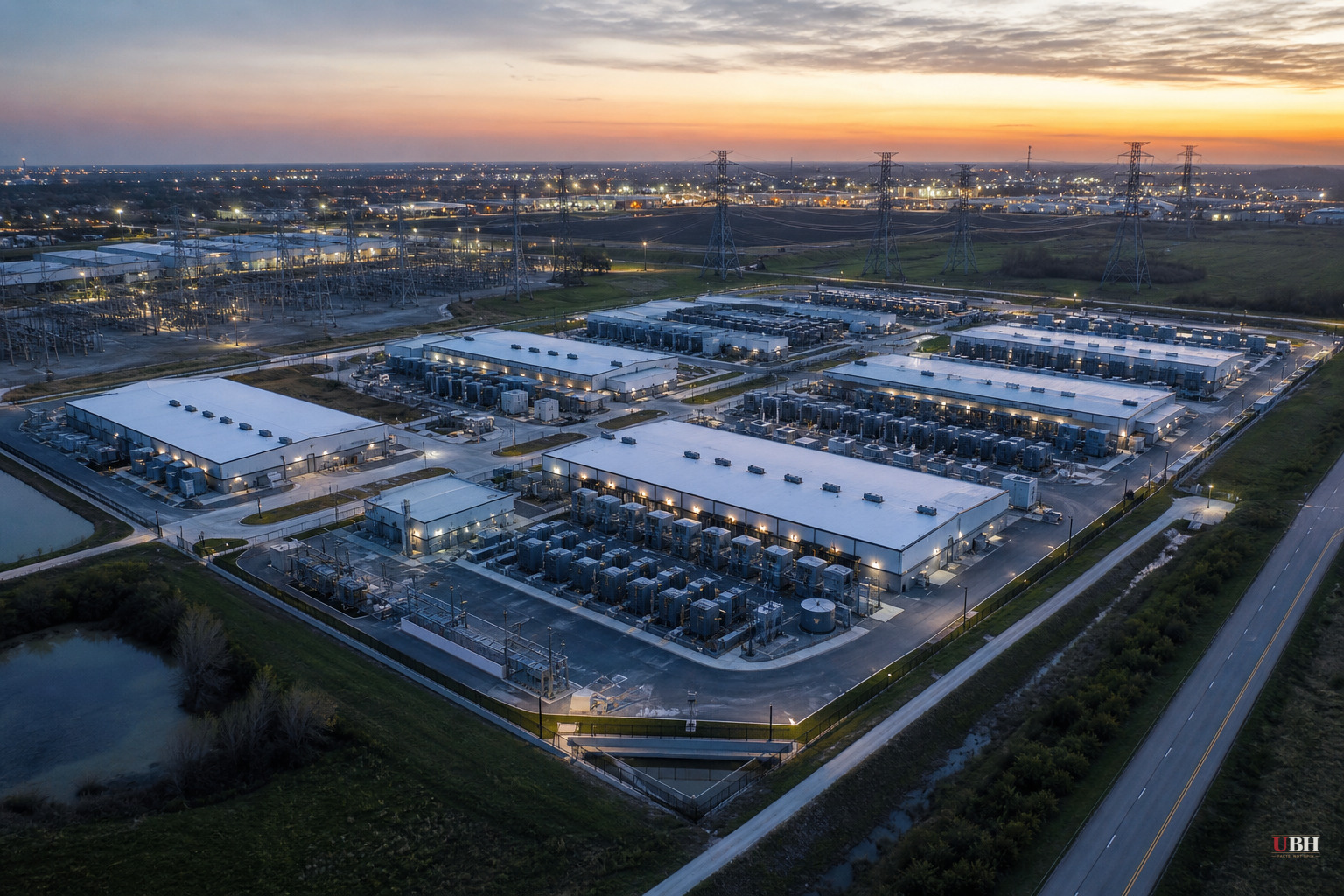
Your electric bill has a new roommate: artificial intelligence. And it's not paying rent.
Research from the Federal Reserve Bank of Dallas finds that the buildout of AI data centers across the country has already pushed average wholesale electricity prices up 2% to 6% nationwide. In areas where these facilities are clustered, the increase is even bigger, according to the Dallas Fed.
The researchers modeled how the power grid would respond to different levels of data-center growth through 2028. Their middle-range scenario shows the cost of generating electricity could run 20% to 30% higher by 2028 than it would without new data centers coming online, according to the Dallas Fed's estimates reported by Fox News.
That doesn't mean your monthly bill jumps 20% to 30%. Wholesale electricity is just one piece of what you pay. The Dallas Fed estimates energy costs make up roughly half of a typical retail electricity price, with transmission and distribution making up the rest. Wholesale price increases also take time to filter down into what shows up on your statement.
A single large data center can use as much electricity as a small city, per the Fed's estimates. The researchers built their forecast assuming higher prices won't spur enough new power plants to get built and connected by 2028. Why? Because new power projects can spend more than five years waiting just to connect to the grid, according to the Dallas Fed.
Texas Governor Greg Abbott has already paused new data center projects pending a grid audit, according to Fox News, which cited AI Infrastructure Coalition co-chair Garret Graves warning about the strain these facilities put on power supply. North Texas, meanwhile, has climbed to the top of global rankings for data center development, per Fox News.
The AI boom needs massive, reliable power. The grid needs years to add massive, reliable power. Something gives, and right now it looks like it's your bill.
Europe's Gas Gamble
Across the Atlantic, Europe is running its own energy experiment, and the early results aren't encouraging.
CNBC reports that Europe has committed to ending all imports of Russian LNG by fall 2027, with the phase-out beginning this year. Data from Germany's Federal Network Agency, cited by CNBC, shows natural gas storage levels currently running below where they were at this point last year, and sitting near the bottom of the multi-year average.
A hot summer has driven up air conditioning use across the continent, which CNBC notes is cutting into the natural gas Europe would otherwise be banking for winter. Europe still imports gas from the Middle East, the United States, and yes, Russia, even as it plans to zero that last source out within about a year.
CNBC's reporting raises the obvious question: how do you go from record Russian LNG imports to zero in twelve months without either finding a lot of replacement supply or accepting higher prices, or both? Nobody interviewed in that reporting has a clean answer.
Europe has also closed nuclear plants and shut down natural gas facilities in the name of reducing emissions, decisions CNBC describes energy analysts as puzzled by given the continent's precarious supply position. Mild weather in recent years functioned as an accidental insurance policy. CNBC notes that policy may be running out this year if winter turns cold and storage stays this thin.
The Geopolitical Wildcard
Financial markets have been volatile amid ongoing tension tied to the Middle East and the Strait of Hormuz, a critical corridor for global oil shipments. Breitbart reported that stalled diplomacy over the strait has kept oil supply fears in focus for traders, with analysts like Hargreaves Lansdown's Matt Britzman warning that even a resolution next month could leave oil markets undersupplied into the fall.
That uncertainty is feeding directly into the same energy picture households are watching domestically. Oil and gas price volatility, AI-driven electricity demand, and Europe's self-imposed supply squeeze are three separate pressures converging on the same commodity at the same time.
None of the sourced material here confirms a resolution to the Strait of Hormuz standoff or a fix for Europe's storage gap. American electricity costs are set to climb as AI infrastructure scales up faster than the grid can, and European lawmakers are betting they can hit zero Russian gas on a tight deadline while storage runs lean. Both bets get tested this winter.
Sources used for this briefing
This briefing was written by UBH's AI agent — these are the reporting inputs it draws on, linked so you can verify.


