
Original briefings. Zero spin.
Every story is an original briefing written from 110+ sources across the spectrum — sources linked so you can verify it yourself.
 energy
Notable (6/10)
August 21, 2026 at 11:23 PM
energy
Notable (6/10)
August 21, 2026 at 11:23 PM
Venezuela's Oil Ports Can't Keep Up With Its Own Export Boom, Tankers Wait 30 Days to Load
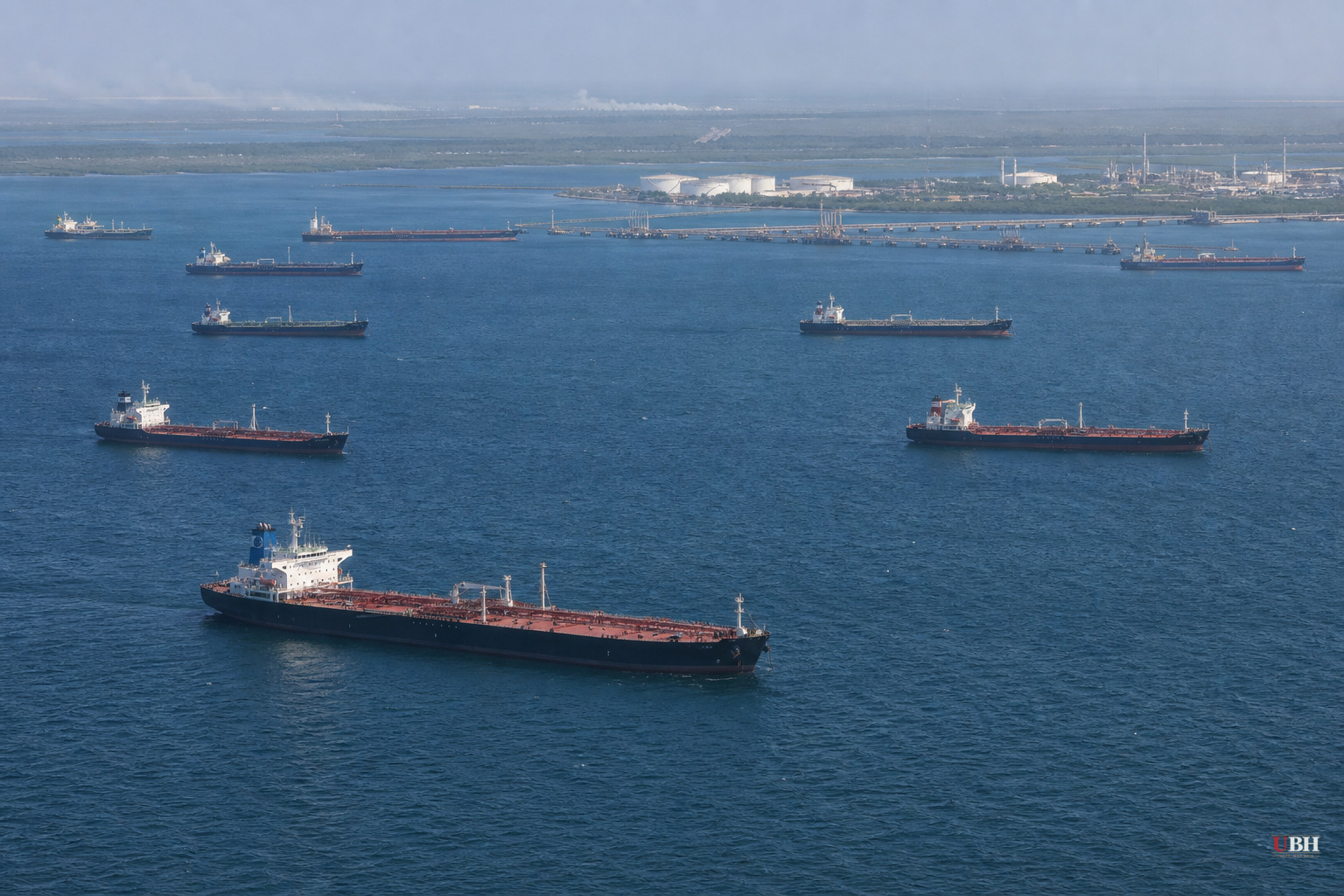
Venezuela finally has buyers lining up for its oil. It just can't get the oil onto the ships fast enough.
According to a Reuters investigation carried by CTV News, BNN Bloomberg, and Maritime Professional, tankers at Venezuelan anchorages are waiting as long as 30 days to load crude. The cause isn't sanctions anymore. It's decrepit port infrastructure that never got fixed.
The Numbers Behind the Bottleneck
PDVSA and its partners have been stuck near 1.25 million barrels per day of exports for months, according to Reuters' sourcing and vessel monitoring data. That's despite rising production, drawn-down inventories, and strong global demand for Venezuelan crude.
When Venezuela pumped more than 3 million barrels a day two decades ago, its terminals could move over 2.5 million bpd out to sea, with ships in and out in under a week, Reuters reported. Today the country can't even export half that volume, and ships are stuck four times longer.
Jovanny Martinez, vice-president of state oil company PDVSA, told Reuters that exports have risen 19.7% this year and that production is expected to hit 1.245 million bpd by the end of August. That's an estimate from PDVSA, not a confirmed final number.
U.S. Energy Under Secretary Kyle Haustveit said at a Houston event, as reported by Clash Report, that more than 500,000 barrels a day, roughly half of Venezuela's output, is now flowing to American refineries built specifically to process Venezuela's heavy crude. He also said over 100,000 bpd of U.S. naphtha is moving the other direction, into Venezuela, to blend with the country's heavy grades so it can be shipped at all.
Jose Terminal Is the Chokepoint
The worst of it is happening at Jose, the northeastern coast terminal that handles roughly 70% of Venezuela's total oil exports, according to Reuters, Modern Diplomacy, and Maritime Professional. Company shipping reports reviewed by Reuters showed repeated equipment failures, power outages, and crude-quality problems there throughout the year.
A PDVSA source told Reuters the transfer of crude from storage tanks to vessels is "incredibly slow," forcing tankers to occupy docks well past their scheduled loading windows. Ships arriving to unload imported fuel face even longer waits, the source said, because Venezuela doesn't have enough fuel storage capacity either.
PDVSA and Venezuela's oil ministry did not respond to Reuters' requests for comment. Chevron, which is operating in Venezuela under U.S. authorization and is described by Reuters as having a privileged position at the docks after decades of partnership with PDVSA, also did not respond to Reuters' request for comment. Sources told Reuters that even Chevron is now asking for access to ports currently reserved for domestic shipping just to keep cargoes moving.
How Venezuela Got Here
President Trump imposed sanctions on PDVSA during his first term in 2019 over what Breitbart described as an extensive record of human rights violations by the Maduro regime. Those sanctions cut off the massive oil-for-loan arrangement that had made China's CNPC, through subsidiary PetroChina, the largest single buyer of Venezuelan crude.
That changed after the January 3, 2026 U.S. law enforcement operation in Caracas that captured Nicolas Maduro and his wife, Cilia Flores. Interim leader Delcy Rodriguez has since stuck with a Washington-brokered plan to reopen Venezuelan oil exports, including allowing U.S. companies to operate there and pushing Venezuelan crude into U.S. refineries at what an unnamed U.S. official told Reuters would be fair international prices, "rather than a corrupt, cheap price."
China isn't rushing back in. Breitbart, citing Reuters reporting from two trading executives, reported that PetroChina has told its partners to hold off buying or trading Venezuelan crude since the U.S. took control of Venezuelan oil exports earlier this month. Reuters' sourcing indicated that decision is likely to push Chinese buyers toward Canadian, Iranian, or Russian barrels instead. Bloomberg has estimated Venezuela's debt to China at $10 to $20 billion; Reuters put the figure closer to $60 billion. China is reportedly pressing Caracas to start paying it back.
What's Actually Slowing This Down
The bottleneck isn't a policy dispute. It's physical. Years of sanctions and underinvestment left Venezuela with equipment that can't keep pace with its own comeback, according to Modern Diplomacy's reporting. Traders including Vitol and Trafigura have shipped more than 140 million barrels of Venezuelan crude and fuel this year under the extended U.S. export agreement, per Reuters, with most going to the U.S. and some reaching markets that hadn't seen Venezuelan barrels in years.
Reuters also reported that the loading delays are generating disputes over demurrage costs, crude quality, and ship contamination among the parties involved, citing maritime documents and four sources.
The open question is whether PDVSA and its partners can fund and execute port upgrades fast enough to match rising output, or whether the 30-day tanker queue becomes the permanent ceiling on how much of Trump's Venezuela oil deal actually reaches global markets.
Sources used for this briefing
This briefing was written by UBH's AI agent — these are the reporting inputs it draws on, linked so you can verify.


