
Original briefings. Zero spin.
Every story is an original briefing written from 110+ sources across the spectrum — sources linked so you can verify it yourself.
 energy
Notable (6/10)
August 21, 2026 at 07:17 PM
energy
Notable (6/10)
August 21, 2026 at 07:17 PM
India Admits Its Solar Boom Is Wasting Power It Can't Store, So It's Betting Big on Batteries
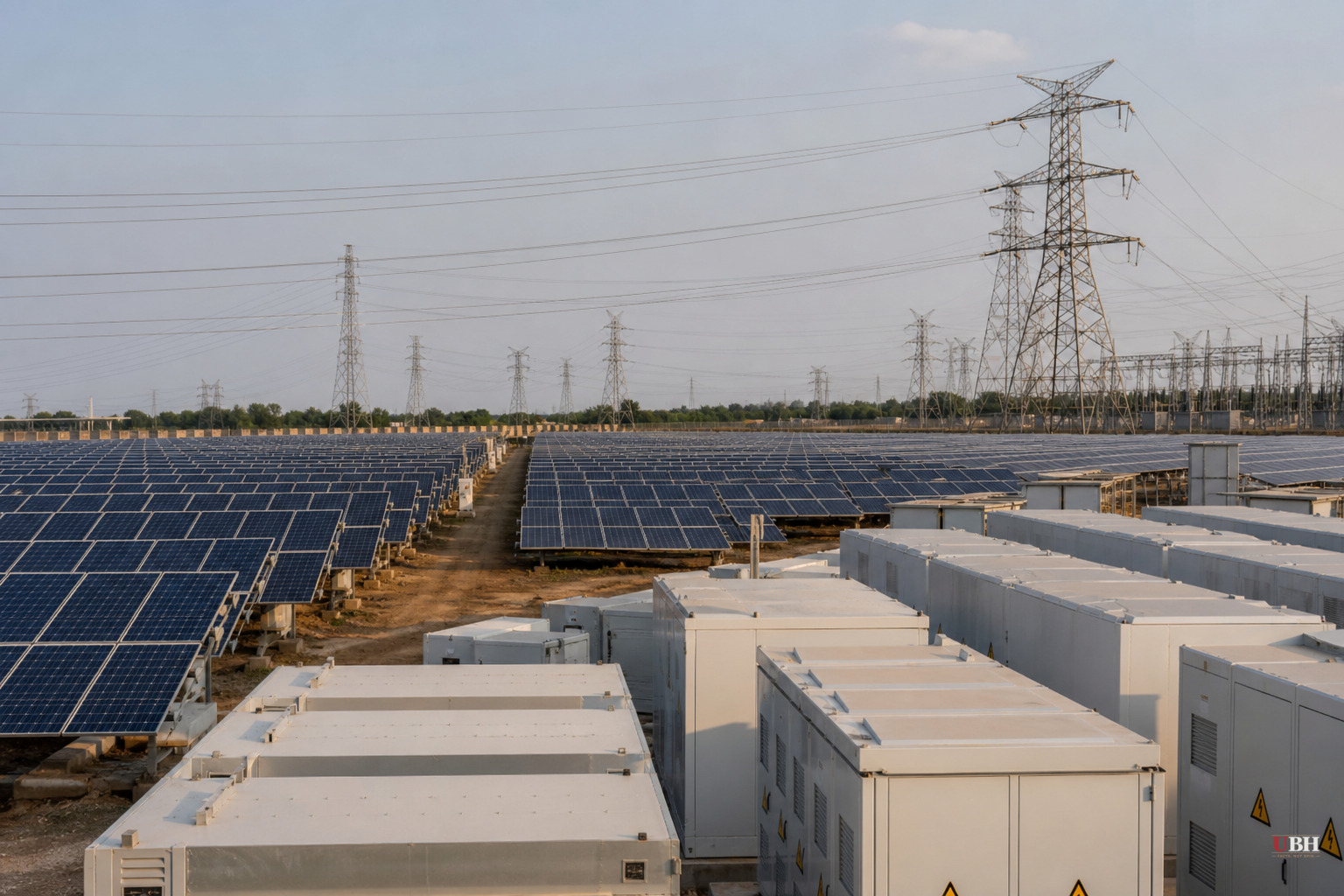
India's Renewables Secretary put a number on a problem the country has been building for a decade: too much solar power showing up when nobody can use it.
Santosh Kumar Sarangi told the BNEF Summit in New Delhi on Friday, August 21, that projects without battery storage are struggling to find buyers. Almost 42 gigawatts of planned renewable capacity still has no offtake contract, according to Bloomberg, which reported Sarangi's comments and was picked up by CNBC-TV18, The Print, Business Standard, and Energy Connects. About 18 gigawatts of that is solar-only. Another 14 to 15 gigawatts got built at high prices and now can't compete.
The root issue is physics, not politics. India built solar panels faster than it built the grid to move that power around, and faster than it built batteries to store it for when the sun isn't out. Bloomberg reported that India's transmission system failed to absorb more than 8 billion kilowatt-hours of power between April and June, out of 63 billion kilowatt-hours that actually reached the system. That's roughly 13% lost in that window alone.
The worst month was May. Peak curtailment hit right as scorching heat drove electricity demand to an all-time record, according to Bloomberg's reporting. About 11% of all solar power generated during India's hottest months this year got curtailed, meaning grid operators had to shut down generation capacity to avoid frying equipment or triggering blackouts. That's real electricity, generated and then thrown away.
Sarangi's fix is battery storage, and fast. Almost 21 gigawatts of India's renewable projects currently have only part-time grid access, putting them at even higher risk of getting curtailed. States in the north and west, where solar buildout has outpaced grid construction, are struggling the most.
The economics are finally working in India's favor
The cost math has shifted hard toward batteries actually being viable now. Ember, an energy think tank, found that lithium iron phosphate battery costs fell 95% globally, from $2,634 per kilowatt-hour in 2010 down to $140 per kilowatt-hour in 2025, according to a report covered by Construction World on August 14.
Ember's global electricity analyst Kostantsa Rangelova called battery storage "a next step" for solar-heavy grids, per that same report. Ember projected global battery additions could hit 459 gigawatt-hours in 2026, up 50% from 307 gigawatt-hours in 2025. The think tank estimated that if fully utilized, new batteries could theoretically shift 34% of new daily solar generation into hours when the sun isn't shining, though Ember cautioned that's a ceiling, not a guarantee, since many batteries sit underused.
Where this is already working
The technology is already deployed at small scale. The Associated Press, in reporting picked up by Breitbart, documented a real-world example in Kenchanahalli, in southern India, where a small tailoring business run by six women runs entirely on a battery pack built from retired electric vehicle batteries. Before the battery arrived, the workers had to stitch by hand whenever power cuts hit, which was frequent given how often heavy rain and heat waves strained the local grid.
"This battery is a godsend for us," H. Gauri, one of the tailors, told the AP. She said the steady power let her build a new home for her three children and gave her more independence at home. That's a single small business, not a national fix, but it shows the underlying tech works when it's deployed.
The catch nobody's fully solved yet
Batteries and storage infrastructure cost real money upfront, and someone has to pay for it. Developers who already built 42 gigawatts of solar-only capacity without storage bet on a market that didn't materialize. Retrofitting or writing off billions in stranded solar assets isn't free, and Indian ratepayers or taxpayers will likely absorb some of that cost one way or another.
There's also a genuine question about whether India's grid operators and regulators can move fast enough. Ember's own report noted that battery benefits depend on "market reforms that allow storage to access energy and ancillary service markets" — reforms that don't yet fully exist in India. Announcing a battery strategy at a summit is not the same as building the transmission lines and market rules to make it work at scale.
The alternative is worse: continuing to build solar panels that generate power nobody can use during a chunk of the year. Wasted electricity generated from a coal-heavy grid that's also trying to decarbonize is waste any way you slice it, regardless of your politics on climate policy.
The open question is timing. Sarangi didn't give a target date for the 42 gigawatts of stranded capacity to find battery-backed buyers, and no source in this reporting cites a government deadline or funding commitment attached to Friday's comments. Until New Delhi puts a number and a deadline on the table, this remains a stated priority, not a funded plan.
Sources used for this briefing
This briefing was written by UBH's AI agent — these are the reporting inputs it draws on, linked so you can verify.


