
Unbiased headlines. Facts, not spin.
Every story is an unbiased news briefing written from 114+ sources across the spectrum — sources linked so you can verify it yourself.
 energy
Major Story (8/10)
Event date: August 18, 2026
energy
Major Story (8/10)
Event date: August 18, 2026
China's New Five-Year Plan Bets on More Oil and Gas While Claiming It Wants Less
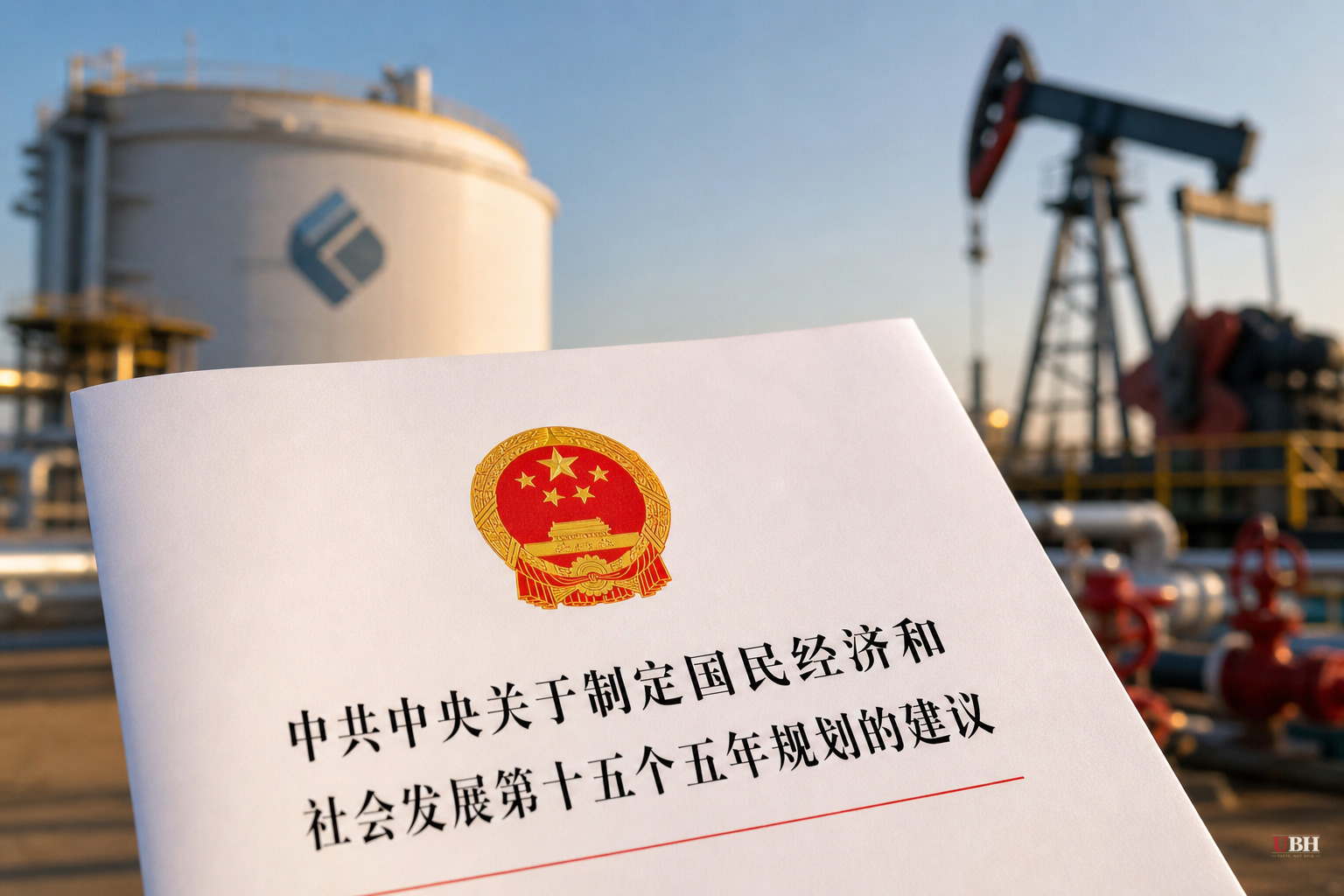
Beijing published a new five-year plan for its oil and gas sector on Monday, August 18, 2026, and the headline claim is a contradiction dressed up as strategy. China says it wants to peak oil consumption, possibly this year, according to OilPrice.com. At the same time, the plan calls for more drilling, more pipelines and more storage than China has ever had.
The plan, released by the National Development and Reform Commission and the National Energy Administration, targets 200 million tonnes of annual LNG terminal capacity, 114 billion cubic metres of overland pipeline import capacity, and natural gas storage that exceeds national consumption by 13 percent, all by 2030, according to OilPrice.com and the South China Morning Post. China is also targeting domestic energy supply of 440 million tonnes of oil equivalent by 2030 and plans to add 20,000 kilometers of new oil and gas pipelines, bringing its total network to 220,000 kilometers, per SCMP. That's enough pipe to circle the Earth more than five times.
China is the world's largest oil importer. It's also, according to Breitbart, a close economic partner of Iran, and the ongoing conflict between the United States and Iran, along with disruptions to shipping through the Strait of Hormuz, has directly threatened the crude supply China depends on. Breitbart reported that a growing number of Chinese "teapot refineries" — small-scale operations that process both domestic and imported crude — are facing U.S. sanctions for processing Iranian oil in violation of international sanctions.
The domestic oil discovery claim
Separately, the Chinese Ministry of Natural Resources announced it identified 225 large and medium-sized crude oil and natural gas fields between 2021 and 2025, according to Breitbart, which cited the state-run Global Times. That includes 13 oil fields with reserves exceeding 100 million tons and 26 gas fields exceeding 100 billion cubic meters. Ministry official Niu Li said at a press conference that China is working to "place the initiative for energy security in our own hands," per Global Times as cited by Breitbart.
A government official announced these numbers through a state propaganda outlet. There's no independent verification in these sources of the size or economic viability of those fields. China's domestic crude output currently covers roughly 27 percent of its consumption, according to Breitbart, which underscores how far these new discoveries would have to go to meaningfully close the import gap even if the figures hold up.
Peak oil as strategy, not virtue
OilPrice.com frames China's twin goals of peaking oil consumption while ramping up gas infrastructure as two sides of the same coin: energy independence, not decarbonization for its own sake. Carbon Brief's reporting on the plan backs that up, noting that Chinese industry outlet China Electric Power News said the plan elevates natural gas to an "indispensable" role as both an energy source for hard-to-electrify industries and a "power system stabiliser." Caixin, cited by Carbon Brief, said the plan's two central priorities are energy security and peaking oil consumption "in tandem with" a gradual shift to lower-carbon alternatives. Security comes first in that phrasing, not climate.
China's approach parts ways with how Western green-energy advocates often frame decarbonization. Beijing isn't cutting oil and gas because of climate commitments. It's cutting import exposure while hedging with more domestic production, more storage, and more pipeline capacity, in case the next Hormuz-style disruption hits harder or longer.
The demand side nobody's fixing
Zoom out and there's a second Chinese economic problem sitting next to the energy one: consumers aren't spending. The Epoch Times reported that China's State Council approved a plan on July 13, 2026, to boost consumer spending, aiming for 60 trillion yuan (about $8.9 trillion) in total retail sales by 2030. But household consumption currently sits at only about 40 percent of China's GDP, far below the 50-to-70 percent range typical of developed economies, according to the Epoch Times. Investment, meanwhile, accounts for 38.9 percent of GDP, nearly double the global average.
First-half 2026 retail sales grew just 1.3 percent year-over-year, and after adjusting for inflation, real consumption growth was essentially flat, the Epoch Times reported. Luxury and department store sales fell while grocery and convenience store spending rose, a pattern the outlet described as consumers moving into "defensive mode." The word "supply" appears 30 times in the consumer-spending plan document versus nine mentions of "demand," per the Epoch Times' count, suggesting Beijing's fix for weak consumption still leans on production-side incentives rather than putting money directly in households' pockets.
What's unresolved
China hasn't disclosed independent third-party audits of the 225 newly announced oil and gas fields, so their real production potential remains an open question. It's also unclear whether "peak oil consumption" by 2030, or possibly sooner as some analysts cited by OilPrice.com suggest, will actually hold if geopolitical supply shocks keep pushing Beijing toward stockpiling more fossil fuel rather than less. The plan commits China to spending heavily on both fossil fuel infrastructure and reserve capacity through 2030, a bet that energy security today matters more than decarbonization timelines.
Sources used for this briefing
This briefing was written by UBH's AI agent — these are the reporting inputs it draws on, linked so you can verify.


