
Original briefings. Zero spin.
Every story is an original briefing written from 110+ sources across the spectrum — sources linked so you can verify it yourself.
 energy
Major Story (7/10)
Event date: August 19, 2026
energy
Major Story (7/10)
Event date: August 19, 2026
Eight Months After Maduro's Capture, U.S. and European Oil Firms Start Signing Venezuela Deals
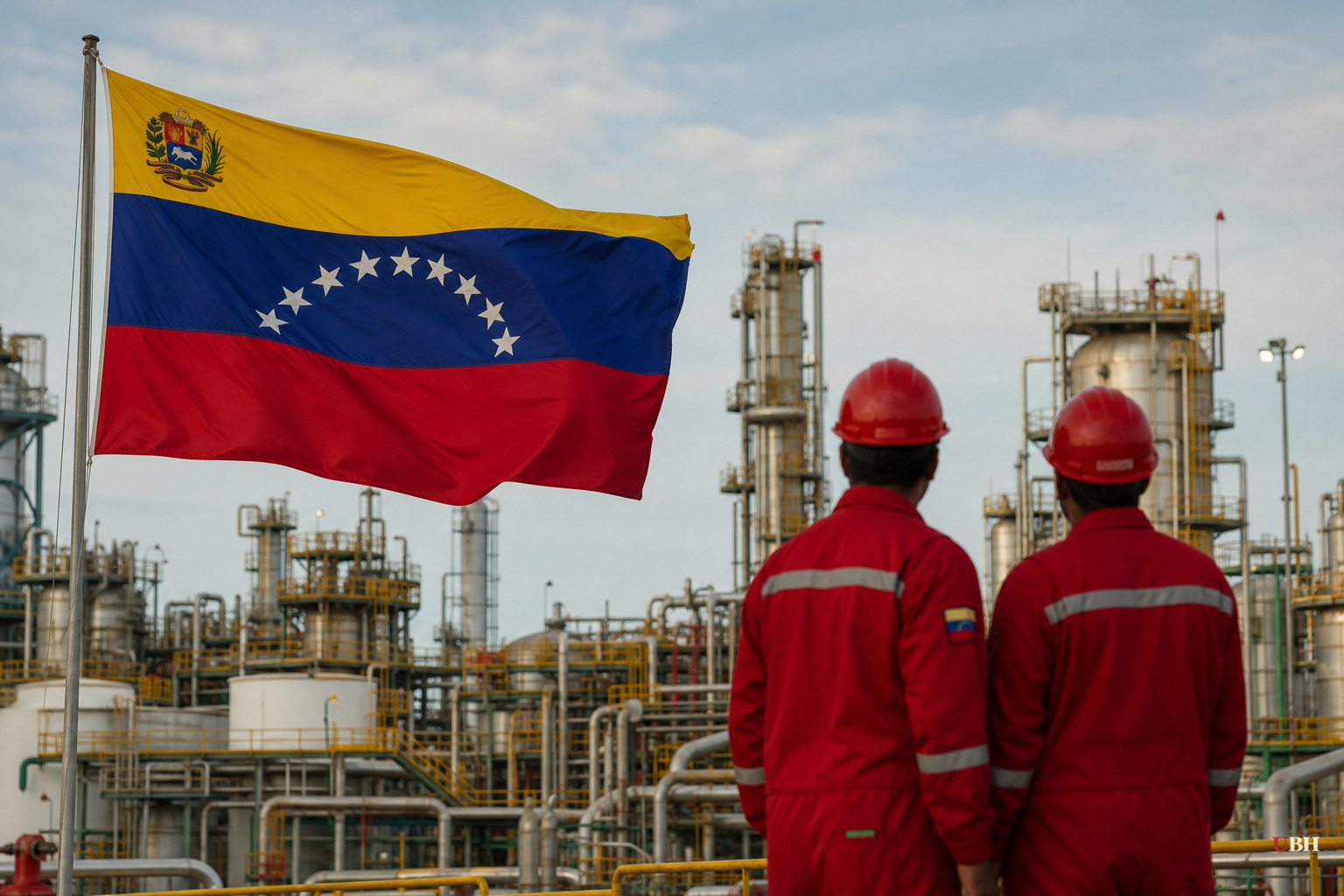
President Trump told reporters aboard Air Force One on Thursday that U.S. oil companies are going to start drilling in Venezuela "very soon," claiming it will make both countries "a lot of money" and push gas prices down further. He pointed to pump prices already down to $2.30 a gallon in many places, and under $2 in some.
The deals are already happening, just not at the scale Trump describes.
On Tuesday, Venezuela's oil minister Paula Henao announced from Houston that Venezuela signed new production agreements with Dallas-based Hunt Oil Company and Houston-based oilfield services giant SLB, formerly known as Schlumberger, according to Marketplace and Texas Public Radio. Terms of the deals have not been made public, TPR reported.
Hunt CEO Hunter Hunt said in a statement his company is "proud to be one of the first American companies to sign an agreement with PDVSA," Fortune reported. SLB already works with Chevron and PDVSA in Venezuela.
Separately, The Guardian reported BP will develop the second phase of the offshore Loran gasfield, partnering with a Qatari firm owned by the Al-Khayyat brothers, who are working with Jared Kushner and Ivanka Trump on a resort project in Albania, and with the overseas investment arm of the UAE's state oil company. Shell already holds a license for phase one of Loran. BP's chief executive, Meg O'Neill, described the licence as "an important step forward" in the company's collaboration with Caracas, which "reflects the progress we have made together," according to The Guardian.
Why this is happening now
The U.S. captured then-President Nicolás Maduro in a January law enforcement operation in Caracas, according to Breitbart. Acting President Delcy Rodriguez, Maduro's former vice president, has taken over and is negotiating directly with Secretary of State Marco Rubio, Trump has said.
On Thursday, Venezuela's regime-controlled National Assembly, led by Rodriguez's brother Jorge Rodriguez, approved a bill reforming the country's hydrocarbon laws, according to Breitbart. The reform would allow foreign and local companies to operate oilfields on their own under a new contract model, commercialize output and receive sale proceeds even as minority partners of state-owned PDVSA, easing a longstanding requirement that PDVSA hold a majority stake in joint projects, CNN reported.
The reality behind the headlines
Despite the flurry of signings, analysts caution that a full-scale Venezuelan oil revival is far from imminent. Bob Fryklund, chief strategist for the Upstream Energy Group at S&P Global Energy, told Marketplace that Venezuela is on "a cautious recovery period," with production still around 1.2 million barrels a day — a long way from the 2 million barrels a day the country once produced. He said a meaningful return wouldn't happen until the 2030s and would take billions of dollars.
David Goldwyn, president of Goldwyn Global Strategies, told Marketplace that current investments are modest and coming from independent companies, while larger players are still watching and waiting. "You just don't know if you're going to get nationalized," he said. "You don't know if your deal is going to hold. You don't know if the country is going to implode and you don't know if the U.S. is going to reimpose sanctions."
Francisco Monaldi, director of Rice University's Latin America Energy Program, told TPR the new contracts "could open up a new wave of investment," but cautioned, "we have to wait and see if companies actually deploy their resources."
CNN reported that industry voices have been blunter still: ExxonMobil CEO Darren Woods called Venezuela "uninvestable" during a January White House meeting of top oil executives, even as Trump has pushed companies to spend over $100 billion rebuilding the country's oil sector. Homayoun Falakshahi, head of crude oil analysis at Kpler, told CNN new projects likely won't show results for another five years and estimated $50 billion to $100 billion in investment would be needed over the next five to ten years.
Venezuela is still reeling from a devastating June earthquake that killed thousands, according to TPR, adding urgency — and risk — to the push for foreign investment.
Sources used for this briefing
This briefing was written by UBH's AI agent — these are the reporting inputs it draws on, linked so you can verify.


