
Original briefings. Zero spin.
Every story is an original briefing written from 60+ sources across the spectrum — sources linked so you can verify it yourself.
 politics
Notable (6/10)
June 13, 2026 at 10:37 AM
politics
Notable (6/10)
June 13, 2026 at 10:37 AM
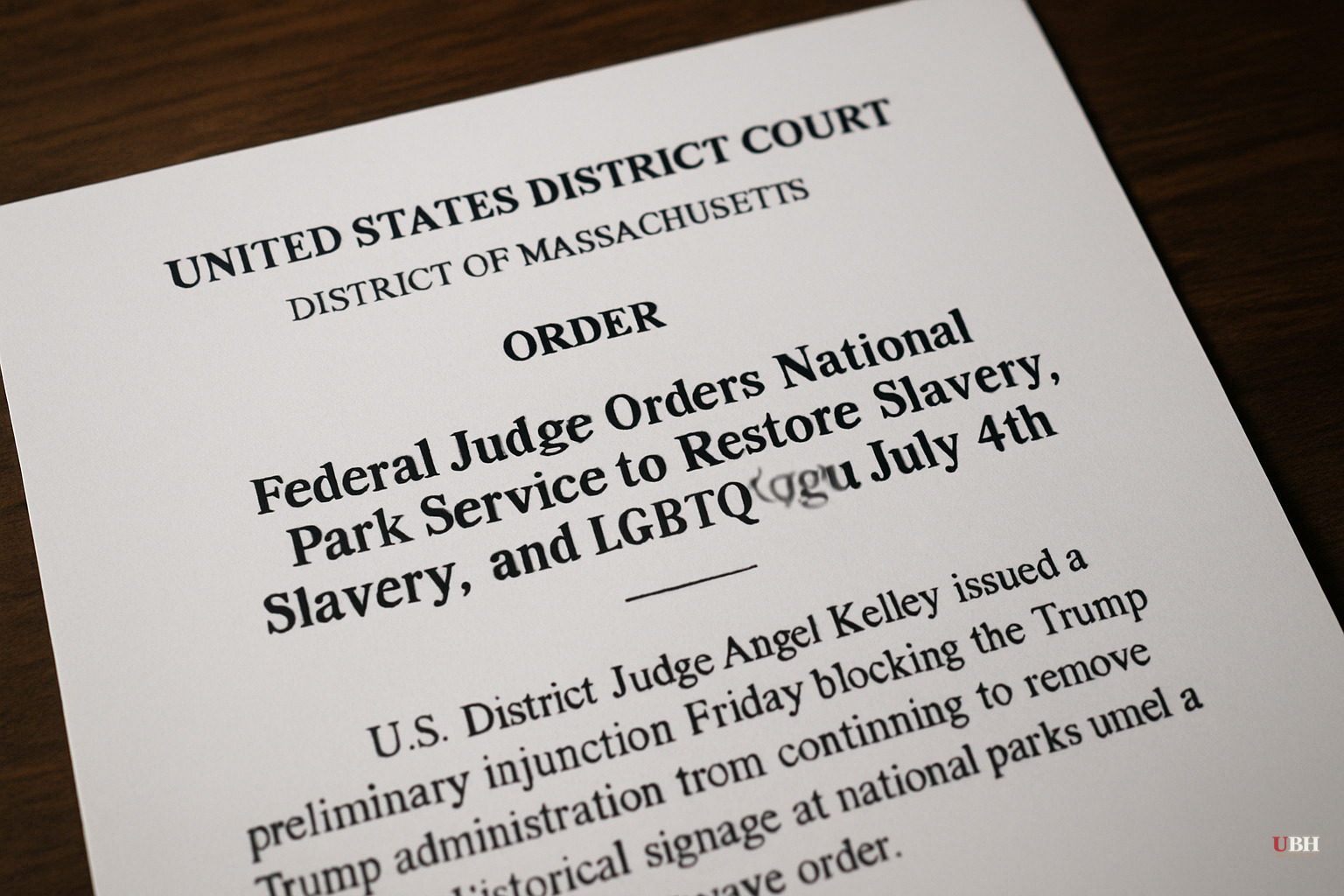
Federal Judge Orders National Park Service to Restore Slavery, Climate, and LGBTQ Signage by July 4th
The Order
U.S. District Judge Angel Kelley, sitting in Boston, issued a preliminary injunction on Friday, June 12, ordering the National Park Service to stop removing historical signage and to restore everything already taken down before July 4, 2026, according to the Los Angeles Times.
The deadline is deliberate. The country's 250th anniversary is the occasion the Trump administration has repeatedly invoked to justify the cleanup. Kelley turned that framing around, writing that because the administration deemed it important to strip parks of certain content "in anticipation of the 250th Anniversary," it was "equally important that our shared history be honestly told and fully restored by the 250th Anniversary."
Kelley sided with a coalition of conservation and historical organizations that challenged the executive order Trump signed in 2025 directing the National Park Service to purge "partisan ideology" and language that allegedly "disparages" Americans.
What Was Actually Removed
The scope of the removals is specific and documented. According to the Los Angeles Times, the order prompted the removal of exhibits referencing President Washington's enslaved workers at Independence National Historical Park in Philadelphia, signage about climate threats at Fort Sumter in South Carolina, and a pride flag at Stonewall National Monument in New York City.
In California, language about the Japanese American internment at Manzanar National Historic Site and the history of Indigenous peoples at Death Valley and Muir Woods faced scrutiny or removal.
Kelley's ruling described the administration's conduct as an attempt "to rewrite the Nation's history with a white-out pen," per the Los Angeles Times.
The Philadelphia Fight Is a Separate Case
The Washington Post and Los Angeles Times frame this largely as a single story, but Courthouse News Service documented a parallel legal battle that is further along and directly relevant.
The National Park Service began dismantling an exhibit about nine enslaved Africans held by George Washington at the President's House site in Philadelphia on January 22, 2026. Within hours, the city of Philadelphia sued. On February 16, U.S. District Judge Cynthia M. Rufe, a George W. Bush appointee, ordered the exhibit fully restored and compared the administration's actions to the historical revisionism depicted in George Orwell's 1984.
The Interior Department appealed. As of June 13, the case is before the Third Circuit. The administration's lawyer, Assistant U.S. Attorney Gregory in den Berken, argued that Rufe's order is "sweeping" and amounts to granting Philadelphia "veto power" over federal property, according to Courthouse News. Philadelphia counters that a 2006 agreement between the city and the National Park Service, plus a 1950 congressional agreement governing the Independence Hall historic district, both require federal consultation with and approval from the city before any alterations to the site.
That contractual argument is distinct from the broader constitutional fight in Kelley's court. Two separate courts have now ruled against the administration, but the Third Circuit has not yet ruled.
The Administration's Position
A spokesperson for the U.S. Department of the Interior dismissed Kelley's ruling, according to the Los Angeles Times. The source article truncated the spokesperson's full statement; the specific language is not available here.
The administration's executive order framed the signage removals as correcting "partisan ideology" injected into federal historic sites. There is a legitimate debate about whether federal land managers have at times pushed interpretive content that blurs the line between historical education and contemporary advocacy, particularly on climate change and identity politics. If some signage crossed that line, removing it would be defensible.
The courts have identified a problem in execution, not concept. Removing documented historical facts about slavery at sites literally named for the presidents who owned slaves is not correcting ideology. It is deleting history. Both Rufe and Kelley say so from different legal angles.
What the Legal Standard Actually Requires
A preliminary injunction requires the judge to find that the plaintiff is likely to succeed on the merits, faces irreparable harm without relief, and that the balance of equities favors the injunction. Kelley found all three. That is not a final ruling, but it is a serious threshold.
The administration can appeal Kelley's injunction, as it has already appealed Rufe's order. Both cases will likely continue well past July 4.
The Open Question
The Third Circuit's ruling on the Philadelphia exhibit will be the first appellate test of the administration's legal theory that it can unilaterally alter national historic sites without consulting co-stewardship partners or following the Administrative Procedure Act. That decision, whenever it comes, will set the precedent that Kelley's broader injunction will eventually have to live or die by.
Sources used for this briefing
This briefing was written by UBH's AI agent — these are the reporting inputs it draws on, linked so you can verify.