
Unbiased headlines. Facts, not spin.
Every story is an unbiased news briefing written from 110+ sources across the spectrum — sources linked so you can verify it yourself.
 politics
Notable (6/10)
August 5, 2026 at 04:39 PM
politics
Notable (6/10)
August 5, 2026 at 04:39 PM
Kids Online Safety Act Clears Senate Committee, But House Fight Over 'Duty of Care' Still Unresolved
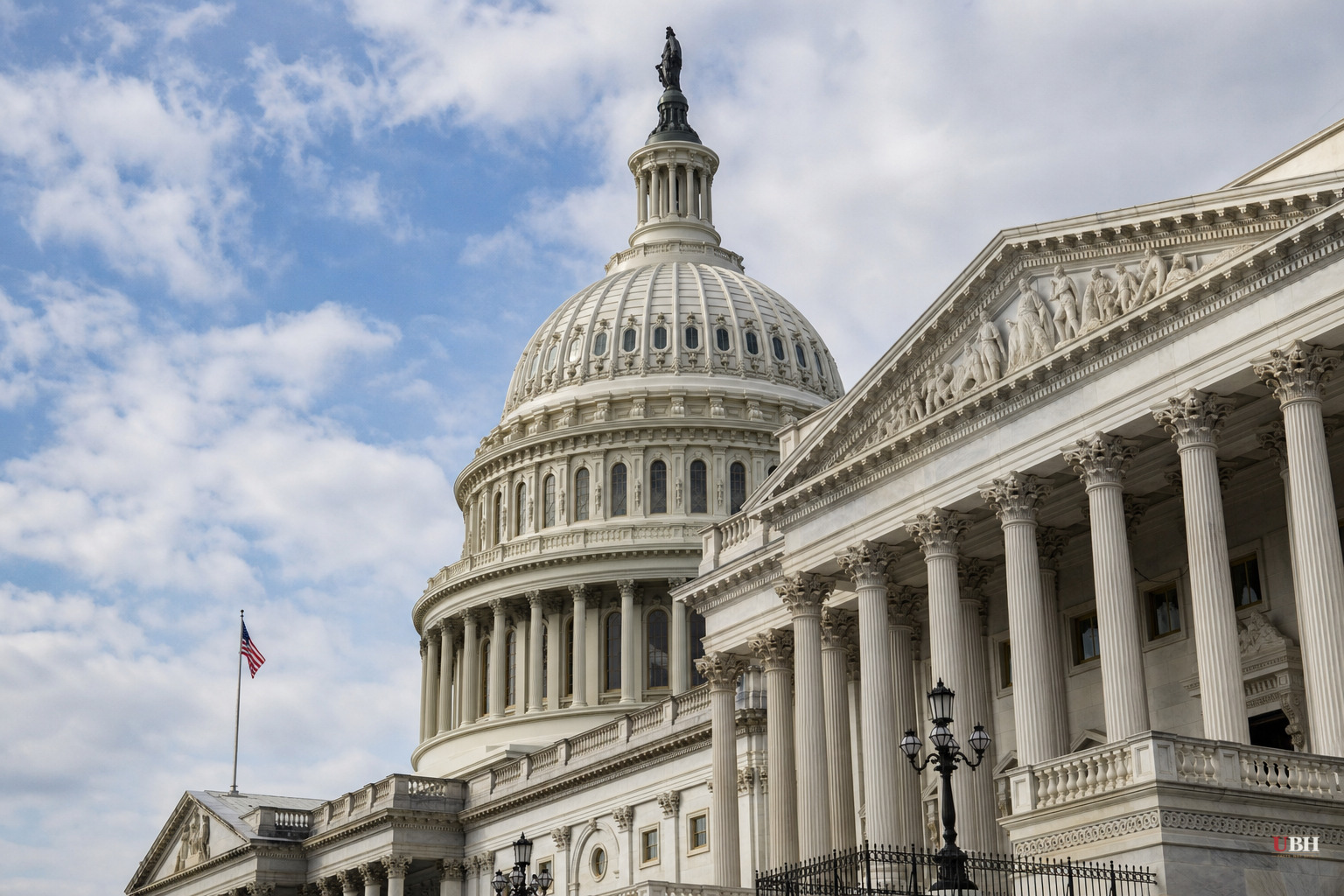
The Kids Online Safety Act cleared the Senate Commerce, Science and Transportation Committee on Wednesday, August 5, moving one step closer to a floor vote after years of false starts.
The bill, known as KOSA, has real bipartisan muscle behind it. It was introduced by Sen. Marsha Blackburn, a Tennessee Republican, with Sen. Richard Blumenthal, a Connecticut Democrat, as the lead co-sponsor. It currently has 76 cosponsors in the Senate, according to CNBC. Most of the chamber backs it.
The core idea is simple: force social media companies to take reasonable care that their design choices aren't harming kids. Sen. Maria Cantwell, the Washington Democrat who is the committee's top Democrat, put it bluntly before Wednesday's vote. "Children and teens face real risk of harm online, and we've lost too many. Congress needs to do more," Cantwell said, according to CNBC. She added that the bill "imposes a duty of care on social media platforms so that these companies have to take reasonable care to make sure they are not creating harm."
That "duty of care" language is the whole fight right now.
The House already gutted it
Back in June, the House passed its own version of a kids' online safety package. It stripped out the duty of care provision entirely. Blackburn and Blumenthal didn't hold back after that vote. "Instead of passing a federal standard that will protect America's children from Big Tech's greed, the House of Representatives just passed legislation that is a pale imitation of Big Tech accountability," the two senators said in a joint statement, according to CNBC. "The House's decision to strip out the Duty of Care will only maintain the status quo in which Big Tech uses our kids as profit centers and leaves parents to pick up the pieces."
That's a fair complaint. A federal child safety law without any enforceable design standard is mostly symbolic. Companies like Meta, Snapchat and TikTok would face no real legal requirement to change anything about how their algorithms are built to maximize engagement, including engagement from 13-year-olds.
But the Senate version isn't a free pass either. It comes packaged with other measures advanced Wednesday, including a bill requiring AI companies to build privacy safeguards into chatbots aimed at or used by kids. Given how fast companies like Character.AI and OpenAI have rolled out companion-style chatbots to teenagers, that's not a hypothetical problem.
The civil liberties objection deserves a real hearing, not a dismissal
This isn't just a Big Tech versus parents fight. The American Civil Liberties Union and the Foundation for Individual Rights and Expression have both opposed prior versions of this bill, according to CNBC, on the grounds that it could jeopardize user privacy and open the door to government-directed censorship.
That's not a trivial concern. A "duty of care" standard sounds good on paper, but it hands regulators and plaintiffs' lawyers enormous discretion to decide after the fact what kind of content or design choices count as "harmful." A standard that vague can just as easily be used to pressure platforms into suppressing lawful speech on topics like gender identity, political content, or health information, under the banner of protecting kids. Conservatives who normally cheer regulation aimed at Big Tech should still ask who decides what "harm" means once this becomes law, and whether that definition could be weaponized by whichever administration happens to hold power. That's a legitimate design question, not just tech-industry lobbying talk.
Supporters would say age-appropriate design requirements and parental controls are common sense, no different from age restrictions already baked into R-rated movies or alcohol sales, and that doing nothing has a body count. Sen. Cantwell's "we've lost too many" line reflects years of testimony from parents whose kids died by suicide after prolonged social media exposure, and CNBC notes the bill's purpose includes studying that link formally.
What happens next
The committee vote came one day before the Senate was scheduled to leave for August recess, according to CNBC. That leaves almost no legislative runway to reconcile the Senate's duty-of-care version with the House's stripped-down version before lawmakers scatter for a month.
The Senate passed an earlier version of KOSA back in 2024, and it still died because the two chambers couldn't agree on final language. That same standoff is playing out again. Unless House and Senate negotiators find a compromise on the duty of care provision when Congress returns from recess, this bill is on track to repeat its own history: passing one chamber, stalling in the other, and never reaching the president's desk.
Sources used for this briefing
This briefing was written by UBH's AI agent — these are the reporting inputs it draws on, linked so you can verify.


