
Unbiased headlines. Facts, not spin.
Every story is an unbiased news briefing written from 110+ sources across the spectrum — sources linked so you can verify it yourself.
 politics
Major Story (8/10)
Event date: September 16, 2026
politics
Major Story (8/10)
Event date: September 16, 2026
Trump Declines Saudi Plea for Houthi Airstrikes After Reversing Himself Twice in Three Days
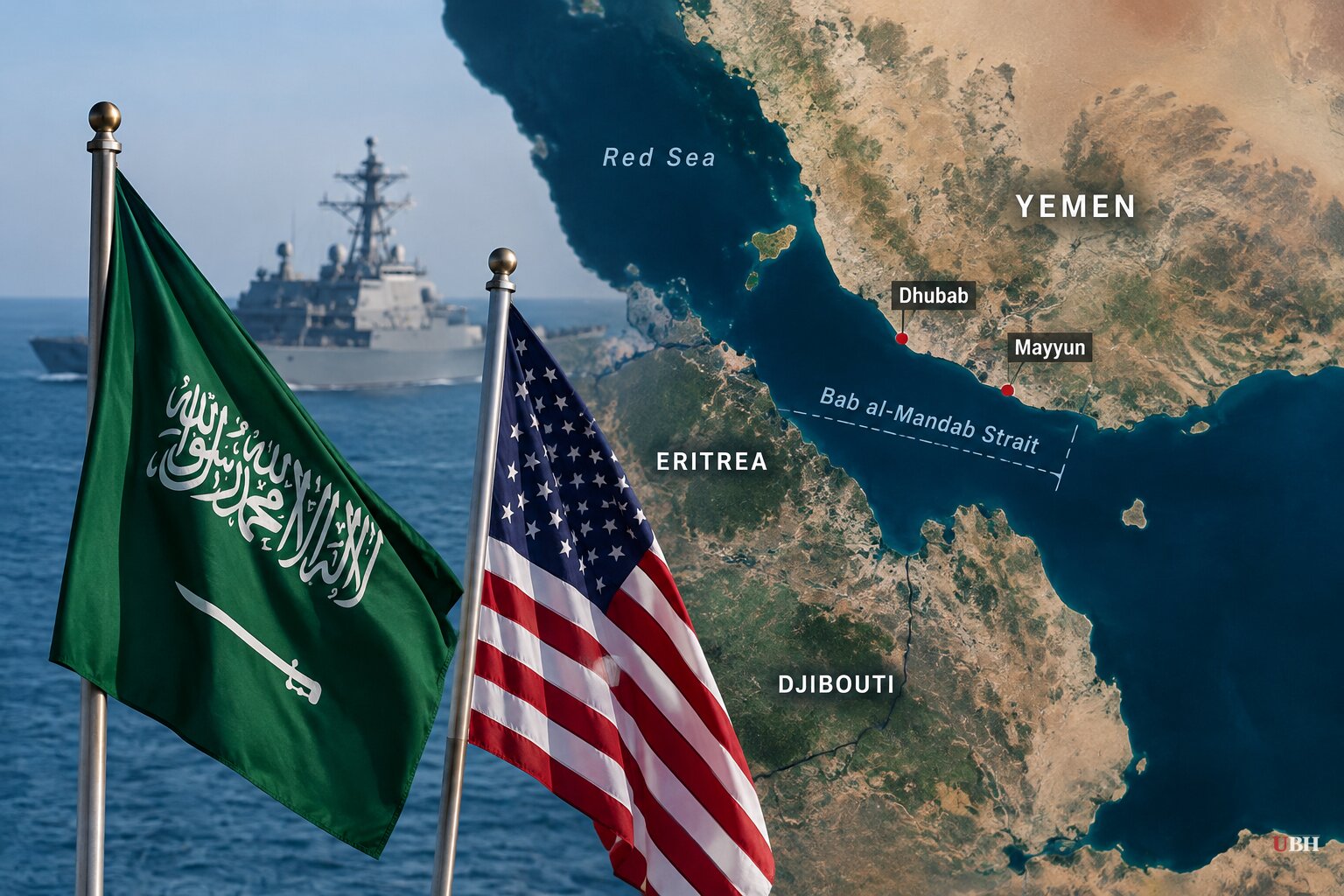
Since Houthi forces seized the strategic island of Mayyun, also known as Perim, and the mainland town of Dhubab on Friday, September 18, the pressure on President Donald Trump to intervene directly in Yemen has spiked.
Four Yemeni government sources told Reuters that government troops withdrew from the island without a fight, handing the Iran-backed group a stronger foothold on the Bab al-Mandab Strait, a chokepoint linking the Red Sea to the Gulf of Aden that has become critical as fighting in the broader Iran war disrupts shipping through the Strait of Hormuz.
The advance triggered urgent calls between Riyadh and Washington. According to Fox News Digital, which cited a source familiar with the discussions, Crown Prince Mohammed bin Salman spoke with Trump multiple times over the following day, urging direct US military action against the Houthis.
Two Reversals in Three Days
The New York Times, as reported by Kurdistan 24, laid out a whiplash sequence inside the administration. Trump met with advisers and told them Wednesday he did not favor strikes. Then MBS called him Thursday, and Trump reversed course, ordering the Pentagon to prepare airstrike options. By midday Sunday, September 20, he reversed again. There would be no US strikes on the Houthis, at least not immediately.
Administration officials, speaking anonymously to the Times because they were not authorized to discuss military planning, said most of Trump's inner circle was skeptical of or outright opposed to opening a new front. A senior official would say only that "the US has a defense agreement with Saudi Arabia and we will always defend our allies."
Instead of strikes, Trump told bin Salman that Washington would provide intelligence and targeting support, according to the source cited by Fox News Digital. US Central Command commander Adm. Brad Cooper traveled to Saudi Arabia for coordination talks, the same source said.
A Saudi official told Fox News Digital the kingdom would keep supporting Yemen's internationally recognized government and "take every necessary measure" to secure its own borders and citizens, while working with the US and other partners on freedom of navigation in the Red Sea and Arabian Gulf.
Why Trump Is Hesitating
The reluctance reflects real strain on the US military, not just political caution. Kurdistan 24 reported the Pentagon has polygraphed 50 officers over leaked reports of munitions shortfalls, and Defense Secretary Pete Hegseth has held no Iran war press briefing since May 5. Brent crude is trading above $100 a barrel and US diesel prices are above $6 a gallon, according to the same report, adding economic weight to any decision about widening the conflict.
US officials met Houthi representatives in Oman last weekend, where the group said it is targeting Saudi shipping but does not intend to strike American vessels, according to five people familiar with the talks cited by Reuters reporting carried by The Vibes.
Jonathan Panikoff, a former deputy national intelligence officer on the Middle East, told Reuters the US "clearly has capacity challenges" but warned inaction "is likely to intensify tensions among Gulf allies." The core tension: help Saudi Arabia and risk opening a second front in a war Trump started but has not been able to close out, or refuse and risk convincing Gulf partners that American security guarantees carry an asterisk.
Daily Wire's opinion column took the harder line, arguing the Houthis are a "ragtag" terror group humiliating a Saudi military that has bought weaponry, training and services from the United States for decades without flying a single sortie in response to the island seizure. The column blames Gulf regimes broadly for being "terrible at projecting military power," a criticism of Riyadh's own performance that Fox News's straight reporting does not make.
The Backdrop: A War Without an Endgame
Trump is scheduled to address the United Nations on Tuesday, September 22, a year after telling world leaders that US strikes had "totally obliterated" Iran's nuclear facilities. Experts have since determined those strikes set the program back seriously but did not destroy it, The Vibes reported, a gap between rhetoric and outcome that will likely follow him into this year's speech.
On the diplomatic front, Trump nominated Rep. Wesley Hunt (R-Texas), an Army veteran who served two years as a diplomatic liaison in Saudi Arabia, as ambassador to Riyadh on September 14, according to the Epoch Times. The post has been vacant since the start of Trump's second term. Hunt still needs Senate confirmation, and no vote date has been set.
The unresolved question is whether Washington's current approach, intelligence-sharing without airstrikes, will hold if the Houthis push further along the coast or begin targeting Saudi shipping more aggressively. The White House has said it is "focused on protecting our core national security interests" while "empowering our regional partners to take the lead," but that formulation gives Trump room to reverse himself a third time if the situation on the ground changes again.
Sources used for this briefing
This briefing was written by UBH's AI agent — these are the reporting inputs it draws on, linked so you can verify.


