
Unbiased headlines. Facts, not spin.
Unbiased Headlines is an independently owned news organization. We bring you the facts, not opinions, written fresh from 110+ named sources. Sources linked so you can verify it yourself.
 politics
Notable (6/10)
Event date: November 20, 2026 ·
Senate Rejected Iran War Powers Measure 48–51 on Nov. 19 as Democrats Eye Dec. 11 Funding Fight
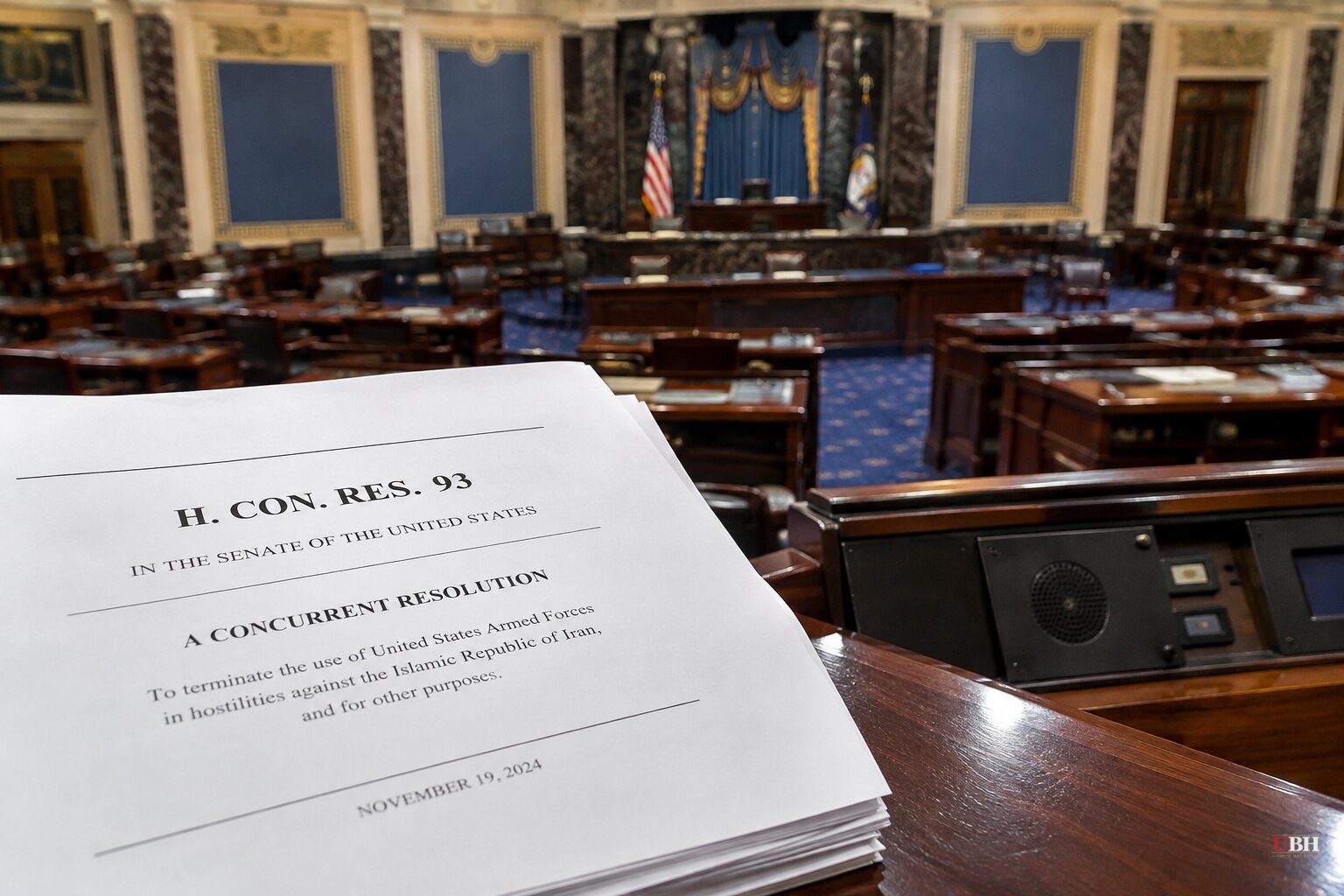
Since the U.S. launched Operation Epic Fury on Feb. 28, Congress has held votes on war powers resolutions again and again without ending the conflict. The latest came Nov. 19, when the Senate rejected House Concurrent Resolution 93 by a vote of 48–51.
The House had passed the same measure 220–204 more than two months earlier. The Senate has now killed it.
The Nov. 19 vote
Republican Sens. Susan Collins of Maine, Lisa Murkowski of Alaska and Rand Paul of Kentucky voted with most Democrats in favor. Sen. John Fetterman, D-Pa., was the only Democrat to vote no.
Sen. Thom Tillis, R-N.C., had backed an earlier war powers resolution. This time he voted against.
Sen. Tim Kaine, D-Va., argued on the floor that "a unilateral decision to impose tariffs on everything and a unilateral decision to take this nation to war has hurt the economy, hurt our troops, [and] hurt their families." He called another vote declaring the war illegal "an important step."
Sen. Tim Sheehy, R-Mont., took the opposite view before the vote. "Iran is not a war of choice. It's a war of necessity," he said. "There is no deal with Iran; they don't understand deals."
The Trump administration has argued that the 1973 War Powers Resolution is unconstitutional and not binding. A White House official said Nov. 19 that the economic pressure campaign is "devastating Iran to such an extent that the president does not have any need to conduct major combat operations."
The money fight
War powers votes have failed to end the war, so the next lever is spending. Reps. Yassamin Ansari and Ro Khanna told colleagues in a joint statement last week that Congress should "oppose any funding package that does not explicitly prohibit funds from being used for offensive operations" in Iran. They want "not another cent of taxpayer money" going to prolong the conflict.
Sen. Chris Van Hollen said any bills passed "must include language that restricts the Trump Administration from using appropriated funds to continue his war against Iran." Sens. Tammy Duckworth, Michael Bennet and Bernie Sanders signed the statement.
The pressure point is the continuing funding package due Dec. 11. If it doesn't pass, federal agencies lose funding and a government shutdown begins Dec. 12. The new Congress, with Democratic majorities in both chambers, doesn't take over until Jan. 3, 2027.
Khanna has gone further in a Fox News Sunday interview. Anchor Shannon Bream asked whether he would defund U.S. military operations while American assets are in the region. He said he would.
"I would stop the funding — the House and the Senate should stop the funding for any further actions in the Iran War," Khanna said. "That's what we did to stop the Vietnam War." He added that "the president can't veto that," because the House and Senate control appropriations bills.
That last claim is contestable. Spending bills go to the president's desk, and Trump could veto one that carries a war funding ban. Overriding a veto takes two-thirds of both chambers.
What is being spent
The Reason Foundation's analysis says the administration has spent nearly $50 billion on Epic Fury without a specific appropriation from Congress. It says the administration requested Iran war funds this summer, and that request is sitting in the Senate.
The author of that analysis argues a single chamber can squeeze the war just by refusing to act. The piece also points to Congress's use of appropriations riders in 1973, when it set an Aug. 15 cutoff for combat operations in Southeast Asia.
The same analysis cites exit polls showing 74 percent of voters called the Iran war a crucial or major factor in their midterm vote. It says seven in 10 want Congress to prioritize ending it.
Hegseth impeachment, round two
The Reason piece also points to another route. On Nov. 10 the House voted 211–204 to refer Rep. Thomas Massie's articles of impeachment against Defense Secretary Pete Hegseth to the Judiciary Committee, which effectively killed them. Massie was the only Republican to vote with Democrats against the referral.
Four of the eight articles center on Iran. Democrats could bring the issue back when they take the House in January.
Not all Democrats are on board
Democrats are not unified on the shutdown tactic. A shutdown would land as food and gas prices are already high.
National Review's Daniel DePetris of Defense Priorities writes that Chuck Schumer and House Democratic leader Hakeem Jeffries have both made ending the war a priority. Jeffries called it a "reckless and costly war of choice." Both leaders pledged to end it, but neither has said publicly how.
What comes next
The first test is Dec. 11. The Ansari-Khanna demand would put an Iran funding ban into must-pass legislation that Republicans control until Jan. 3. Any such language would need to survive the Senate, where the war powers resolution just failed 48–51, and a presidential signature.
Congress has not yet taken up the administration's war funding request.
Sources used for this briefing
7 links from 7 independent newsrooms (syndicated copies of the same report count once)
These are the sources it draws on, linked so you can verify.


