
Unbiased headlines. Facts, not spin.
Unbiased Headlines is an independently owned news organization. We bring you the facts, not opinions, written fresh from 110+ named sources. Sources linked so you can verify it yourself.
 politics
Major Story (7/10)
Event date: November 20, 2026 ·
Federal Judge Permanently Bars California From Enforcing Mask and ID Laws Against Federal Agents
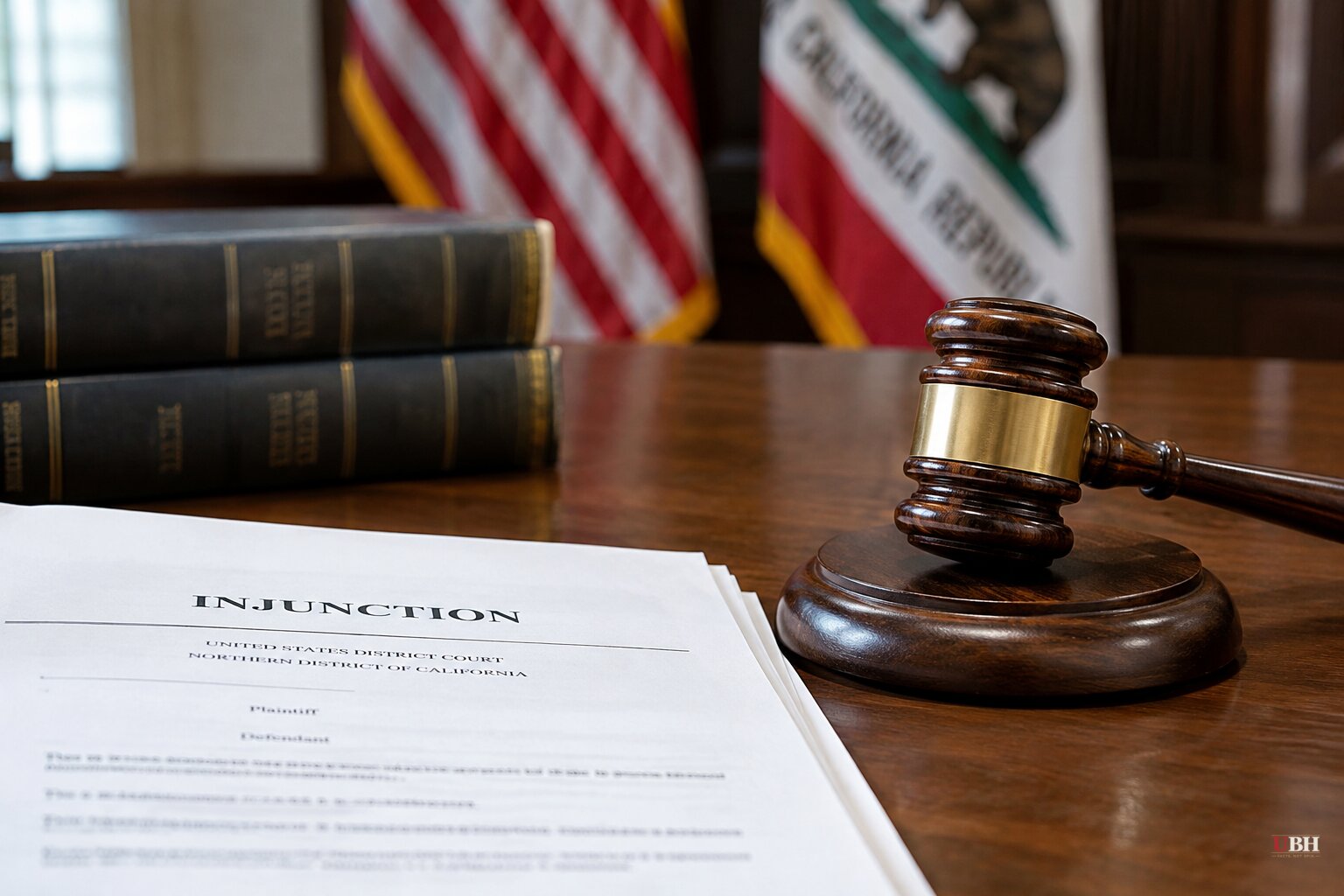
A federal judge in Los Angeles has permanently barred California from enforcing its mask ban and ID requirement against federal law enforcement officers, closing a case the Justice Department opened exactly one year earlier.
U.S. District Judge Christina A. Snyder of the Central District of California signed the order Tuesday, Nov. 17, 2026. The Justice Department announced it Thursday, Nov. 19.
The order bars the State of California, Gov. Gavin Newsom and Attorney General Rob Bonta, plus their successors and subordinates, from enforcing the laws against federal agents and agencies. That includes Immigration and Customs Enforcement officers. The case was dismissed with prejudice, and the court kept jurisdiction to enforce the final judgment.
A settlement, not a trial
This was not a ruling after a full fight in front of Snyder. The order rests on a joint stipulation. In a court filing, state lawyers wrote that the "State Defendants continue to dispute the United States' claims." California still agreed to conclude the case without further appeals.
The injunction covers four code sections: Sections 7288 and 7289 of the California Government Code, and Sections 185.5 and 13654 of the Penal Code.
Those sections come from two laws Newsom signed on Sept. 20, 2025. Senate Bill 627, the "No Secret Police Act" by Wiener, made it a crime for officers to wear a facial covering that hides their identity on duty. Senate Bill 805, the "No Vigilantes Act" by state Sen. Sasha Renée Pérez, required officers out of uniform to display their agency plus a name or badge number.
How the case got here
The Justice Department sued on Nov. 17, 2025. Its argument: California was regulating the federal government directly, in violation of the Supremacy Clause.
On Feb. 9, Snyder issued a preliminary injunction against the mask ban. She found it likely discriminated against the federal government because it reached federal and local officers while exempting California's own state officers. She let the identification rule stand at that stage.
The United States appealed. In April, the 9th Circuit granted an injunction pending appeal, blocking the ID requirement while the appeal proceeded.
On Oct. 14, a three-judge panel ruled for the federal government. Judge Mark J. Bennett, writing for the panel, held that the ID requirement tried to regulate the United States as it performed governmental functions without authorization from Congress. "We conclude that the United States is certain to succeed," Bennett wrote.
What each side says
Associate Attorney General Stanley E. Woodward Jr. said the injunction "confirms a basic constitutional principle: states do not have the authority to regulate the Federal Government or dictate how federal law enforcement officers perform their official duties." He added that the Constitution "does not permit states to interfere with federal operations or place federal officers and their families at risk."
Jonathan D. Guynn, acting assistant attorney general over the Civil Division, said the federal government, not the states, decides what equipment federal officers may use and what measures they may take to protect themselves.
The Justice Department argued the laws threatened officer safety amid doxxing, violence and harassment. It said officers face "an intensely hostile environment that jeopardizes their safety and that of their families."
California officials made the opposite case when the laws were signed. They said unidentified agents were terrorizing residents and evading accountability during immigration raids. "It's problematic when Californians can't tell the difference between a law enforcement officer who is charged with protecting them and a criminal who is attempting to cause them harm," Bonta said last year. Newsom called federal activity in the state "terrifying."
Supporters of the laws also argued that anonymous agents were harder to hold accountable. The state's stipulation shows it has not conceded any of that, only that it will stop litigating.
The unresolved piece: the 2026 rewrite
Snyder's February finding turned partly on a drafting problem: the original mask ban exempted state police. California lawmakers have since passed a revised mask measure in 2026, authored by Wiener, that removes the state police exemption and requires local agencies to adopt mask policies.
The injunction names the original code sections. The revised measure is separate legislation, and the Justice Department has not announced any challenge to it. Whether it survives the Supremacy Clause reasoning in Bennett's opinion, which focused on direct regulation of federal officers, is the next question. Neither side has said how it expects that to play out.
Sources used for this briefing
7 links from 7 independent newsrooms (syndicated copies of the same report count once)
These are the sources it draws on, linked so you can verify.


