
Unbiased headlines. Facts, not spin.
Unbiased Headlines is an independently owned news organization. We bring you the facts, not opinions, written fresh from 110+ named sources. Sources linked so you can verify it yourself.
 politics
Major Story (7/10)
Event date: November 21, 2026 ·
Fifth Circuit Rules 9-8 That House Passed $1.7 Trillion 2022 Spending Bill Unconstitutionally Through Proxy Votes
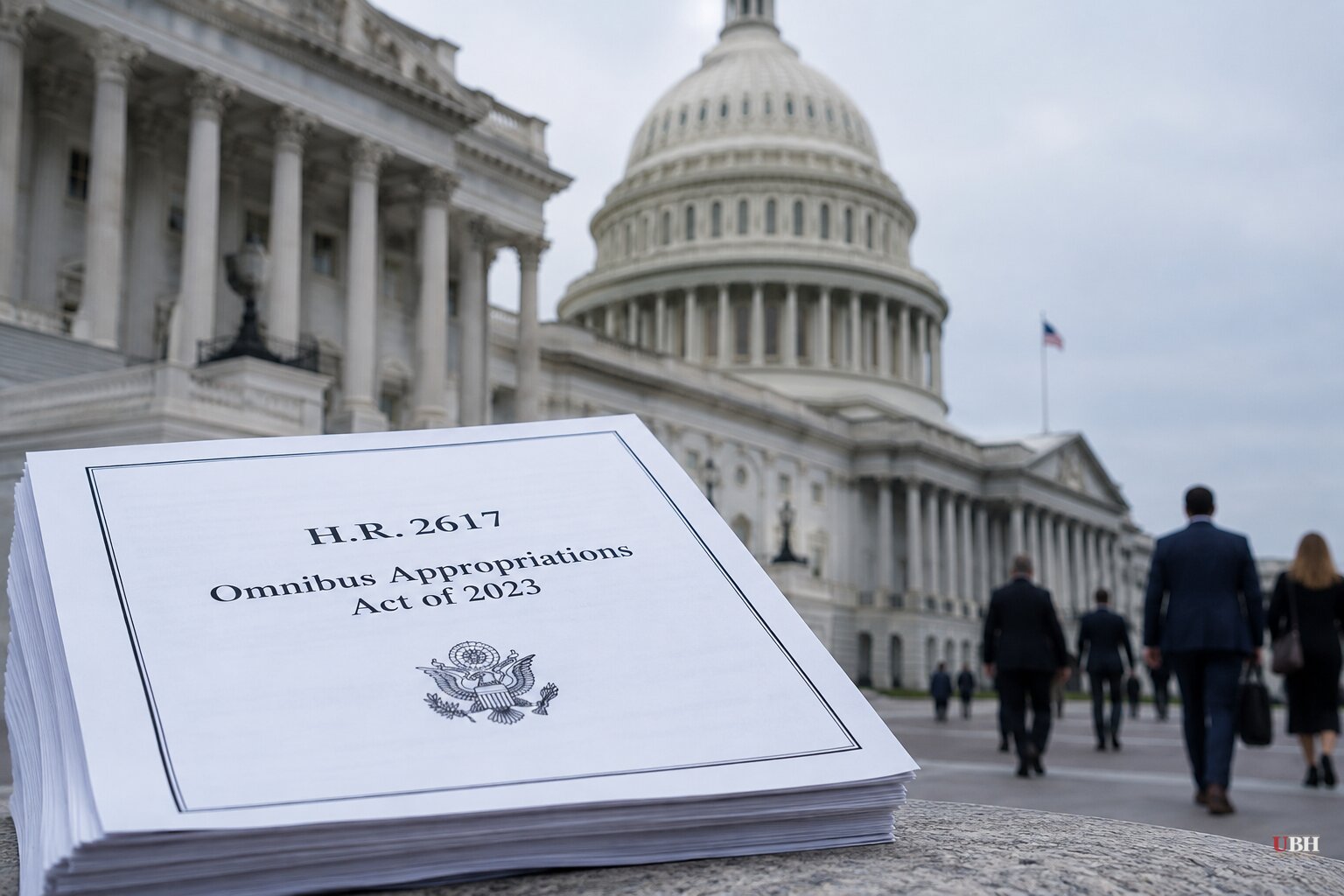
A federal appeals court has ruled that the House of Representatives unconstitutionally passed the roughly $1.7 trillion Consolidated Appropriations Act of 2023 in December 2022. The 5th U.S. Circuit Court of Appeals, based in New Orleans, split 9-8 on Friday, Nov. 20.
The problem was proxy voting. The court held that the Constitution's Quorum Clause requires a majority of House members to be physically present, and that a House rule counting absent members as present does not satisfy it.
How the bill passed
The rule dates to May 2020. Then-Speaker Nancy Pelosi helped put proxy voting in place as an emergency measure at the start of the Covid-19 pandemic. It let members designate a colleague to vote and be counted for them. Republicans ended it after taking control of the House following the November 2022 elections.
Before that happened, the House used the rule to pass the spending package. The vote was 225-201, and according to the appeals court opinion, 226 members voted by proxy. Legislative records show absent members of both parties were counted as present. President Joe Biden signed the bill.
Rep. Chip Roy (R-Texas) complained at the time and reserved the right to object, according to the dissent.
What the court said
Judge Cory Wilson, a Trump appointee, wrote the majority opinion. The court first cleared a procedural hurdle. The enrolled-bill rule generally bars courts from questioning whether a bill signed into law was properly passed. The majority said that doctrine did not apply because the question was whether a procedure met the Constitution, not whether the bill accurately reflected what Congress did.
On the merits, the court said the clause's text, context, original meaning and practice all point the same way.
"As the Supreme Court has held, and as Congress had previously done for over 230 years, members must be present to satisfy the Quorum Clause," Wilson wrote. "Presence-by-proxy does not suffice."
He also wrote: "While the chambers of the legislature have much discretion regarding their rules of procedure, the Quorum Clause's constraints on congressional power cannot be circumvented by congressional fiat."
The majority added that the government did not establish an "existence of an emergency" when proxy voting was adopted.
The dissent
Judge James Graves Jr., an Obama appointee, agreed the court could review the question. He rejected the majority's reading of the clause.
Graves argued the Constitution's text does not expressly require physical presence and gives Congress broad authority over its own procedures. "Even though less than a majority was physically present at the time of the vote, no Member objected that a quorum was lacking," he wrote. He said the majority "shoehorns a much larger requirement into the Constitution." He called the ruling "illogical, inexplicable and invalid."
Graves also asked why, if the entire bill's passage was unconstitutional, the ruling should touch only "one small sliver" of it.
A narrow remedy
Texas Attorney General Ken Paxton brought the case in 2023. He challenged only the Pregnant Workers Fairness Act, a provision in the omnibus that requires covered employers to provide certain accommodations to pregnant workers.
The court barred the Justice Department and the Equal Employment Opportunity Commission from enforcing that provision against Texas. The opinion stresses its "narrow scope."
An earlier ruling by U.S. District Judge James Wesley Hendrix in Lubbock blocked the provision as applied to Texas as an employer, and that injunction covers only state government employees. Hendrix also found Texas lacked standing to challenge $20 million in the bill for a pilot program serving people in immigration removal proceedings.
Paxton, who recently lost his bid for U.S. Senate and is leaving office, framed the case in constitutional terms. "Nowhere does the U.S. Constitution authorize the House to pass trillion-dollar bills when more than half the members are in their homes, vacationing, or are anywhere physically other than the United States Capitol Building," he said at the time of the challenge.
Why advocates say the reach is wider
Inimai Chettiar, president of the workers' rights group A Better Balance, which worked with lawmakers on the provision, says the practical effect goes beyond Texas.
"If a worker was to try to get accommodations now in any of these states and an employer was going to deny the accommodation and then the worker sued, a district court judge in any of those states would point to this opinion," Chettiar said. "That's why we think this is so incredibly harmful because the decision that the law is unconstitutionally enacted goes far beyond the specific fact patterns of the case."
Legal experts had also warned beforehand that a ruling against the bill's passage could affect other measures passed with proxy votes.
What comes next
The Justice Department defended the law. Neither it nor Paxton's office responded to requests for comment after the ruling.
The department has not said whether it will seek Supreme Court review. With the appeals court split 9-8 and a pointed dissent, the case offers an obvious vehicle if it does. It is unclear whether the majority's rule that proxy presence cannot establish a quorum will be applied to other laws the House passed the same way, or will stay confined to this one provision in this one state.
Sources used for this briefing
6 links from 6 independent newsrooms (syndicated copies of the same report count once)
These are the sources it draws on, linked so you can verify.


