
Unbiased headlines. Facts, not spin.
Unbiased Headlines is an independently owned news organization. We bring you the facts, not opinions, written fresh from 110+ named sources. Sources linked so you can verify it yourself.
 politics
Major Story (8/10)
World Court Rules Myanmar Committed Genocide Against Rohingya; UK Expels Defense Attaché, Security Council Meets Next Week
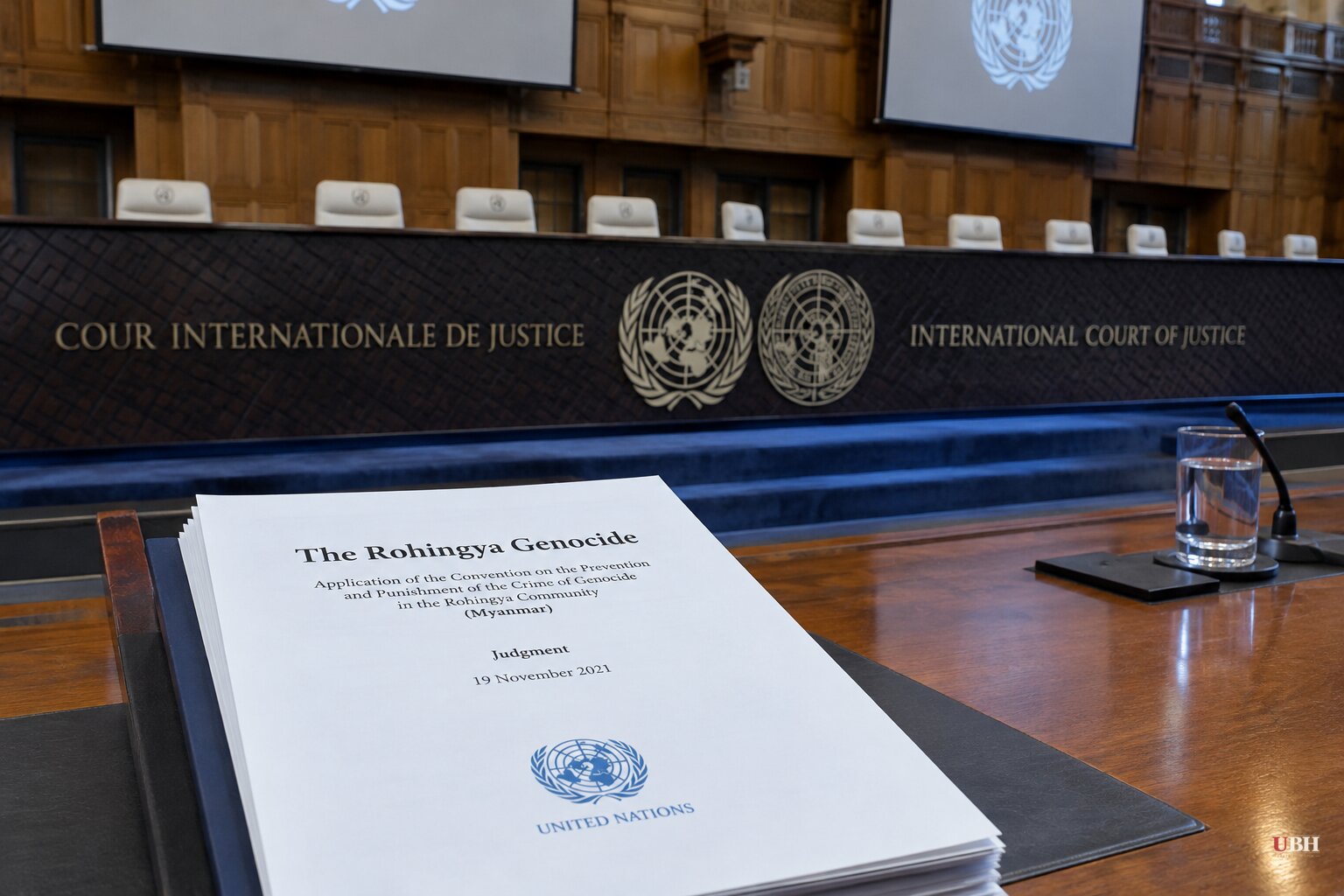
Nine years after Myanmar's military drove more than 700,000 Rohingya into Bangladesh, the United Nations' top court ruled Thursday, Nov. 19, that the state committed genocide against them. Myanmar's government calls the decision unfair and is not expected to comply.
The ruling is final and cannot be appealed. It is the first time in the court's 80-year history that it has found a state responsible for committing genocide, according to the Irrawaddy, a Myanmar news outlet.
What the court ordered
The International Court of Justice ordered Myanmar to let refugees return home safely, pay reparations to the Rohingya, and prosecute those suspected of carrying out genocide. The court said the evidence showed Myanmar forces killed about 100,000 Rohingya.
The case was brought by The Gambia. Min Aung Hlaing, the former military chief, was in charge of the 2017 operation. He is now Myanmar's president.
According to Amnesty International, the court also found that genocidal intent can coexist with other goals, including military ones. Amnesty Secretary General Agnes Callamard said that clarification matters for other pending cases, including South Africa's case against Israel over Gaza.
Myanmar's response
Myanmar's government denies committing genocide and says it was acting against insurgents. Presidential spokeswoman Khine Khine Soe pointed to the judges' nine-to-six vote.
"Not all 15 judges agreed with the decision," she told reporters in Naypyitaw. "So it was not a decision made unanimously. I would say that it was unfair."
The split does not change the legal status. Rulings of the court are binding.
Enforcement is the problem
The court has no police, no sanctions power and no way to collect reparations. Its only recourse is to report noncompliance to the UN Security Council under Article 94(2) of the UN Charter.
That is where it stalls. Daniel Forti, head of UN affairs at the International Crisis Group, told The Associated Press that China and Russia would likely block action.
"China has discouraged the Security Council from acting on the Myanmar file since 2021, as it is reluctant to cede any influence in its own backyard," Forti said. "The ICJ ruling will not alter China's calculations."
The Security Council has scheduled closed consultations for next Wednesday, Nov. 25, and a private meeting on Dec. 7. Both were requested by the United Kingdom, which expelled Myanmar's defense attaché after the ruling.
Forti said The Gambia may eventually seek a resolution in the 193-member General Assembly. Those resolutions are not legally binding. General Assembly President Khalilur Rahman plans an informal dialogue with member states on the ruling.
What rights groups want
Rights groups are pressing for sanctions. Tun Khin, president of the Burmese Rohingya Organisation UK, told the Irrawaddy the ruling is "a big blow" for Min Aung Hlaing as he tries to persuade the world to normalize relations. He said Russia and China would likely veto a resolution but would be forced to explain the vote. "We hope it will result in new sanctions," he said.
Amnesty wants a global arms embargo and a Security Council referral of the entire Myanmar situation to the International Criminal Court. It also wants governments to stop transferring weapons, surveillance equipment and security assistance.
Lucky Karim, executive director of Refugee Women for Peace and Justice, said ASEAN members should stop engaging with the regime. She noted that nine countries have hosted Min Aung Hlaing this year. Myanmar's leaders remain barred from ASEAN's top-level summits.
UN Secretary-General António Guterres welcomed the ruling, as did the UN's Independent Investigative Mechanism for Myanmar, Human Rights Watch, the foreign ministers of the UK, Australia, Ireland and Turkey, and Myanmar's civilian National Unity Government.
Survivors still in the camps
Most Rohingya who arrived in 2017 are still in Bangladesh, in the world's largest refugee camp. They live in shelters of bamboo and tarpaulin and are denied the right to leave the camps, work or seek education.
Hundreds have died at sea this year trying to escape. Malaysia and India have spoken about sending Rohingya back to Myanmar.
Momtaz Begum told The Guardian that Myanmar forces killed her husband and children in Tula Toli, then raped her in front of her one surviving child. Her sister, Dildar Begum, described the same violence. Each believed the other dead for months before learning both had reached Bangladesh.
Return is not simple even on paper. Tun Khin said it remains impossible under the policies of both the Myanmar military and the Arakan Army, which controls 14 of Rakhine State's 17 townships.
The Security Council meets in closed session Nov. 25, then privately again Dec. 7. China and Russia hold vetoes. Any binding action on sanctions or enforcement depends on them.
Sources used for this briefing
8 links from 8 independent newsrooms (syndicated copies of the same report count once)
These are the sources it draws on, linked so you can verify.


