
Unbiased headlines. Facts, not spin.
Unbiased Headlines is an independently owned news organization. We bring you the facts, not opinions, written fresh from 110+ named sources. Sources linked so you can verify it yourself.
 politics
Major Story (7/10)
Jury convicts Jonathan Rinderknecht on two federal arson counts in Palisades Fire retrial
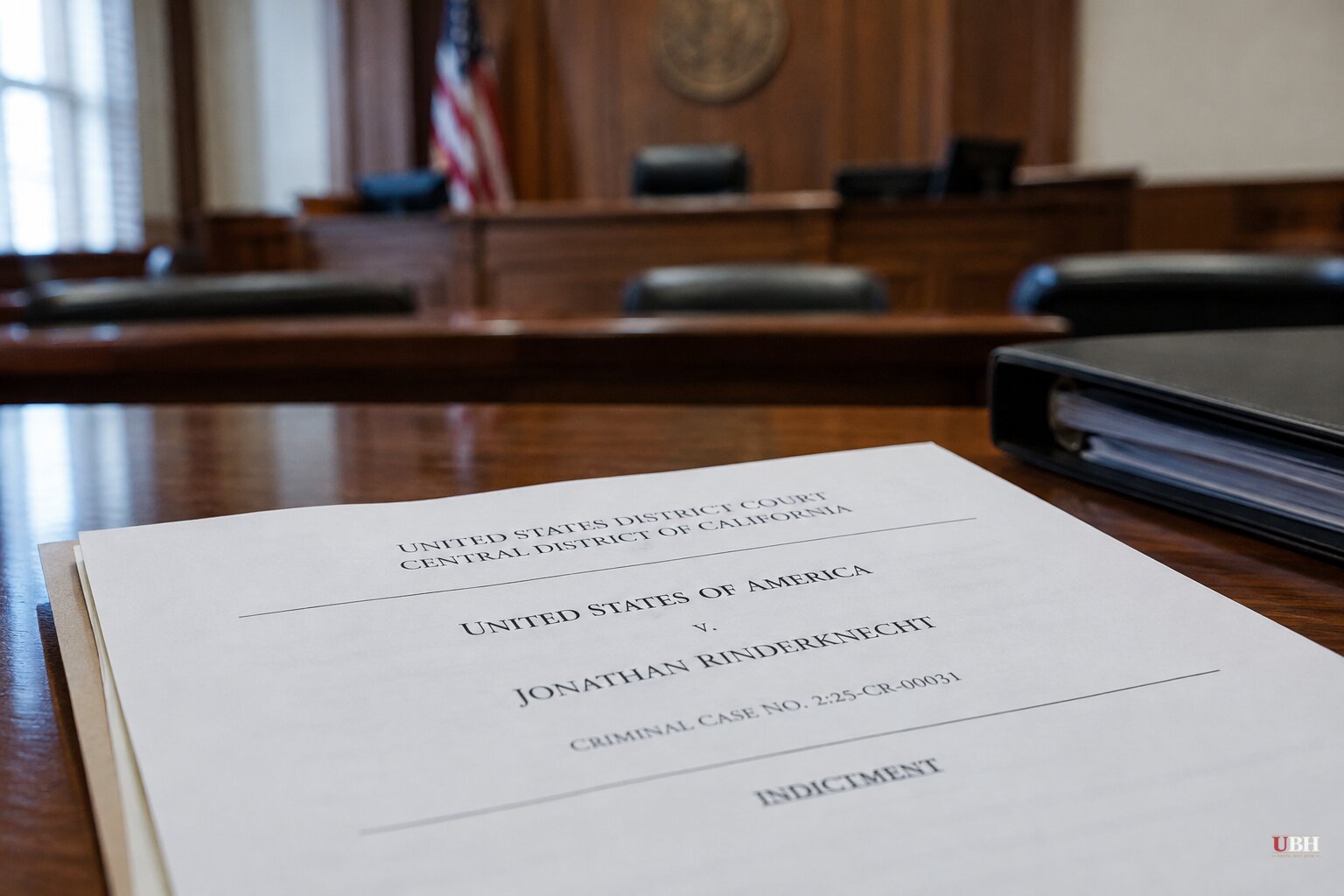
A federal jury in Los Angeles on Friday, Nov. 20, convicted Jonathan Rinderknecht of starting the fire that prosecutors say grew into the Palisades Fire, a deadly blaze and the most destructive in the city's history.
The panel of six men and six women found him guilty on both counts: destruction of property by means of fire, and arson affecting property used in interstate commerce. Deliberations began Wednesday, Nov. 18, and took a little over two days.
U.S. District Judge Anne Hwang set sentencing for March 17, 2027. Prosecutors say he faces a minimum of five years and a maximum of 40 in federal prison. Under the AP's account, each count carries a five-year mandatory minimum and a 20-year maximum.
What the fire did
The Palisades Fire erupted Jan. 7, 2025, driven by winds gusting up to 100 mph. It burned more than 23,000 acres across Pacific Palisades, Malibu and the Santa Monica Mountains and took 24 days to contain, according to Cal Fire. Twelve people died. Between roughly 6,000 and 6,800 structures were destroyed, depending on the count.
First Assistant U.S. Attorney Bill Essayli put the damage at $25 billion. "The question at the time was who was responsible. And now we have the answer to that question," he said after the verdict.
The government's case
Prosecutors said Rinderknecht, then an Uber driver, lit the Lachman Fire with a lighter just after midnight on New Year's Day 2025. Fire sensing platforms detected it at 12:12 a.m. Firefighters put it out after it burned roughly five to eight acres of brush.
The government's theory is that it was a "holdover" fire. It kept smoldering in root systems underground for a week, then resurfaced Jan. 7 and was carried off by the winds.
The evidence was largely digital and circumstantial. Prosecutors showed photographs of his car at the base of the trail, cell tower data tracking his movement on the hill, and fire-camera images that fixed the ignition window. Their experts ruled out other ignition sources that night, including fireworks.
He called 911 more than a dozen times while walking down the hill, and prosecutors played a video he screen-recorded during those calls. During the calls he asked ChatGPT: "Are you at fault if a fire is lit because of your cigarettes?" Prosecutors said that was part of an alibi he was building.
Uber passengers and texts to his then-girlfriend, prosecutors said, showed he was angry and erratic that night. "He was mad at everything, and frustrated," Assistant U.S. Attorney Mark Williams told jurors.
In a Jan. 24, 2025 interview, prosecutors say, Rinderknecht lied about where he was when he first saw the flames. They say phone geolocation data put him about 30 feet away.
A case that changed between trials
The first trial ended in June with a hung jury that leaned 10-2 toward acquittal. Prosecutors then obtained a superseding indictment. They dropped a timber-set-afire count and narrowed the destruction-of-property charge to the Lachman Fire alone. The second count still covers both fires.
Essayli said the change was meant to reach jurors who might have been torn about holding Rinderknecht responsible for the Palisades Fire. He also said he believed the first jury "considered things that were not within the record." The record does not show whether that is what produced the mistrial. Prosecutors also leaned less on a "societal revenge" motive theory the second time.
The retrial's jury selection began Nov. 2. The judge barred any reference to the first trial.
What the jury said, and what the defense says
A juror who gave his name as Cameron told reporters he was the holdout early on. He said his hesitation centered on whether investigators followed protocol in linking the first fire to the second.
What moved him, he said, was Rinderknecht's own testimony. By that account, Rinderknecht was alone on the hill on a clear, calm night, smoking and carrying a lighter, with no fireworks and no smell of fire. "No one else was on the hill that day or night, and happened to be smoking," Cameron said.
The defense has never accepted the government's account. Attorney Steve Haney argued there was no evidence his client set the fire and pointed to fireworks as an alternative cause. The defense agreed Rinderknecht called 911 repeatedly but maintained he was a witness.
Haney said after the verdict: "We are disappointed in the verdict, but respect the jury process." He said the defense plans to appeal.
Rinderknecht's father, Joel, was in the courtroom and told reporters outside that his son is innocent. "There was a lot of mischaracterization ... misleading statements, false statements, witness intimidation," he said. "When you're in front of the government, it's a big machine." He called the case "a false narrative." Prosecutors have not responded to those specific accusations in the available statements.
Rinderknecht, who was arrested in Florida in October 2025, has been in custody since.
Los Angeles Mayor Karen Bass said in a statement that "no verdict can bring back the lives lost or erase the pain families have endured." She added that many residents are still displaced and trying to rebuild.
What comes next
The appeal is the open question. The holdover theory, the link between a five-to-eight-acre brush fire and a blaze that destroyed thousands of structures a week later, is central to the second count. That count covers both fires, and the defense has said it will challenge the verdict.
Hwang sentences Rinderknecht on March 17, 2027. The range is five to 40 years.
Sources used for this briefing
8 links from 8 independent newsrooms (syndicated copies of the same report count once)
These are the sources it draws on, linked so you can verify.


