
Unbiased headlines. Facts, not spin.
Every story is an unbiased news briefing written from 110+ sources across the spectrum — sources linked so you can verify it yourself.
 politics
Major Story (7/10)
September 20, 2026 at 11:24 PM
politics
Major Story (7/10)
September 20, 2026 at 11:24 PM
Alberta to Vote Oct. 19 on Whether to Start Down the Road Toward a Separation Referendum
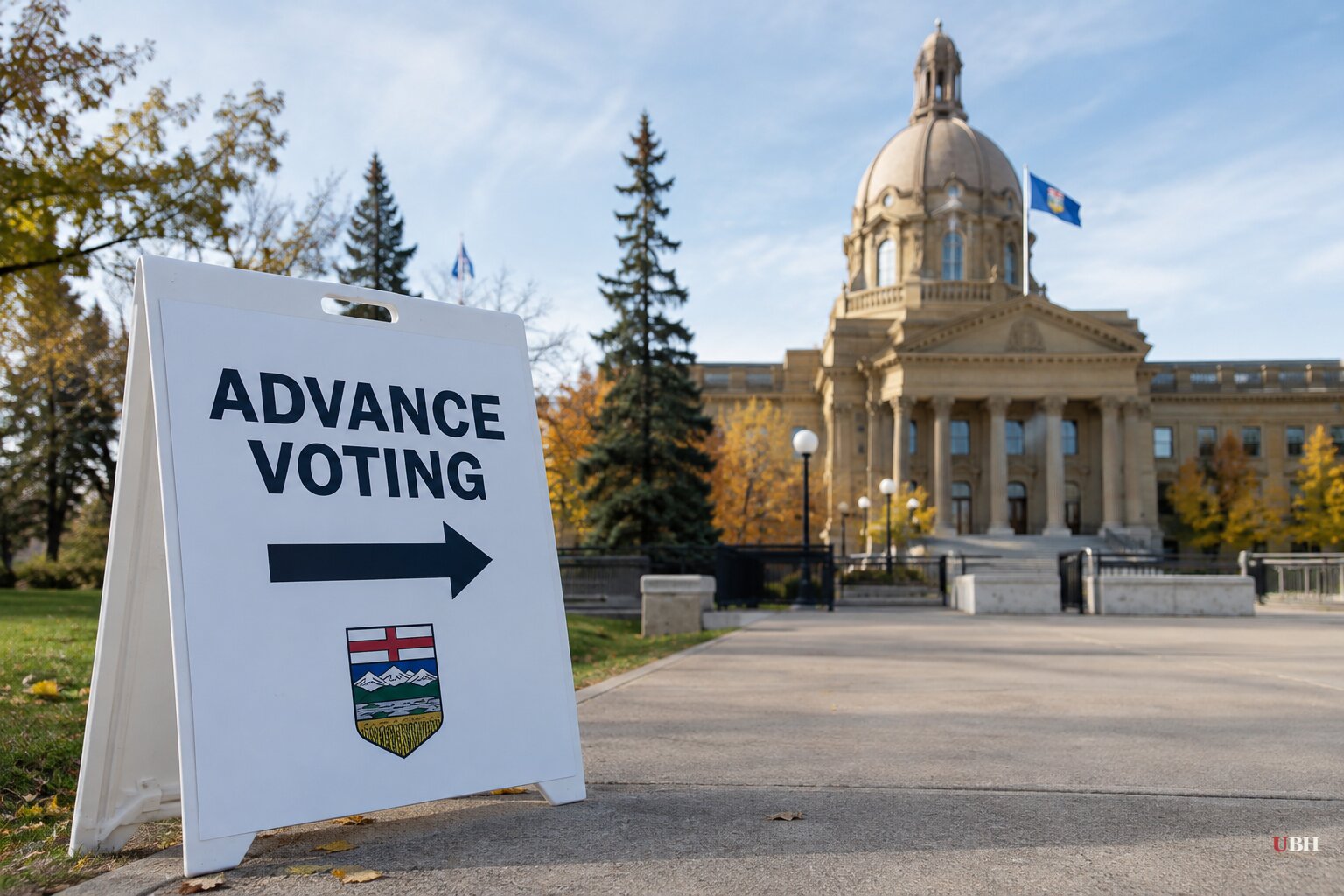
Albertans go to the polls Monday, October 19, to answer a question that would have gotten you laughed out of a Calgary bar a decade ago: should the province start the legal machinery needed for a future, binding vote on leaving Canada?
A "yes" doesn't make Alberta a country. There's no new border checkpoint on the Trans-Canada Highway, no new currency, no Calgary as capital of anything new, according to Elections Alberta and the Times of India. The October 19 vote is non-binding. It just decides whether Premier Danielle Smith's government begins the legal process that could eventually lead to a real binding referendum on separation.
How Alberta got here
Western alienation in Alberta isn't new. The Canadian Press timeline, carried by CTV News and CityNews Ottawa, traces it back to 1980, when Ottawa's National Energy Program capped domestic oil prices below world levels. Alberta saw it as a federal money grab. In 1982, the separatist Western Canada Concept Party briefly won a legislature seat before losing it and settling for 12% of the general-election vote with zero seats.
The modern chapter starts in 2019, when Jason Kenney's United Conservative Party won power on anti-Ottawa grievance but stayed a committed federalist. Danielle Smith replaced Kenney and won the 2023 election on a platform of pushing harder against Ottawa. Unlike Kenney, Smith has refused to call separatists fringe extremists, saying their grievances deserve airing.
After Mark Carney's Liberals won a federal minority government on April 28, 2025, Smith announced a panel on Alberta's future and moved to lower the threshold for citizen-led referendum petitions. A pro-Canada "Forever Canadian" petition launched by former deputy premier Thomas Lukaszuk collected more than 400,000 names but got stuck in a legislature committee, with Smith questioning how the signatures were gathered. Meanwhile, Mitch Sylvestre's separatist Alberta Prosperity Project got the green light in January 2026 and gathered roughly 223,000 signatures, enough to trigger Monday's vote.
What a real breakaway would actually cost
A new report from the University of Calgary's School of Public Policy, government-commissioned and released this week, lays out the economic range for actual independence, from modest long-term gains to "massive long-range detriments," according to CBC News reporter Jason Markusoff. Every scenario the report modeled includes short-term pain.
The report flags problems most voters probably haven't thought through. Alberta's oil exports to the United States are worth more than its trade with the rest of Canada, meaning a new country might need to cut its own deal with Washington rather than fight for a seat at the already strained Canada-U.S.-Mexico Agreement table, CBC reports. The Canada Pension Plan isn't a bank account you can split with a calculator, according to Lethbridge economic development executive Trevor Lewington, writing in a column republished by the Gazette. It's decades of contributions bound up in legal obligations and actuarial assumptions that would take years of negotiation to untangle.
Most of Alberta sits under Treaties 6, 7 and 8, agreements signed with the Crown before Alberta was even a province. Lewington notes separation raises unresolved questions about treaty obligations, land claims and Indigenous consultation that "cannot simply be wished" away. Then there's the boring stuff that actually costs real money: who pays for wildfire and flood recovery, border services, immigration processing, courts and policing that Ottawa currently funds or coordinates.
Lewington points to Brexit as the closest real-world comparison. Britain's economy didn't collapse the day the vote passed. What followed instead was years of uncertainty, weaker investment and slower growth, he writes. His argument isn't that catastrophe is inevitable, but that Alberta's separatist projections generally assume calm markets, uninterrupted oil revenue and minimal legal disputes, conditions that rarely hold during major constitutional upheaval.
The Alberta-is-a-victim case, stated fairly
Separatists' strongest argument isn't fringe fantasy. Alberta has genuinely been a large net contributor to Confederation for years, sending more in federal taxes than it gets back in transfers, a point Lewington himself concedes is true. Alberta's GDP per capita leads all provinces, according to the Business Council of Alberta, driven heavily by oil and gas. Backers of separation argue the province should get to keep more of that wealth rather than subsidize federal programs and policies, like emissions caps, that they say choke the province's biggest industry.
The counterargument, also from Lewington, is that federations work by design as two-way streets: pensions, employment insurance, disaster aid, trade agreements and border security flow back the other direction. Being a net contributor doesn't automatically mean Ottawa owes Alberta a check, he argues, though reasonable people can disagree on where that balance should sit.
Where Trump fits in
President Donald Trump has repeatedly floated Canada as a potential "51st state" during his second term, tying the idea to shared trade and energy resources, according to the Times of India. Trump attended the G7 summit Alberta hosted in Kananaskis in 2025, alongside Prime Minister Narendra Modi and other world leaders. No source establishes any formal U.S. government position, negotiation, or commitment tied to Alberta's referendum process. Trump's comments remain rhetorical, not policy.
If Albertans vote yes on October 19, nothing changes overnight. The province would still need to run at least one more binding referendum before any actual separation could begin, and the University of Calgary report makes clear the legal, financial and treaty questions involved would take years to resolve regardless of which way any future vote goes.
Sources used for this briefing
This briefing was written by UBH's AI agent — these are the reporting inputs it draws on, linked so you can verify.


