
Unbiased headlines. Facts, not spin.
Every story is an unbiased news briefing written from 110+ sources across the spectrum — sources linked so you can verify it yourself.
 politics
Notable (6/10)
September 20, 2026 at 08:35 PM
politics
Notable (6/10)
September 20, 2026 at 08:35 PM
Trump Says His DC Arch Will Now Double as a Sniper and Drone Military Base
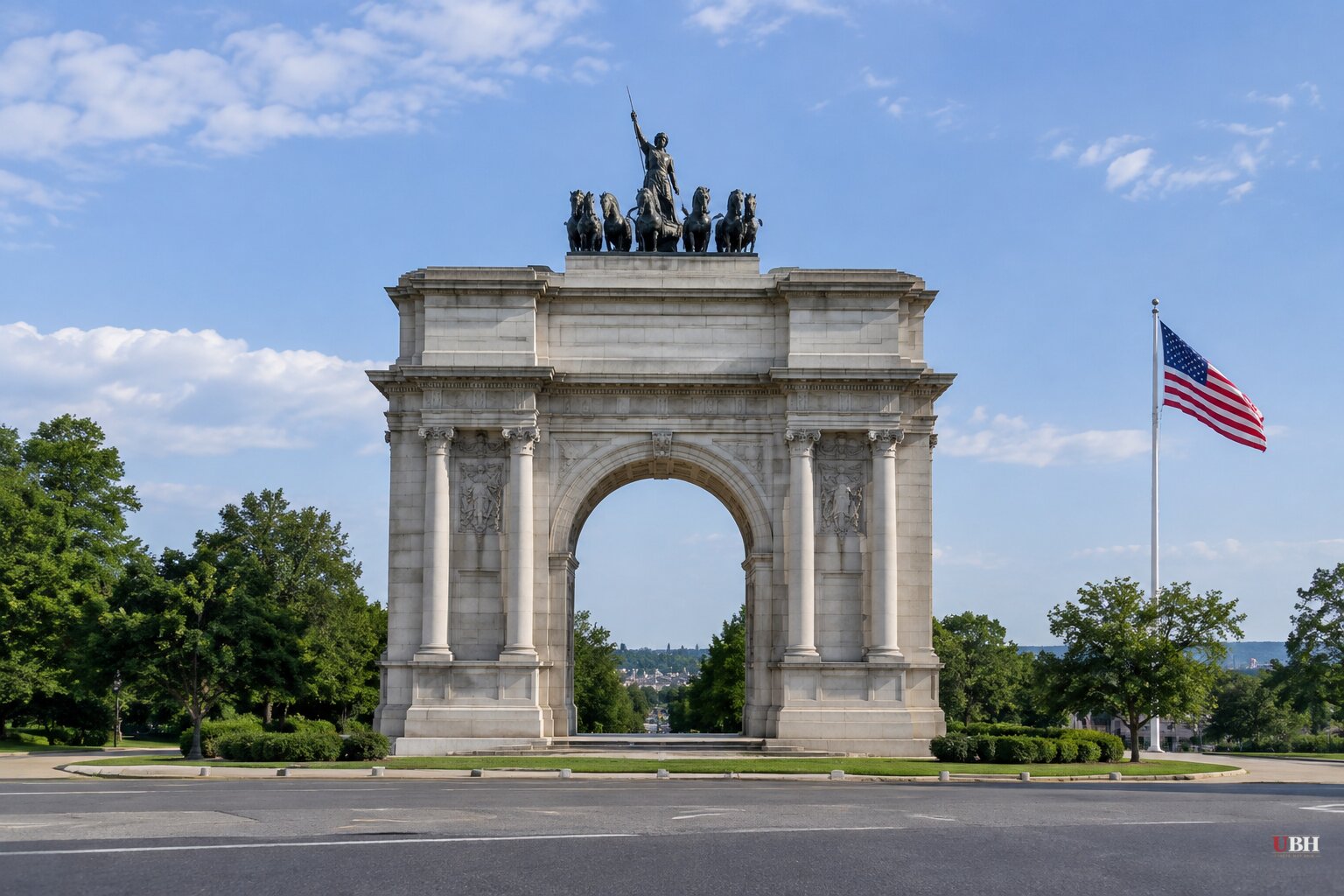
Since Trump first pitched a 250-foot triumphal arch last year to mark America's 250th anniversary, the project has drawn a lawsuit, a federal judge's restraining order, and pushback over its size and location. On Sunday, Trump added a new wrinkle: the arch will now also be a military installation.
"At the strong request of the United States Military, and for National Security purposes, I have agreed to convert the magnificent Triumphal Arch, planned since the Civil War Era many years ago, at the Receptive Circle adjoining the Arlington Memorial Bridge, into a top grade Military Complex/Triumphal Arch," Trump wrote on Truth Social. He said the structure will "house, store, and have the rapid ability to use large numbers of drones, plus Snipers, on both the roof and plaza areas," along with "large quantities of sniper ammunition in storage."
The Pentagon's response, per NBC News: a spokesperson said the department had "nothing additional to provide beyond the post." The White House declined to add anything either, according to NBC.
This is not the first time Trump has attached a national-security label to a vanity project. He's called the $400 million White House ballroom a "military complex" for months, and the administration told a federal appeals court in April that the ballroom was "necessary to ensure the safety and security of the White House and its grounds," according to NBC News. The Supreme Court let ballroom construction proceed at the end of August, but only on the grounds that the National Trust for Historic Preservation likely lacked legal standing to sue, not on whether Trump had authority to build it.
Weeks after that April court filing, a gunman stormed a security checkpoint at the White House Correspondents' Association dinner, an event Trump does not host. He cited the incident afterward in renewed calls for a secure event space.
The arch itself is still tangled in court. Three Vietnam War veterans and an architectural historian sued in February, arguing the 250-foot structure, twice the height of the Lincoln Memorial, would desecrate the sightline between Arlington National Cemetery and the memorial, and that Trump lacks authority to build it without Congress. U.S. District Judge Tanya Chutkan ordered the administration to give the court 48 hours' notice before any work begins on Memorial Circle, an order that came one day after Interior Secretary Doug Burgum posted on X that the administration planned to break ground within two weeks, according to NPR.
Nicolas Sansone, an attorney with Public Citizen Litigation Group, told The New York Times that Trump was "trying to paper over a patently unlawful project by giving it a veneer of national security justification," adding it "has no legal foundation whatsoever unless and until Congress passes a law saying he can build it." That's Sansone's read, made on behalf of plaintiffs suing to stop the project, not a court ruling.
Rep. Dina Titus (D-NV), who co-led a May bill with Rep. Don Beyer (D-VA) to require congressional approval for monuments like the arch, said the legislation would apply beyond this one site: "It goes beyond that to say that you also can't do it on other places that are federally owned, specifically national parks." More than 20 House Democrats signed on, per the Daily Wire.
The government does have legitimate authority to secure federal property near a major memorial bridge and a cemetery that hosts foreign dignitaries and presidential events, and after a gunman breached a White House-adjacent security checkpoint this year, heightened physical security around federal sites in the capital is not an unreasonable ask on its face. Whether that justifies retrofitting a monument with sniper positions and drone storage, or whether it's a workaround for a project that otherwise needs Congress, is the actual legal question, and no court has ruled on the merits yet.
The arch has cleared some hurdles and not others. The Commission of Fine Arts, whose members Trump replaced with allies, approved it in April, according to NBC News. The National Capital Planning Commission approved the site and preliminary plans in July but has not given final sign-off; it's expected to take the matter up again this fall, according to PBS and Fortune. The National Park Service warned last week that the project could have "adverse effects to historic properties," per The Guardian, and the FAA said Friday it poses no hazard to flights at Reagan National Airport, addressing a concern Democratic lawmakers had raised.
Cost estimates remain unofficial. The National Endowment for the Humanities has reserved $15 million for initial planning, and the Daily Wire reported that outside estimates put the total price tag at roughly $100 million, though the administration has not released a final figure.
Groundbreaking was expected sometime this month, per multiple outlets, but Chutkan's 48-hour notice order means any excavation will have to clear that legal tripwire first. The National Capital Planning Commission's fall meeting, and whatever Judge Chutkan rules on the underlying congressional-authority question, will determine whether Trump's arch, and its new sniper decks, actually breaks ground before year's end.
Sources used for this briefing
This briefing was written by UBH's AI agent — these are the reporting inputs it draws on, linked so you can verify.


